





Shine That Stays Put
Put them in and stop thinking about them. Stones that keep their fire through a long night, and studs that screw down instead of slipping off.

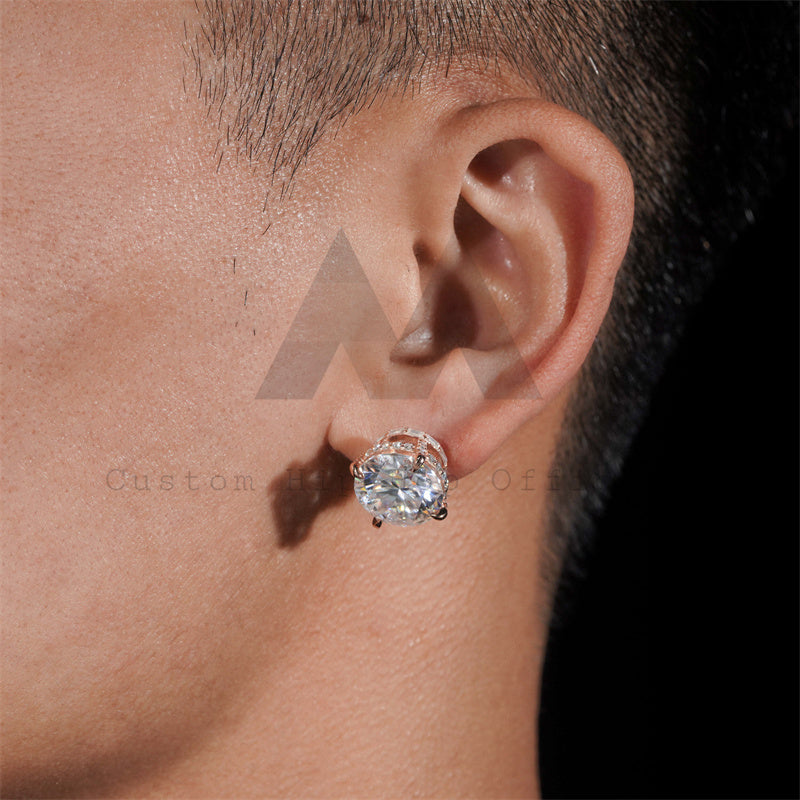
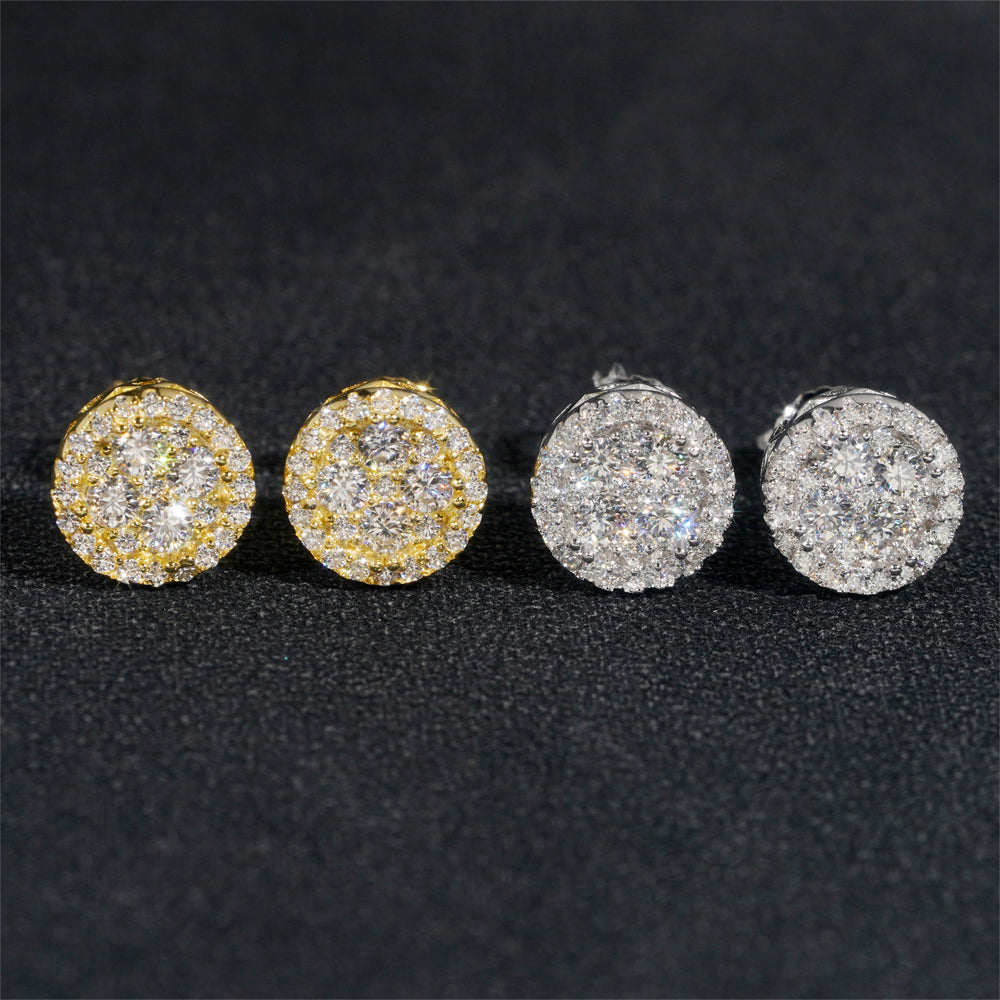
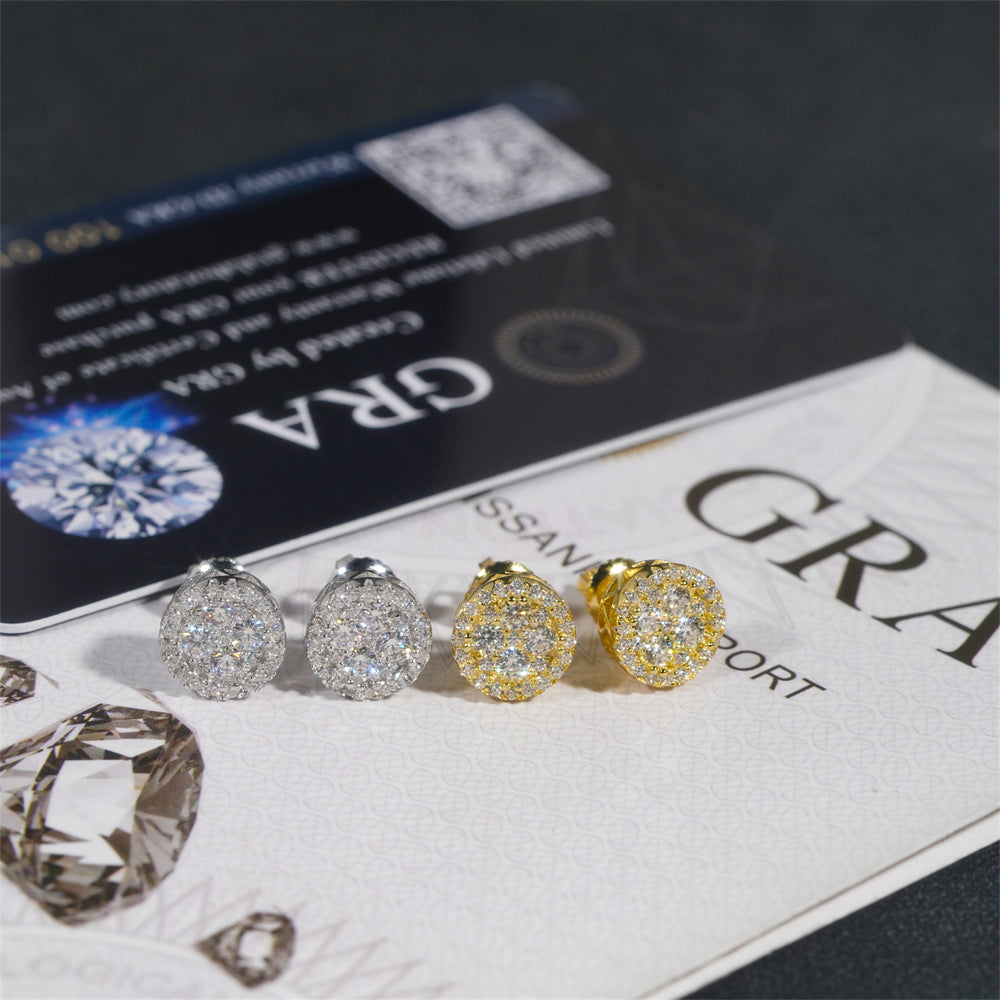
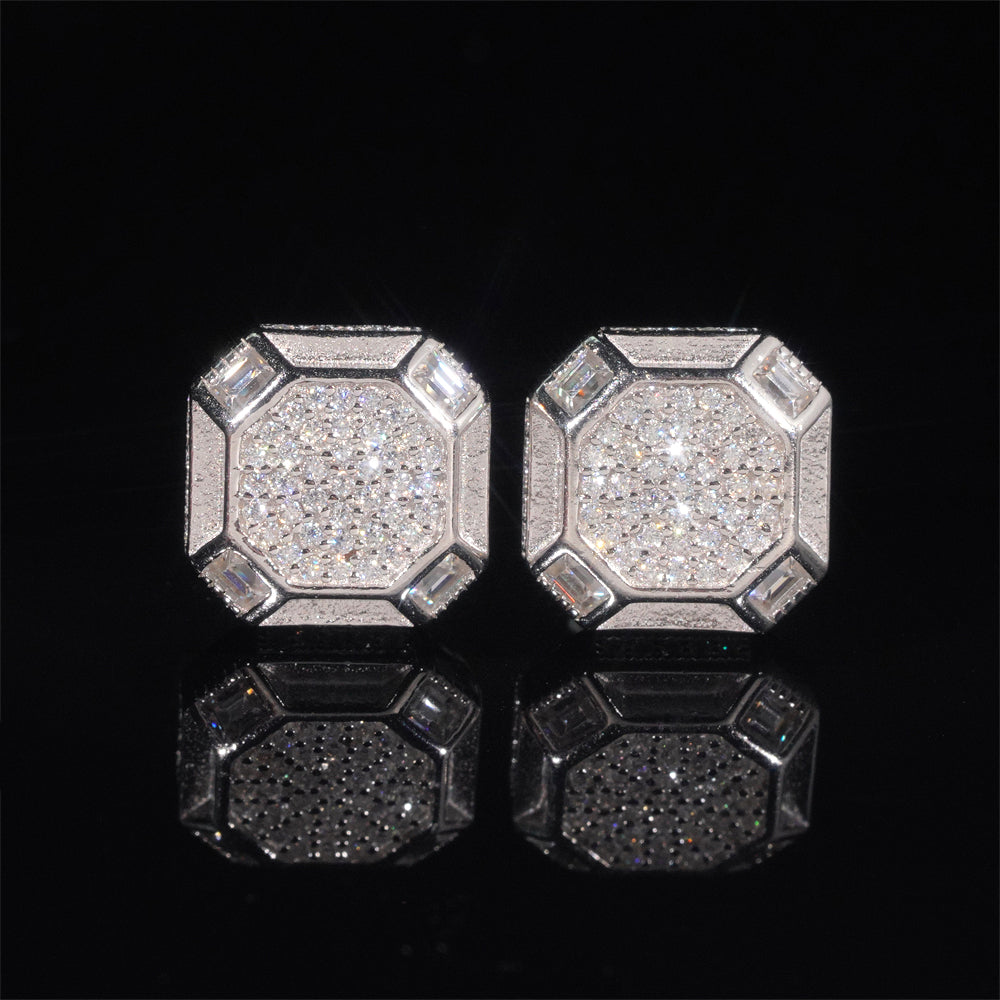
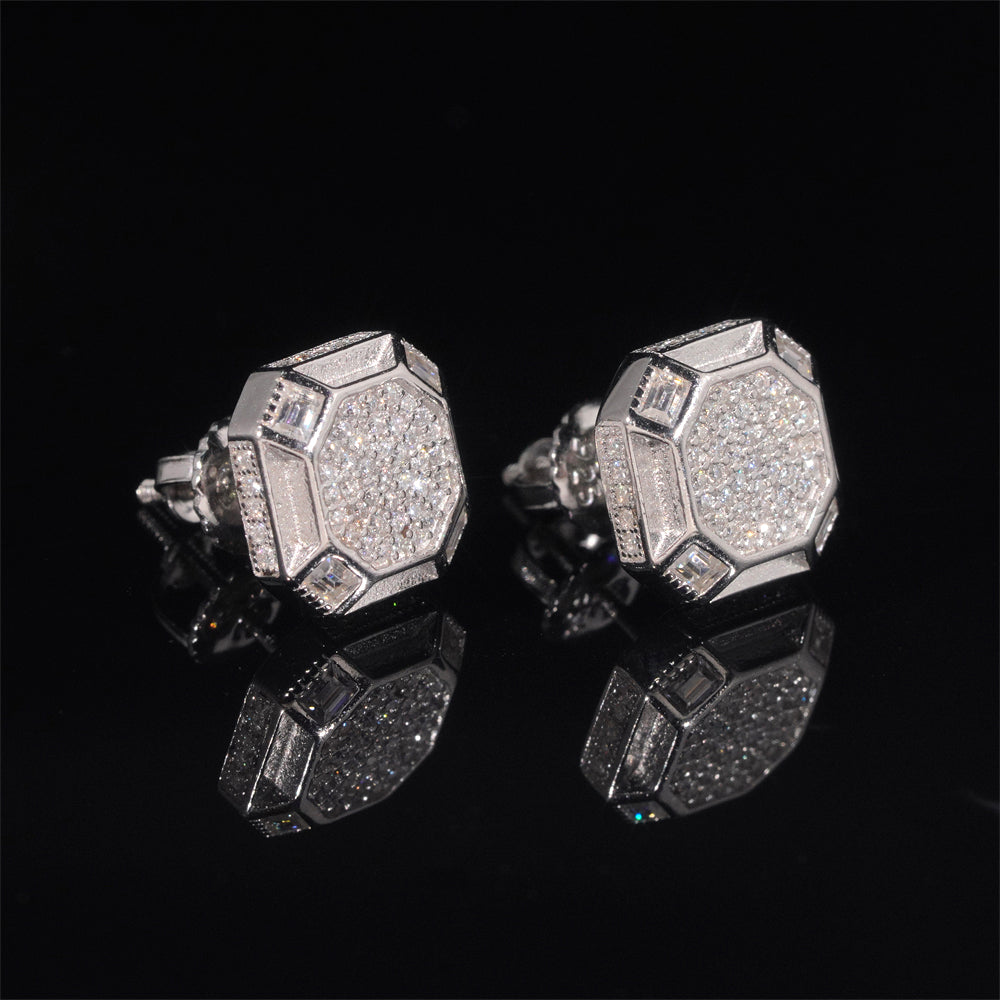
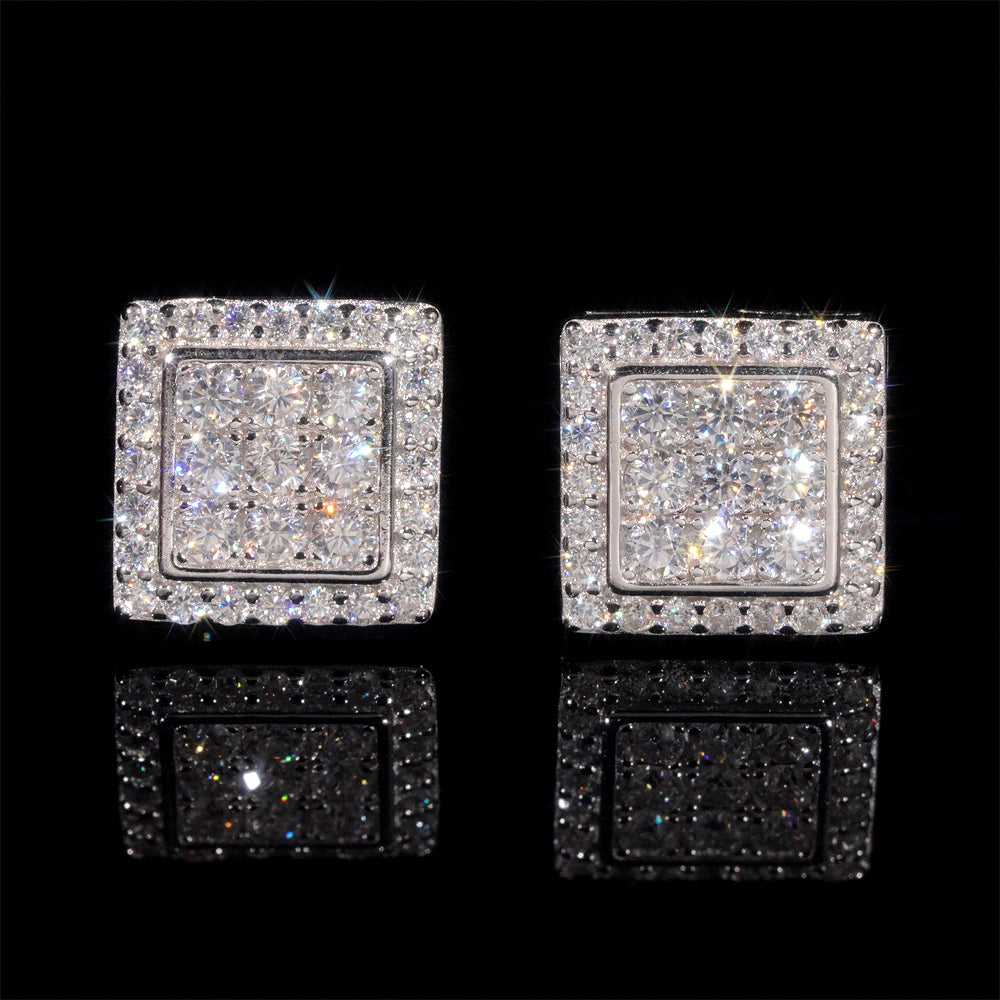
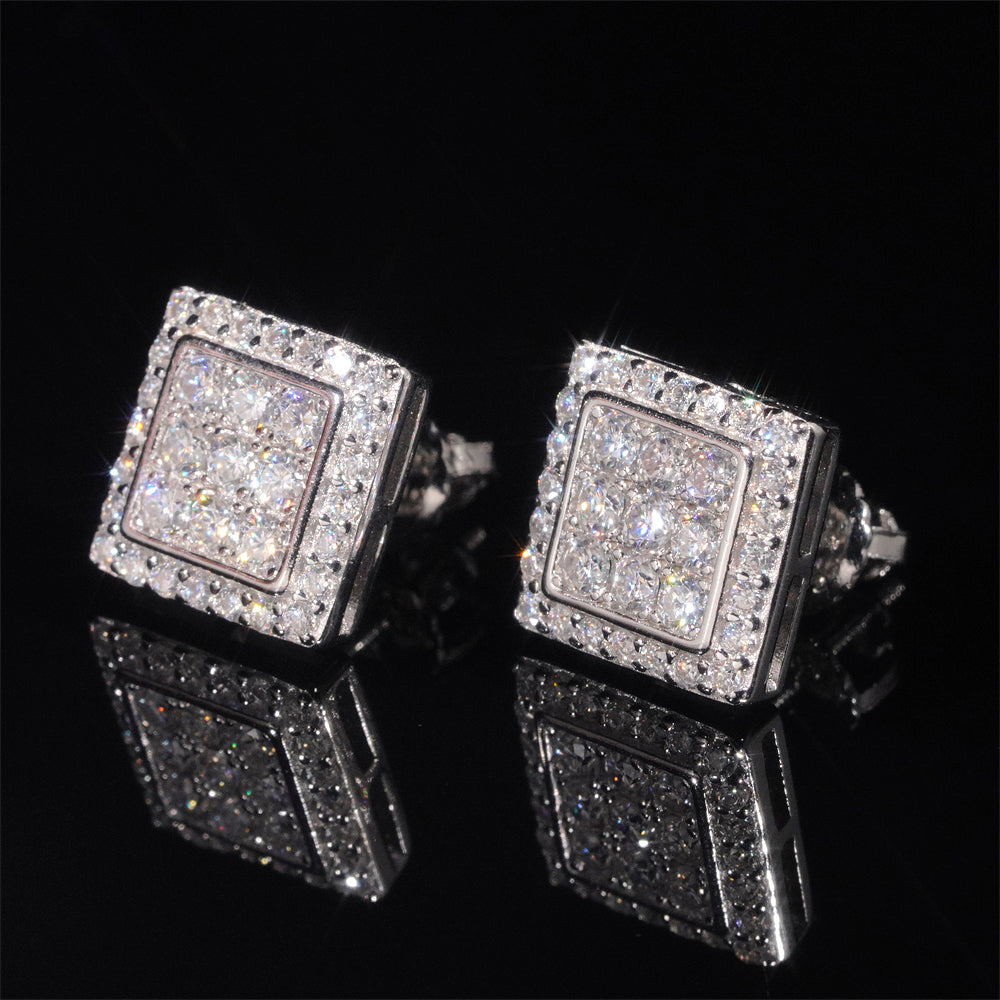
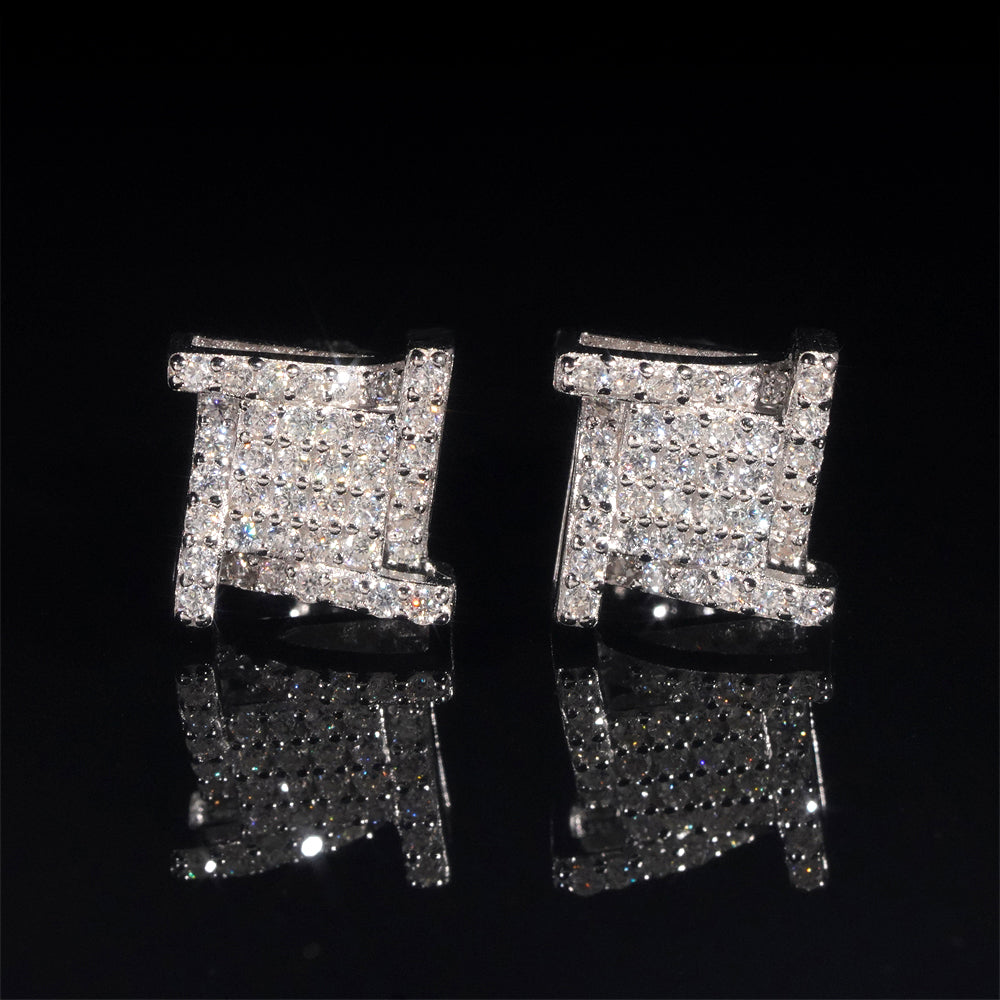
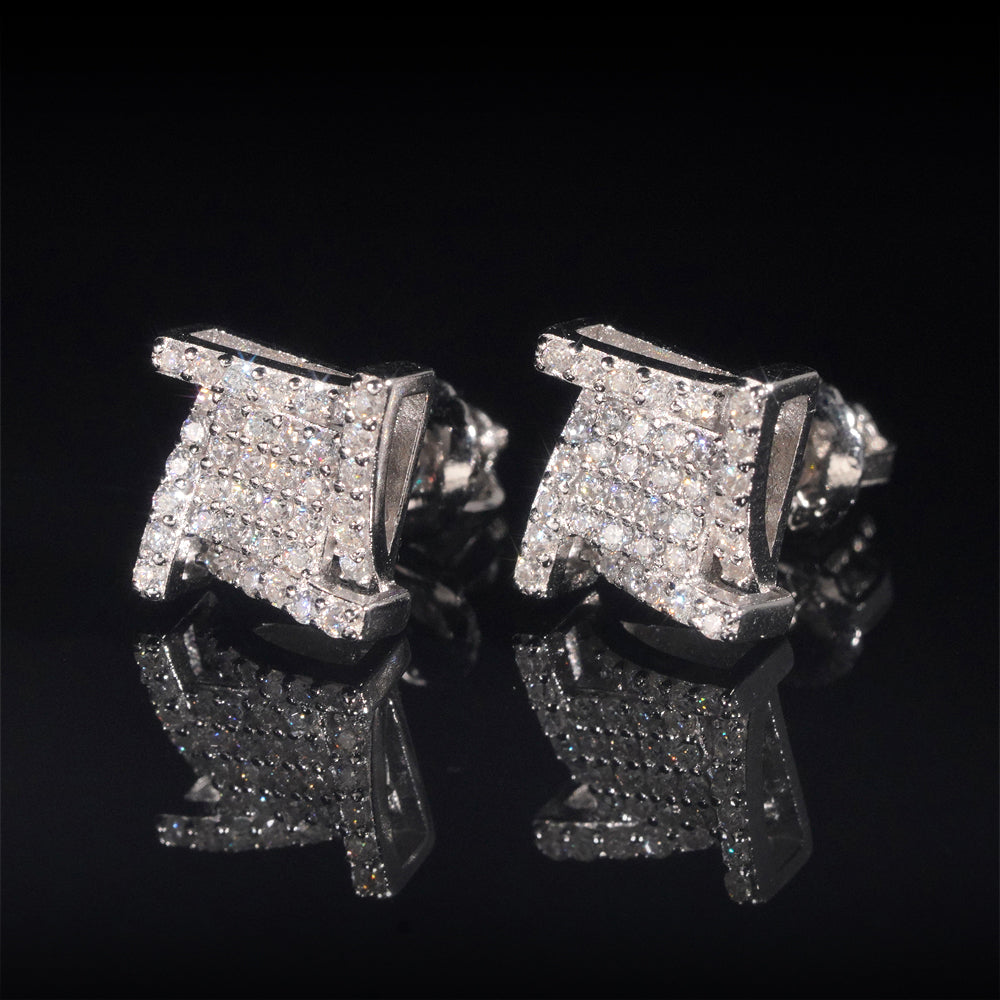
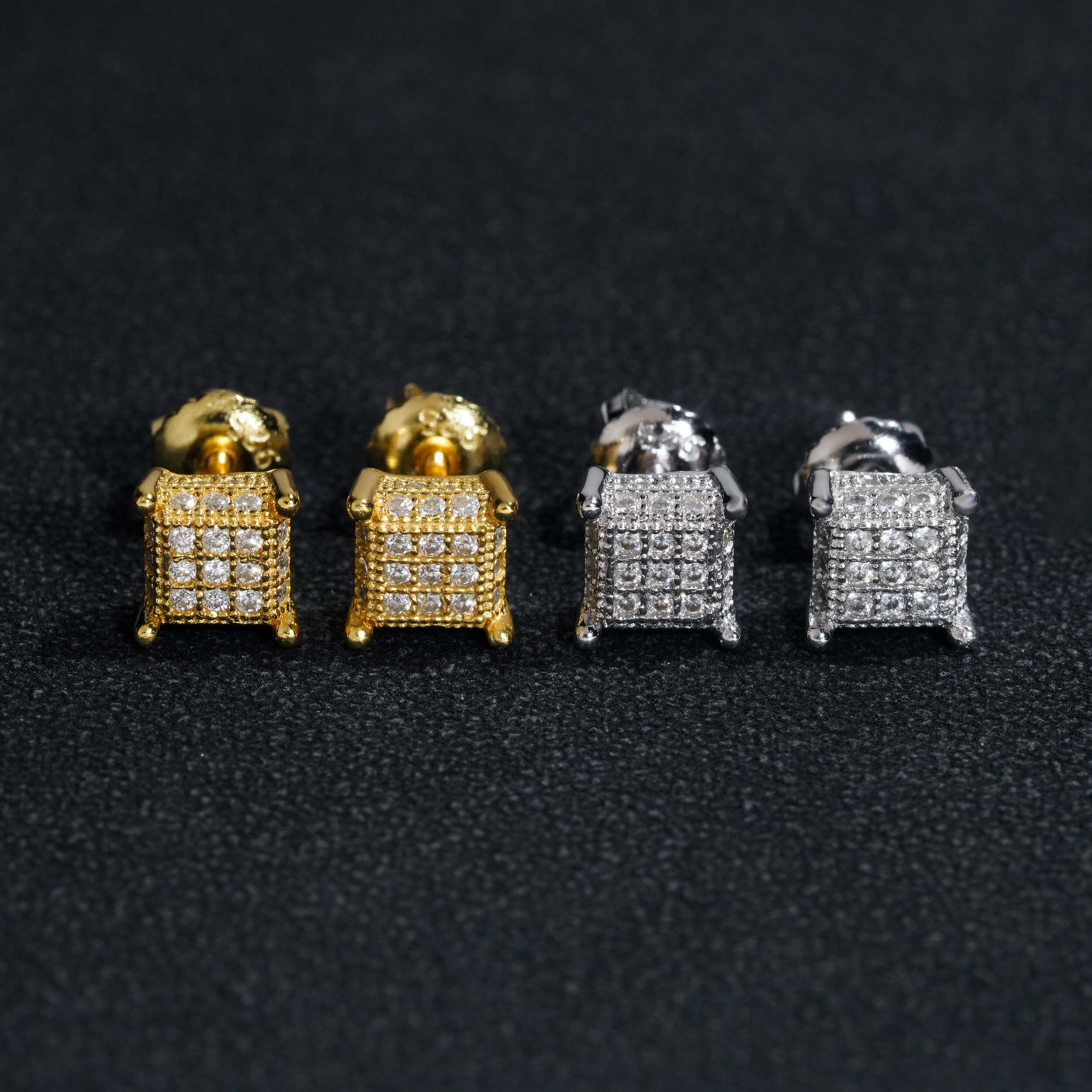
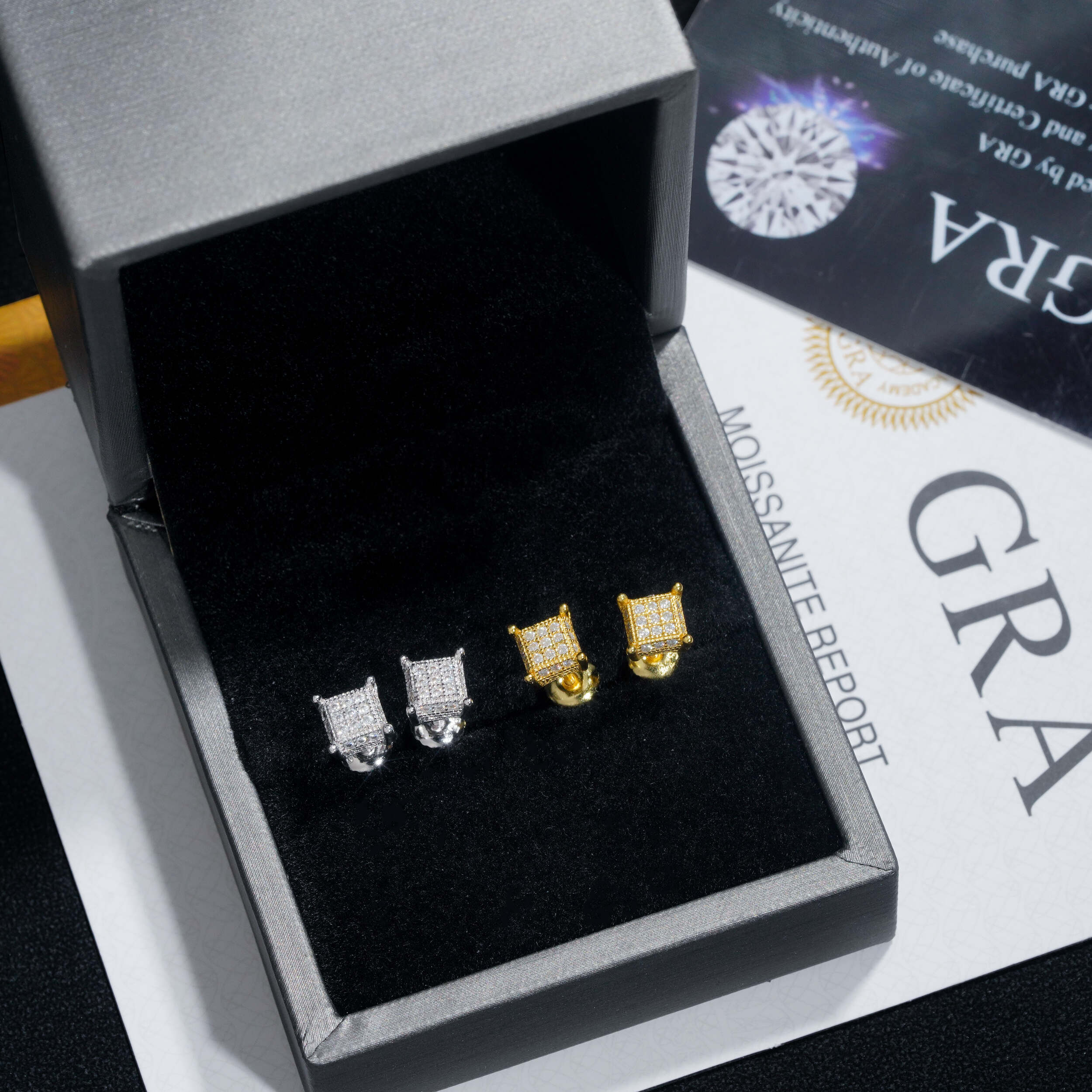
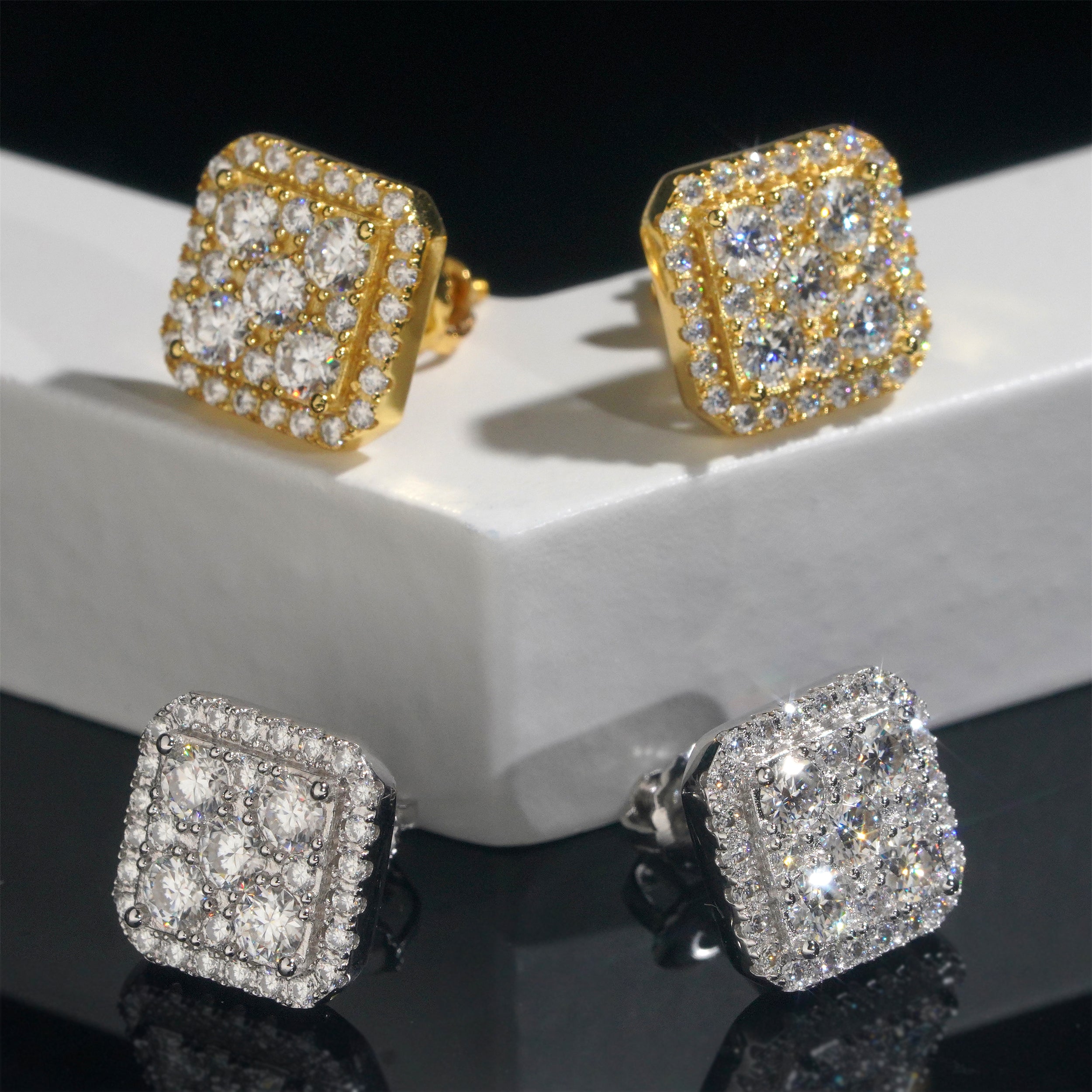
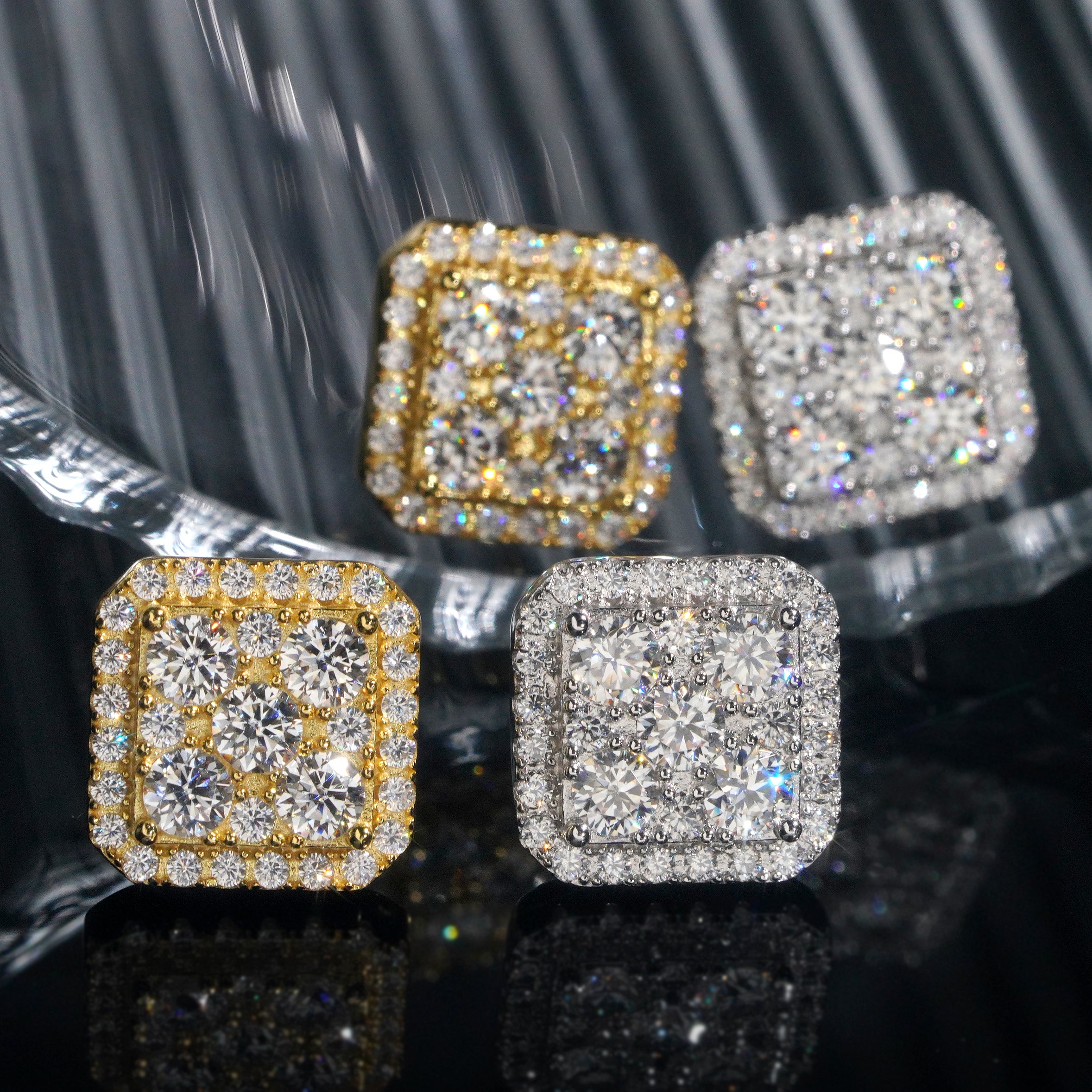
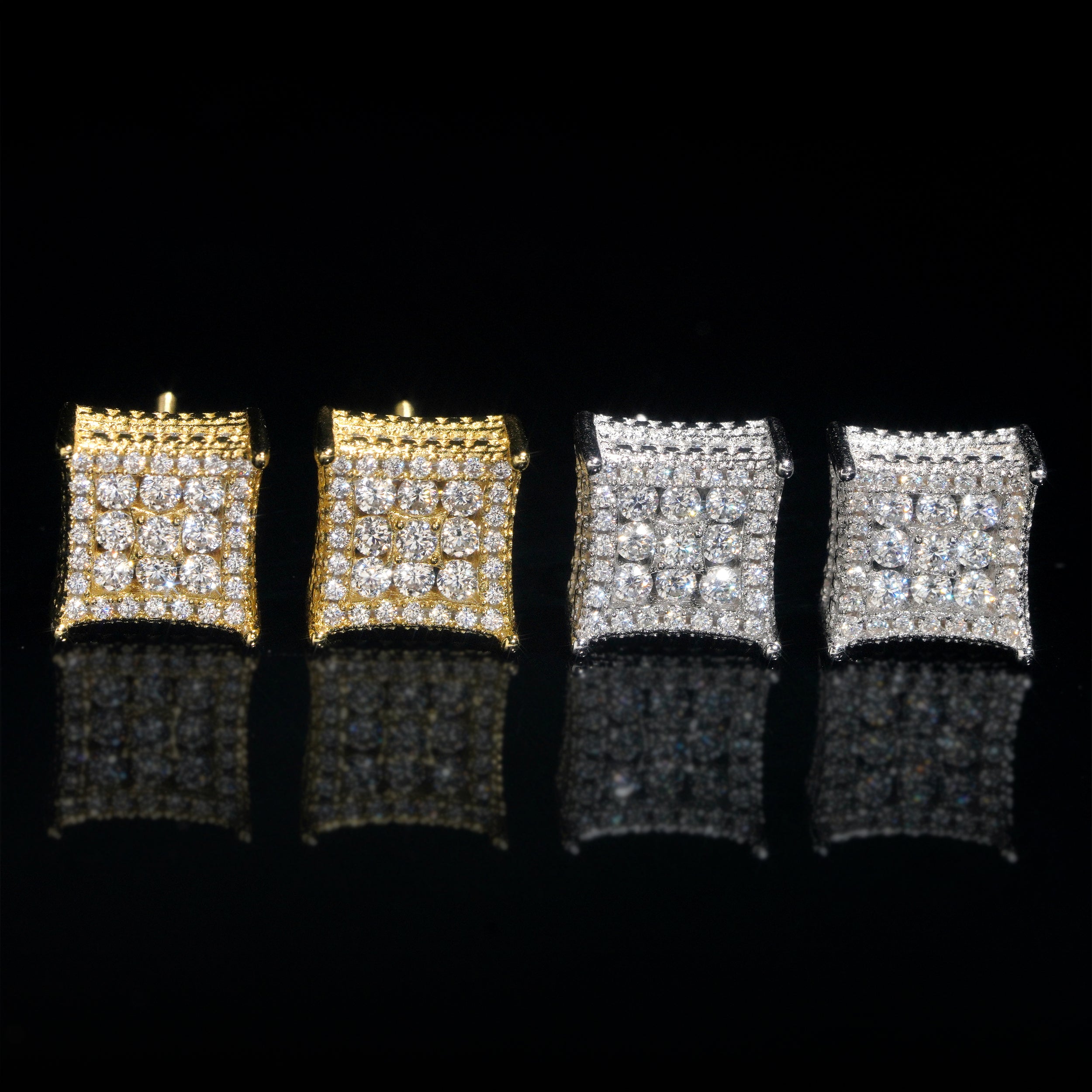
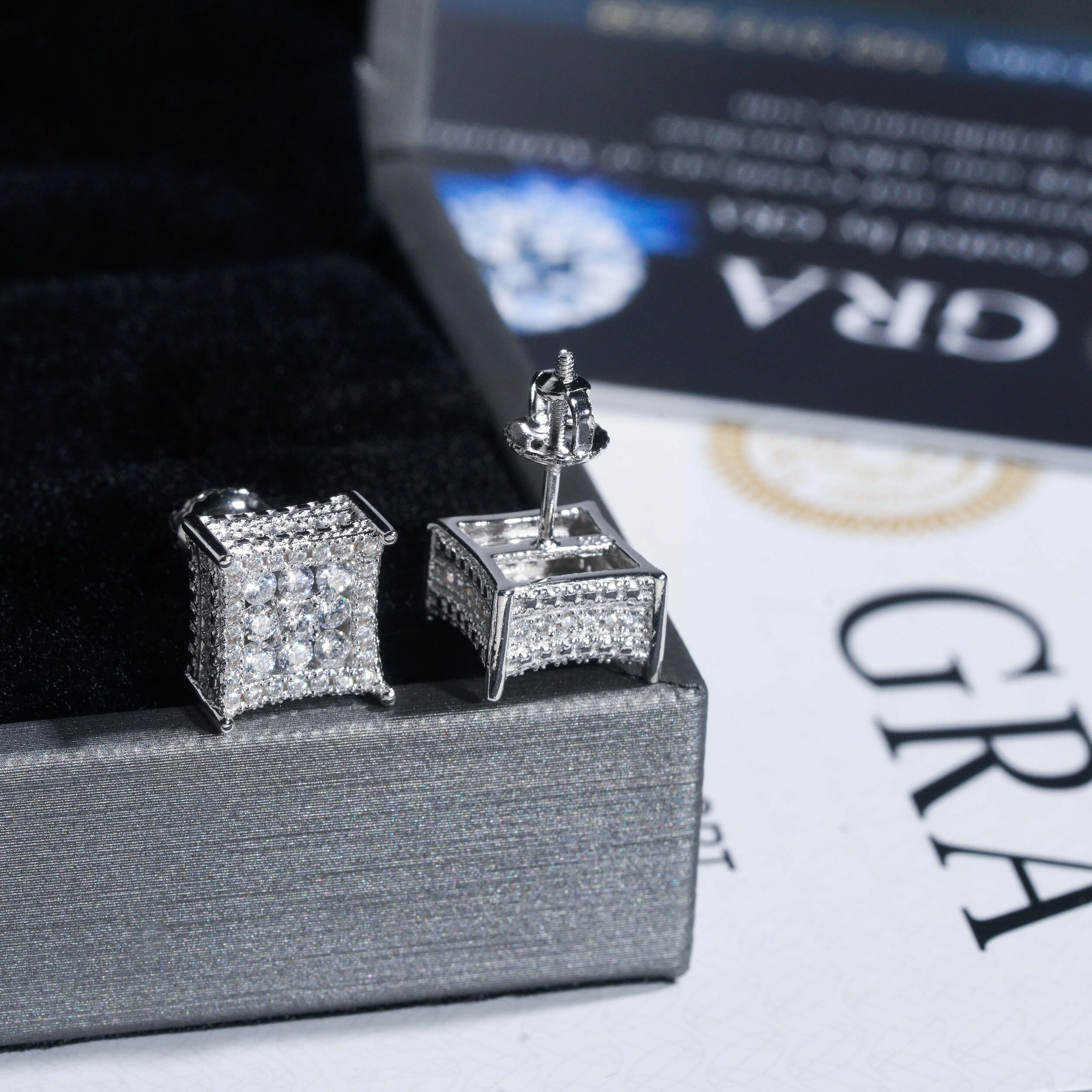
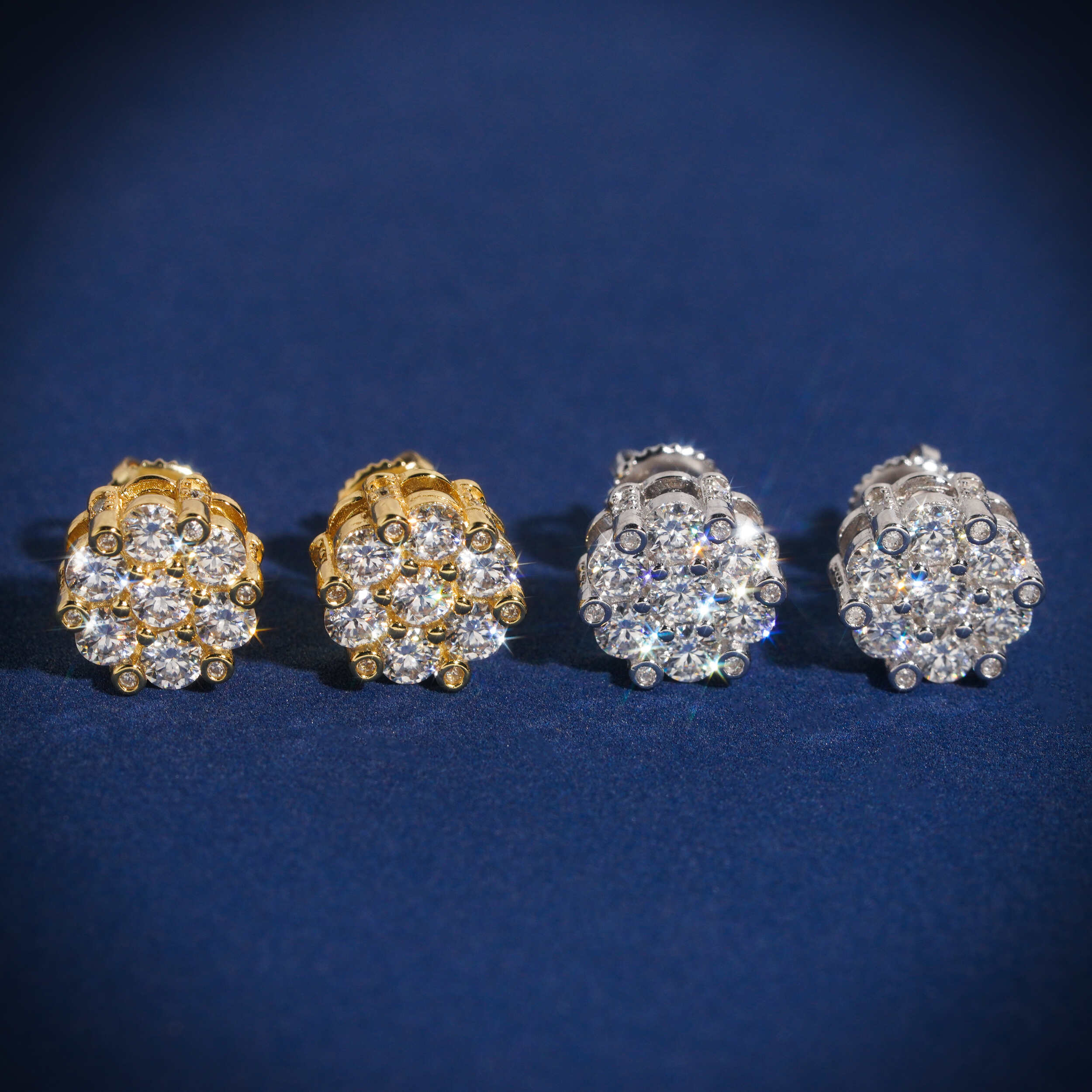
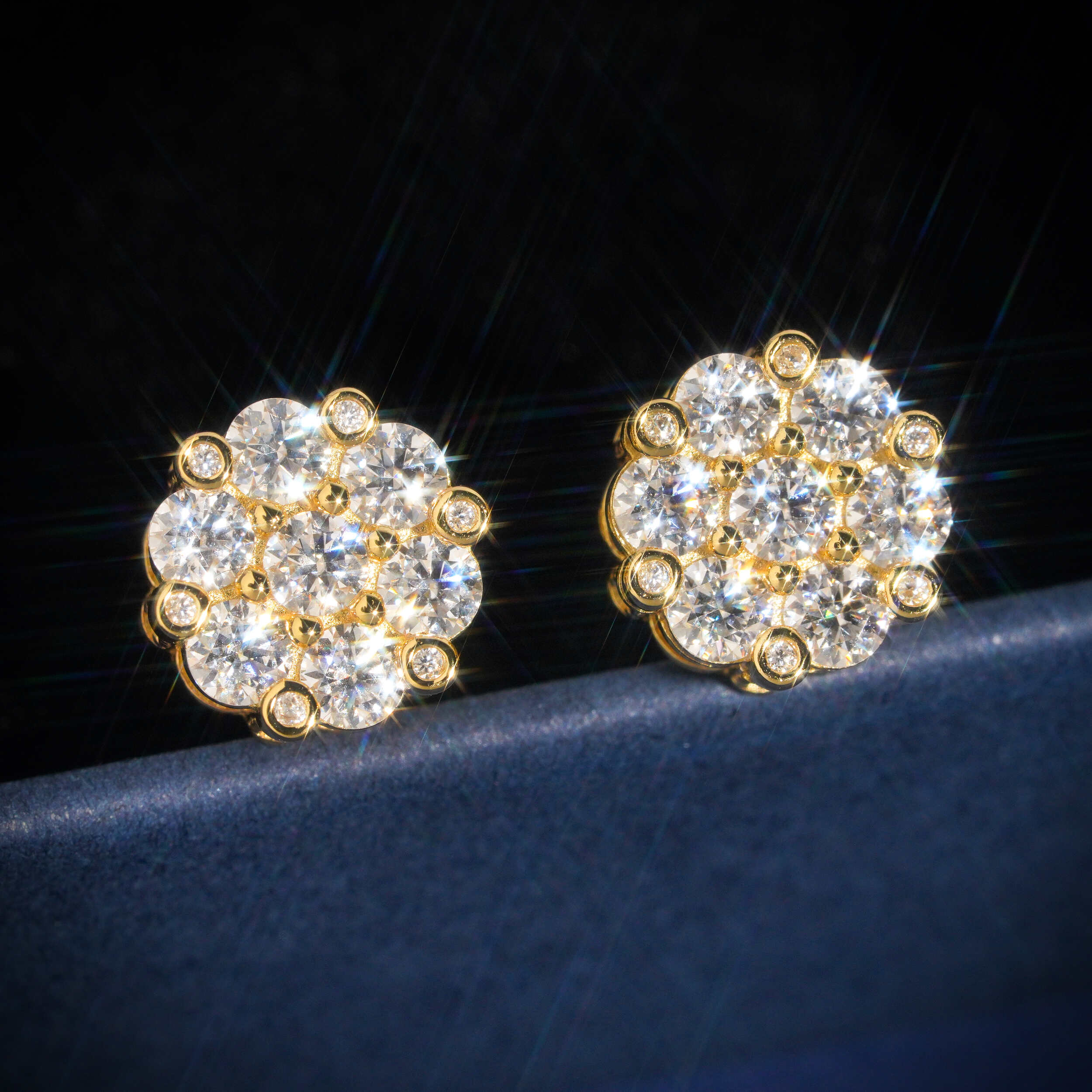
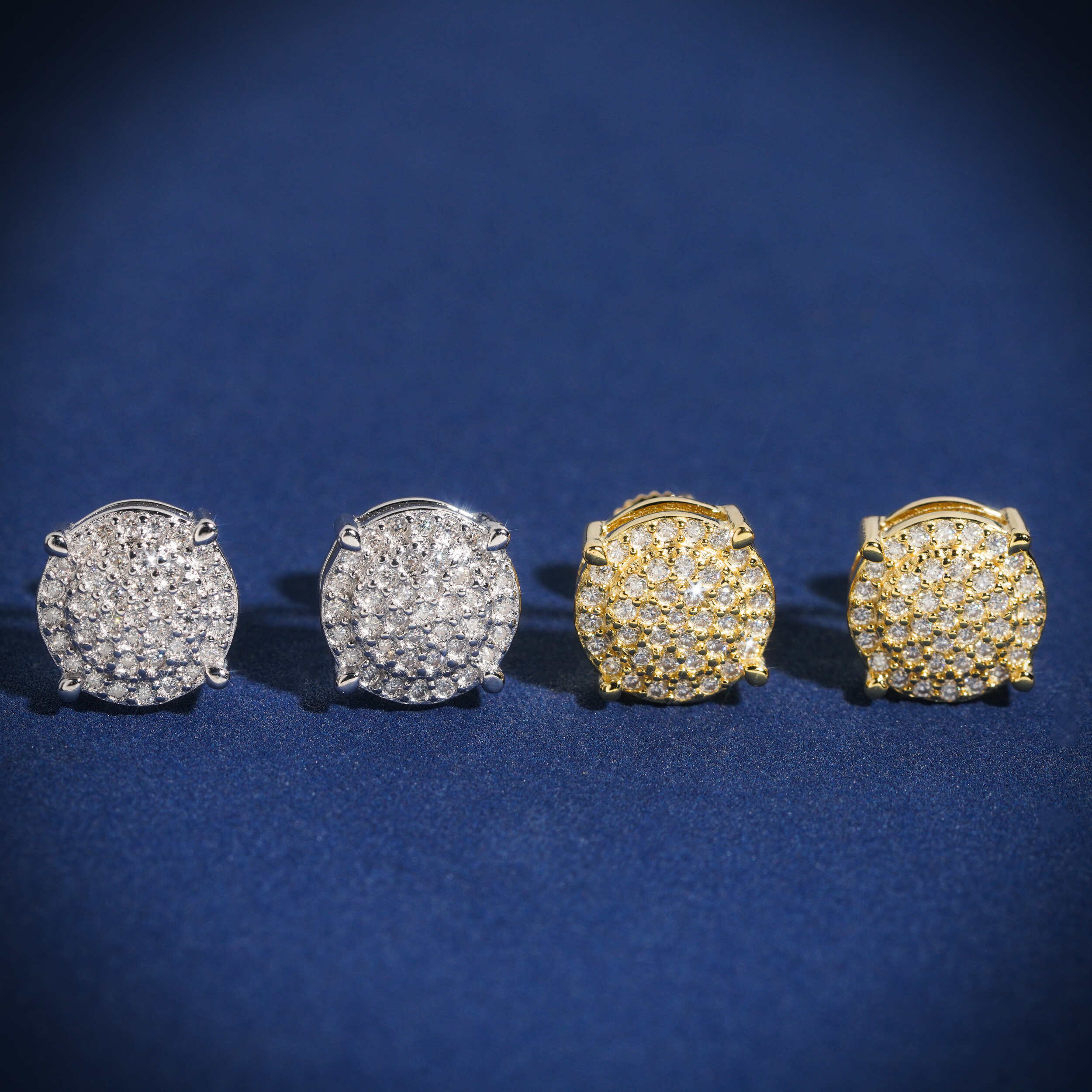
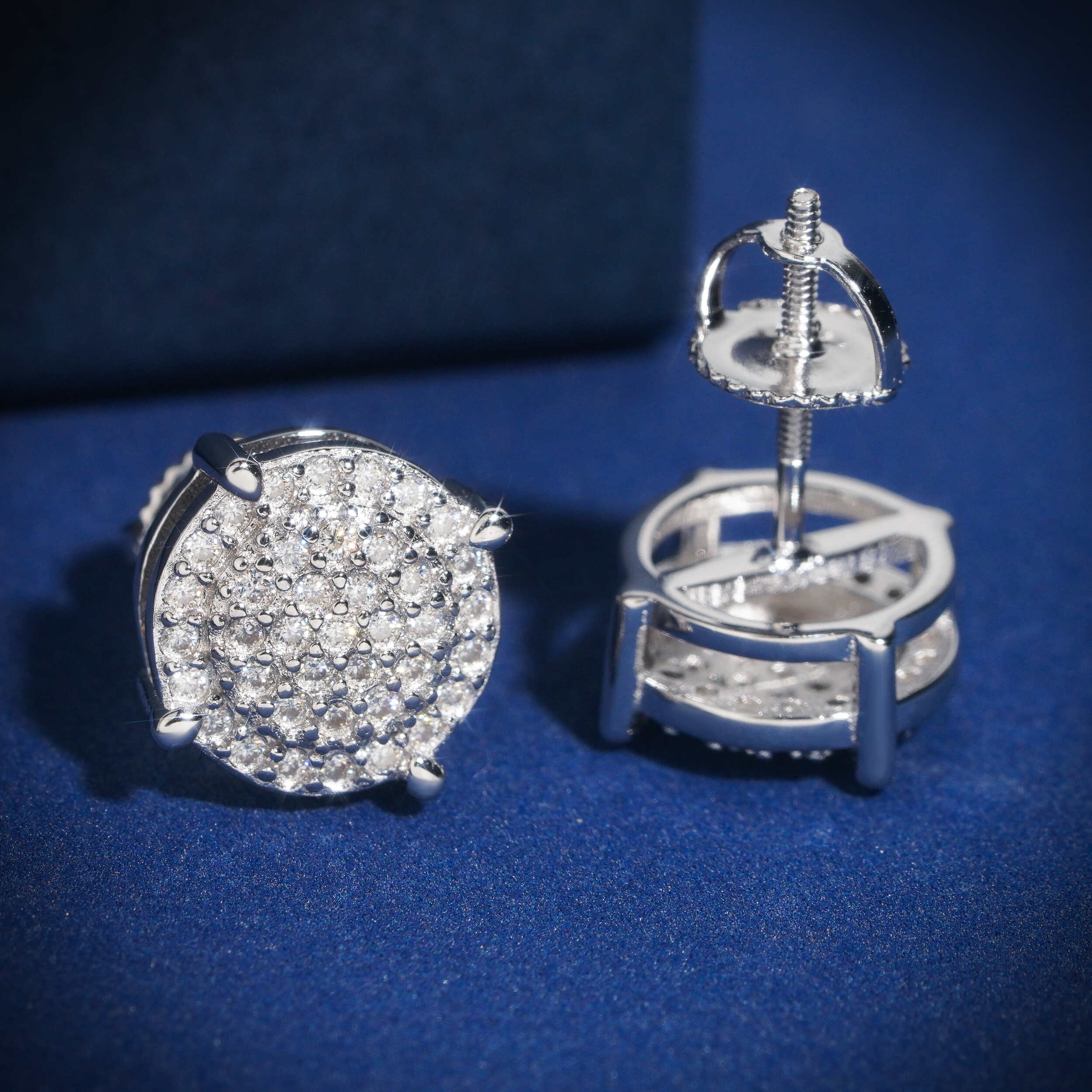
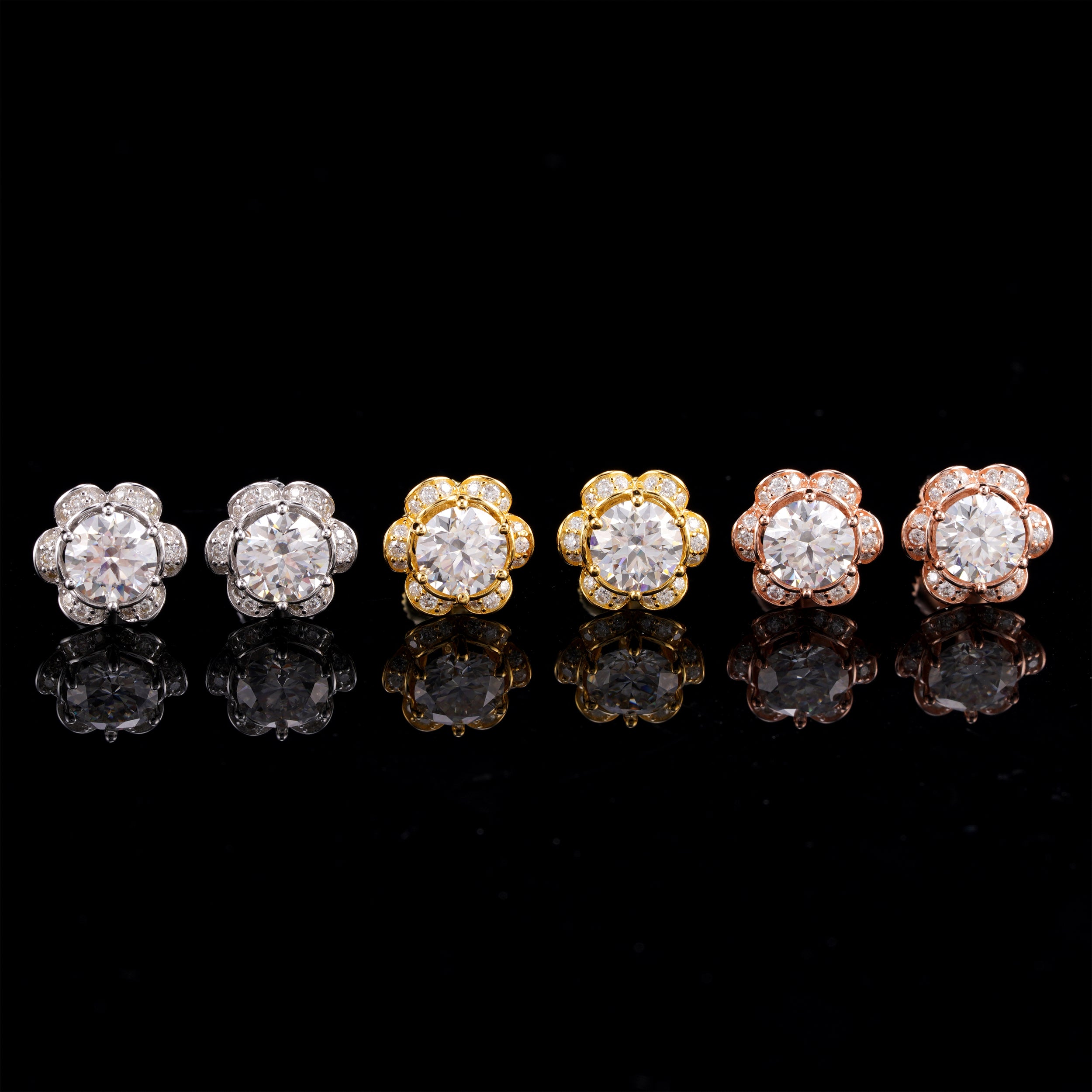
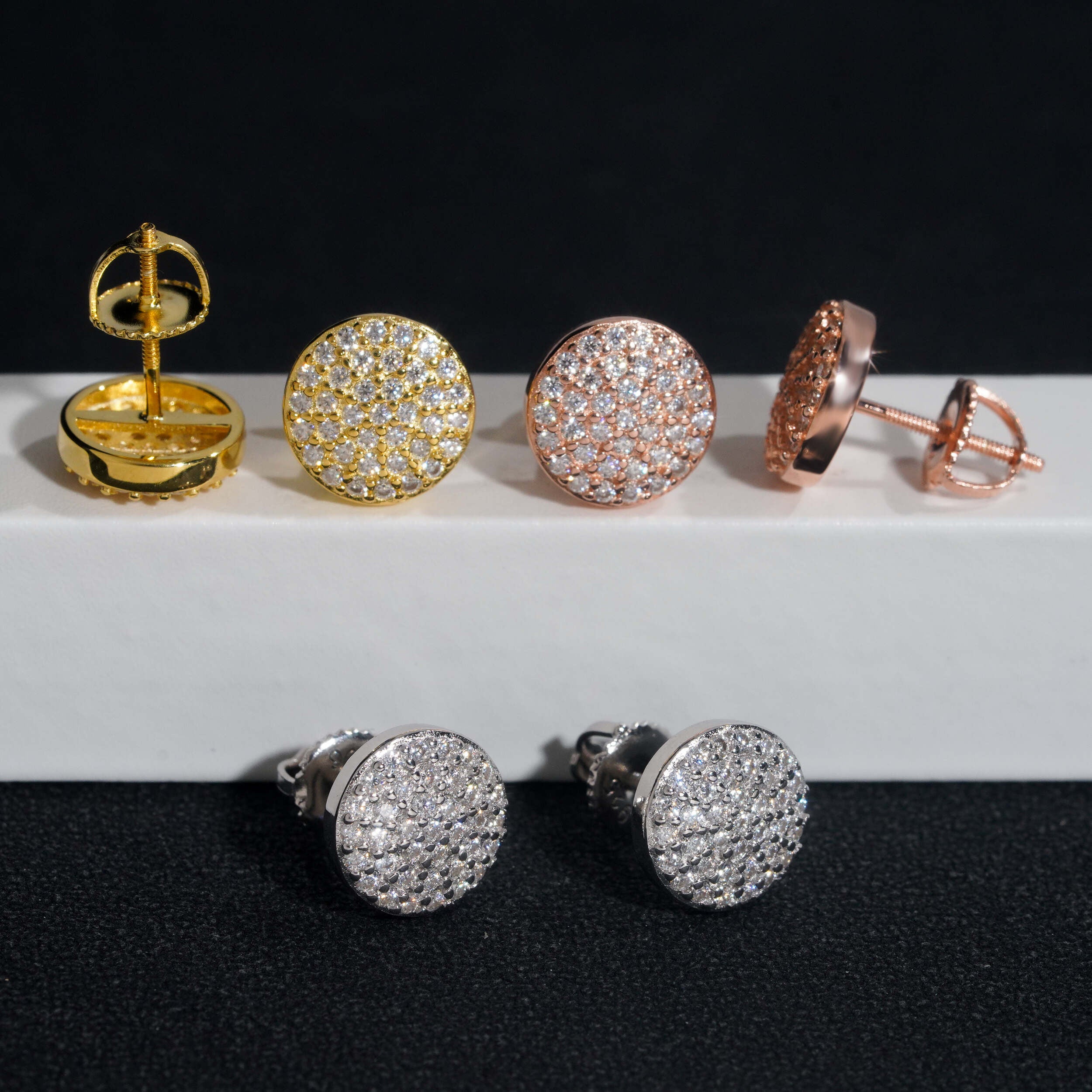
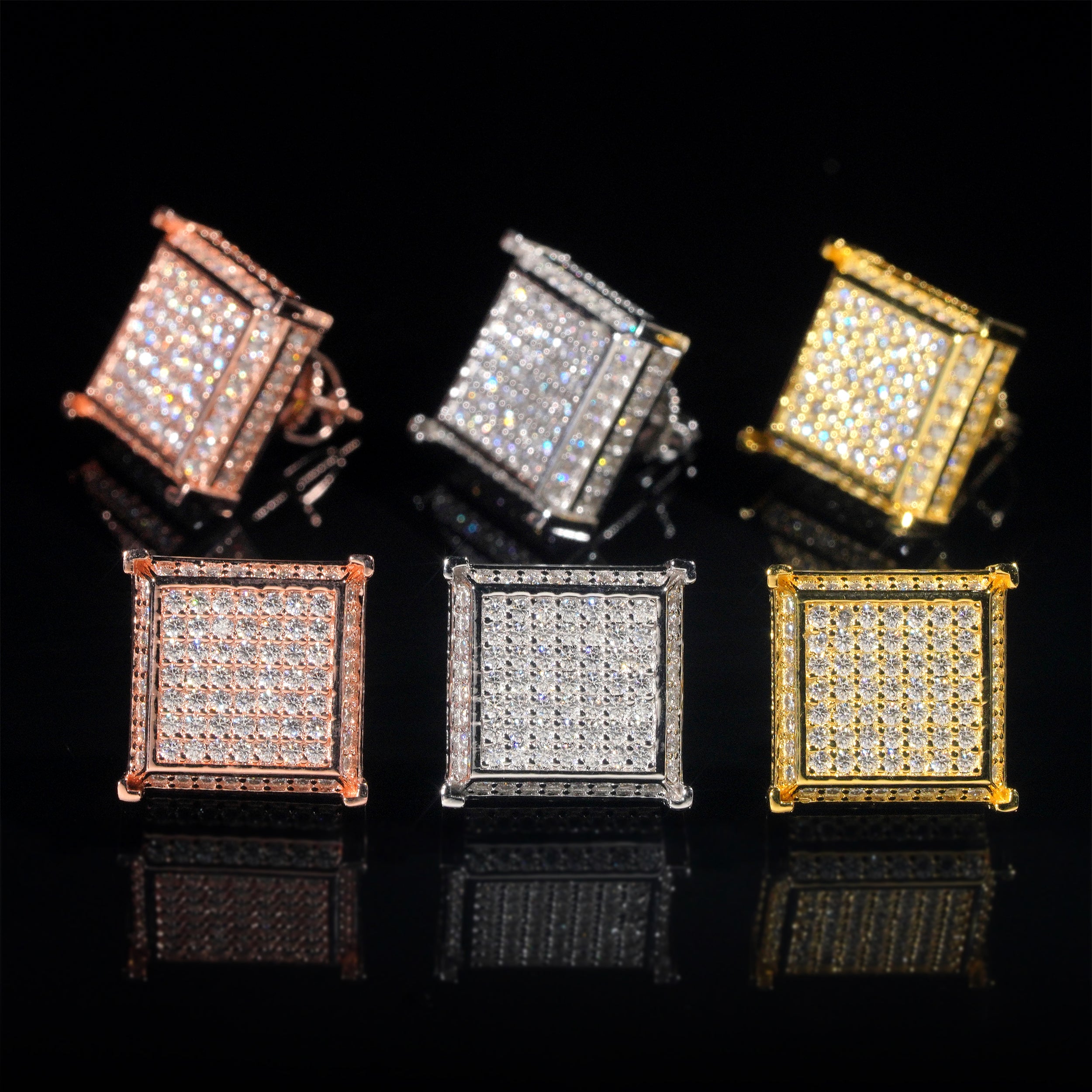
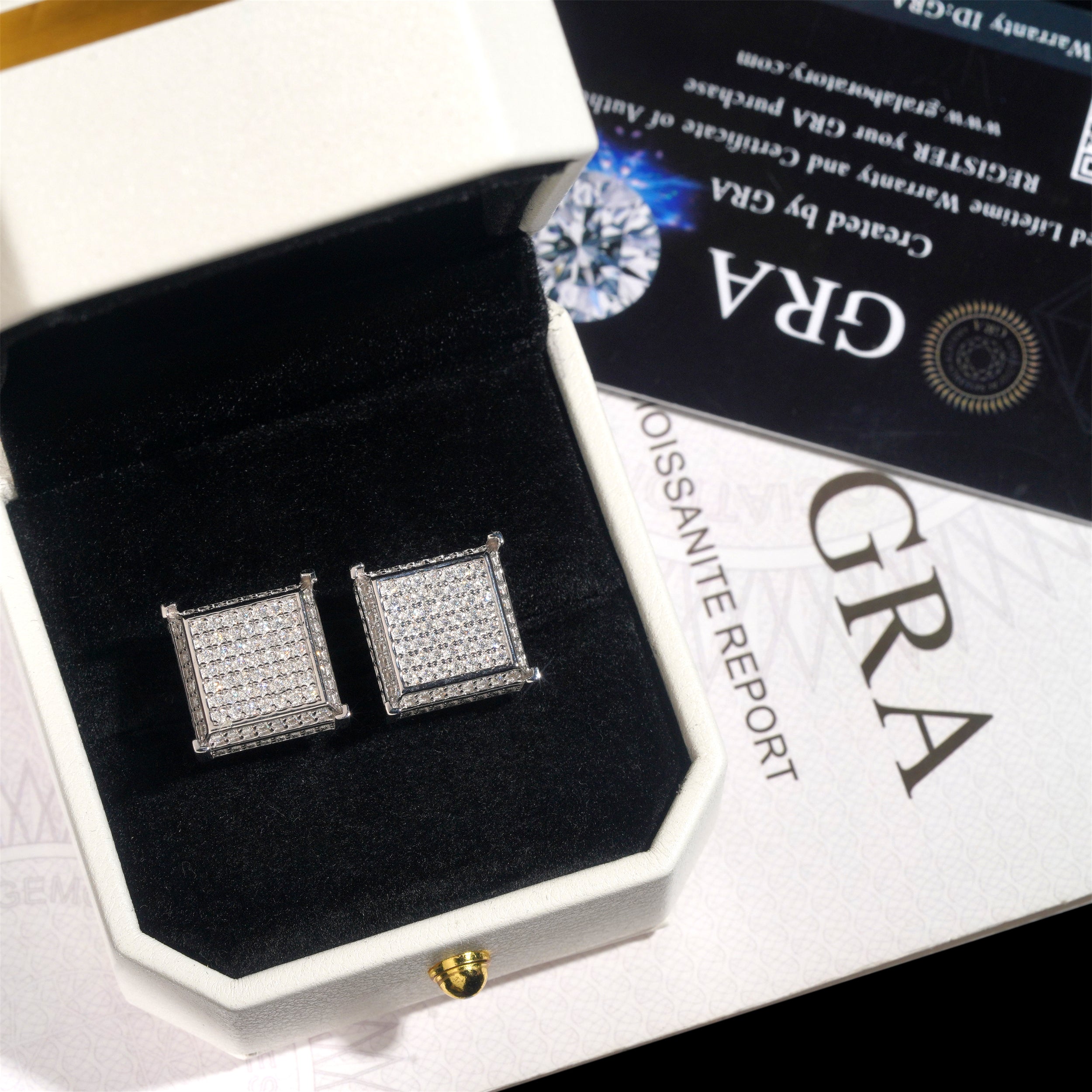
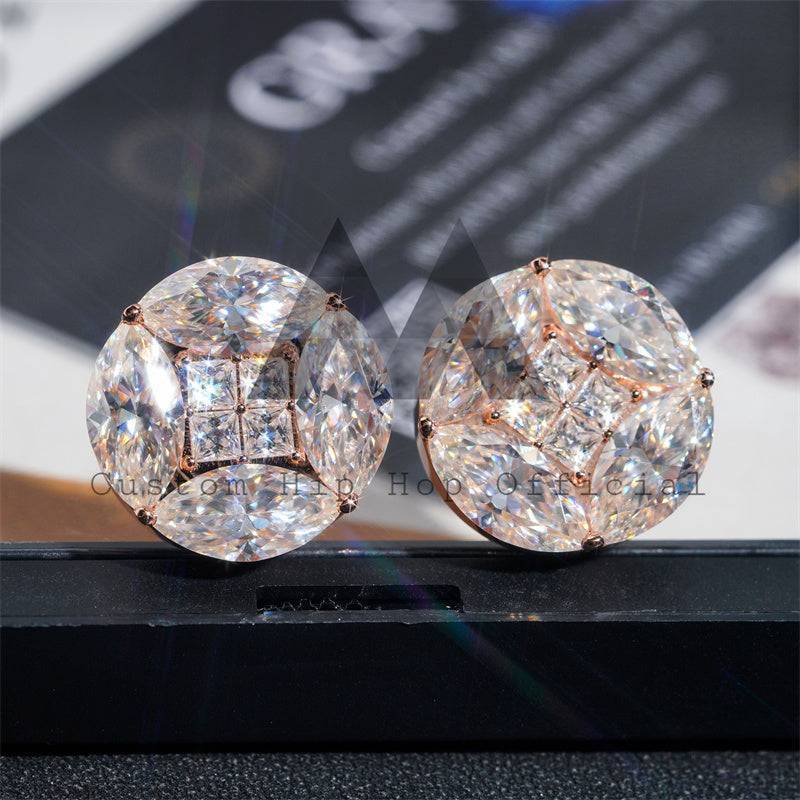
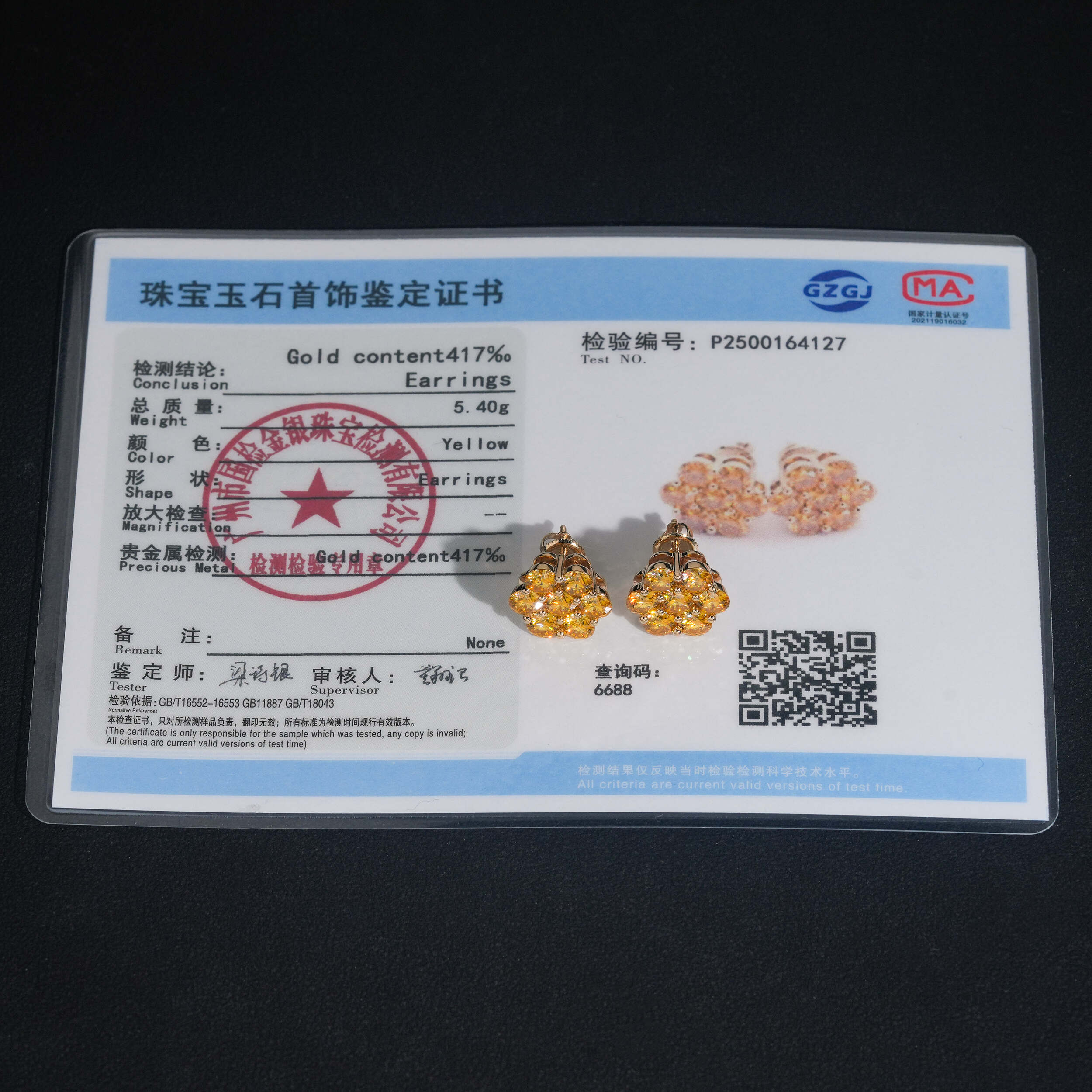
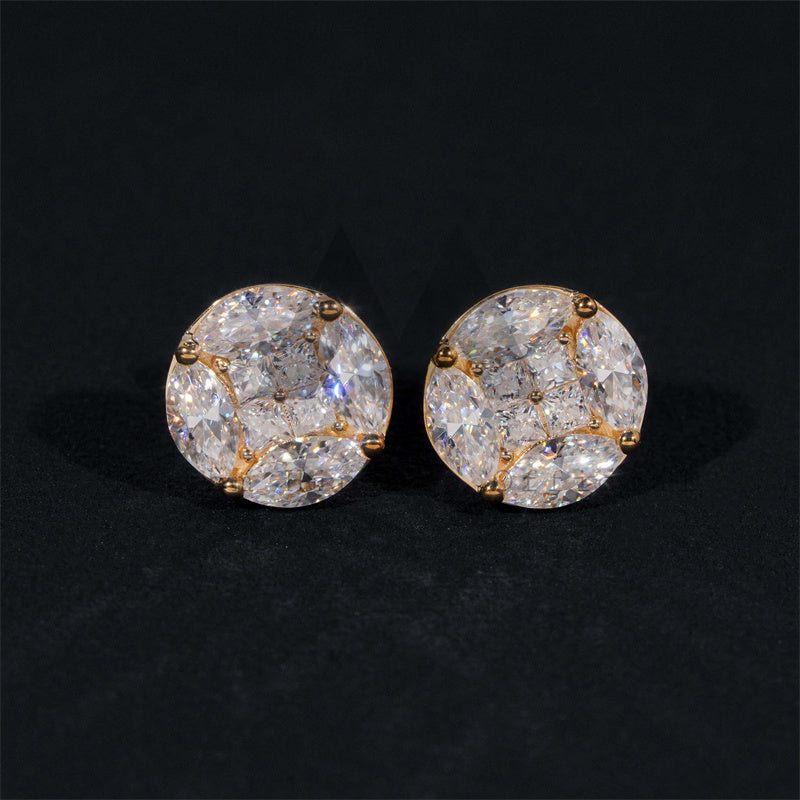
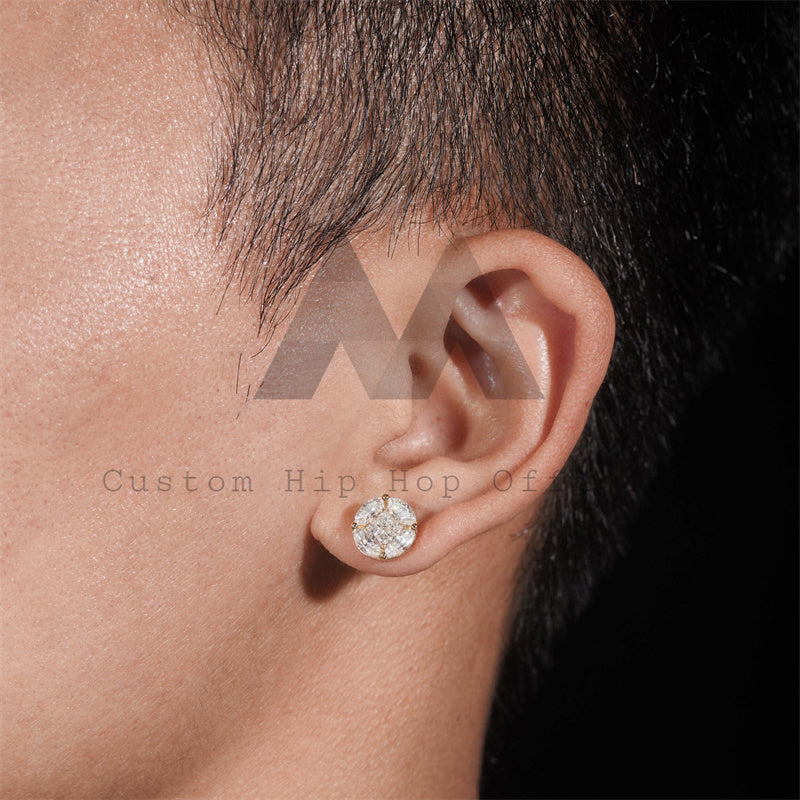
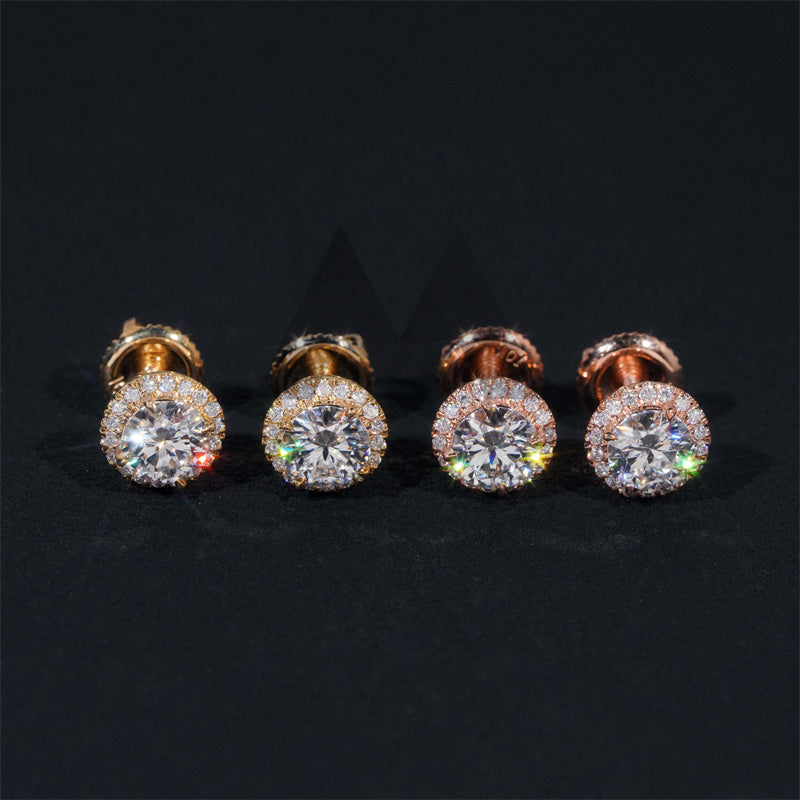
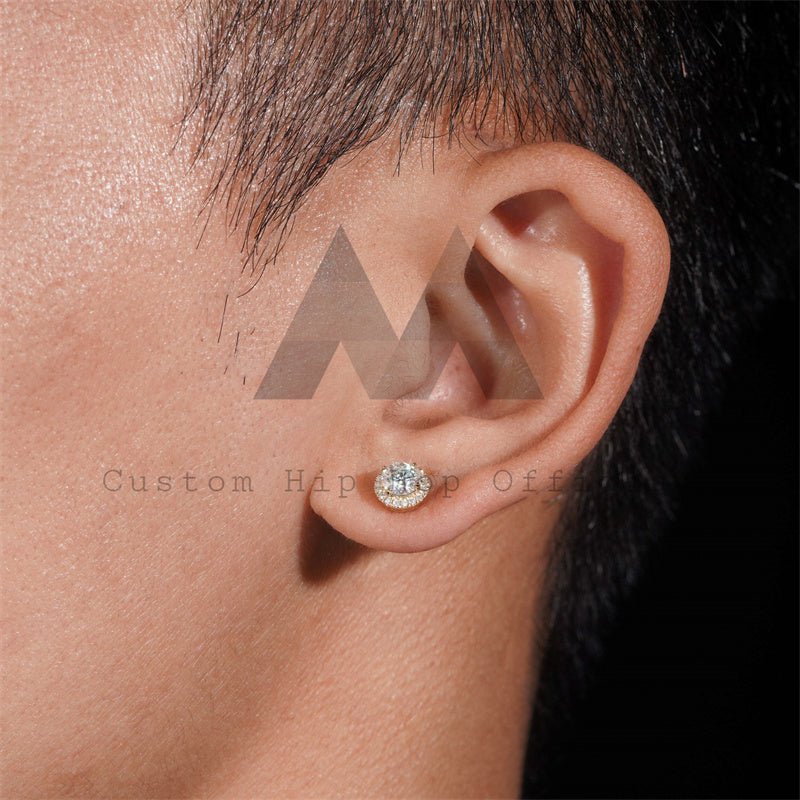
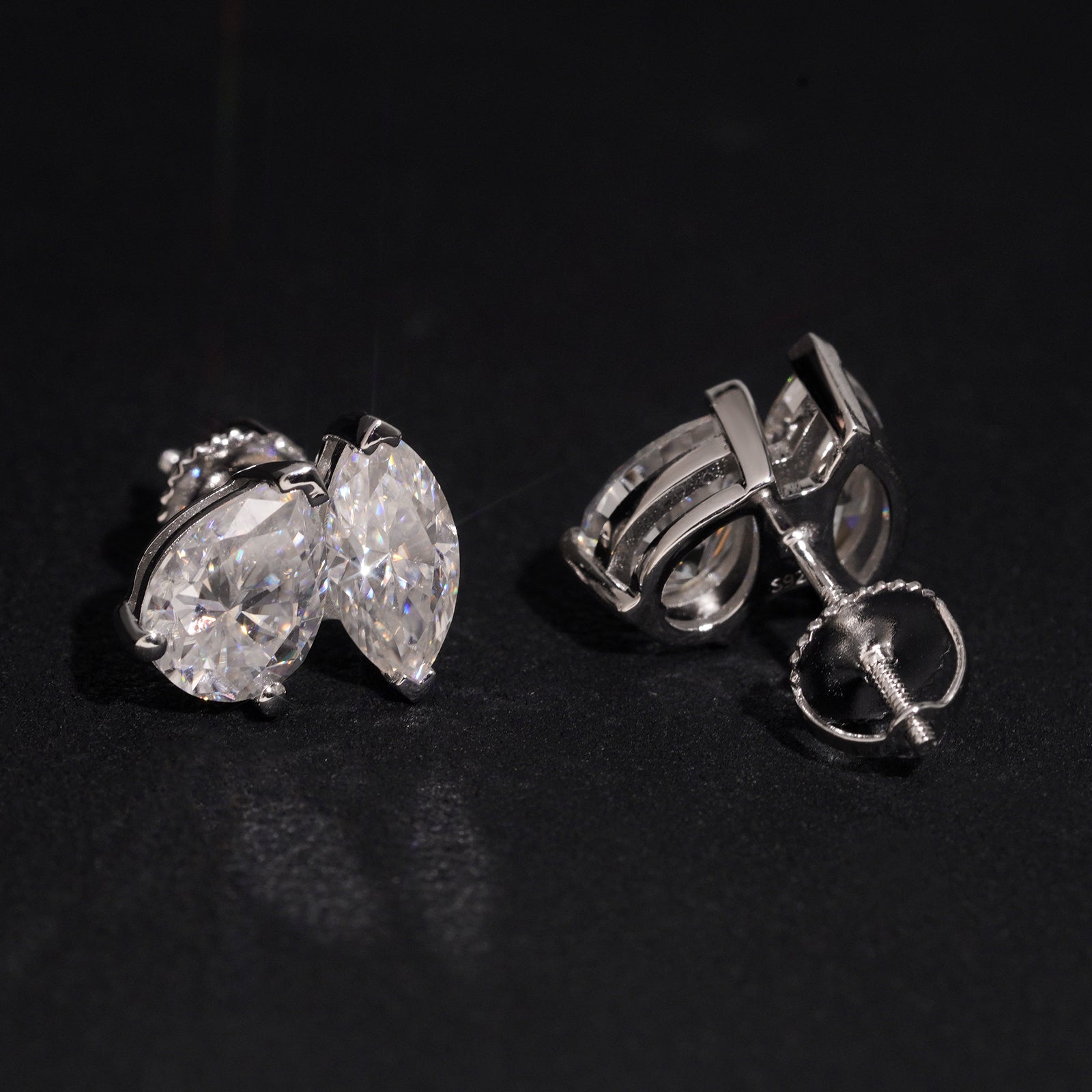
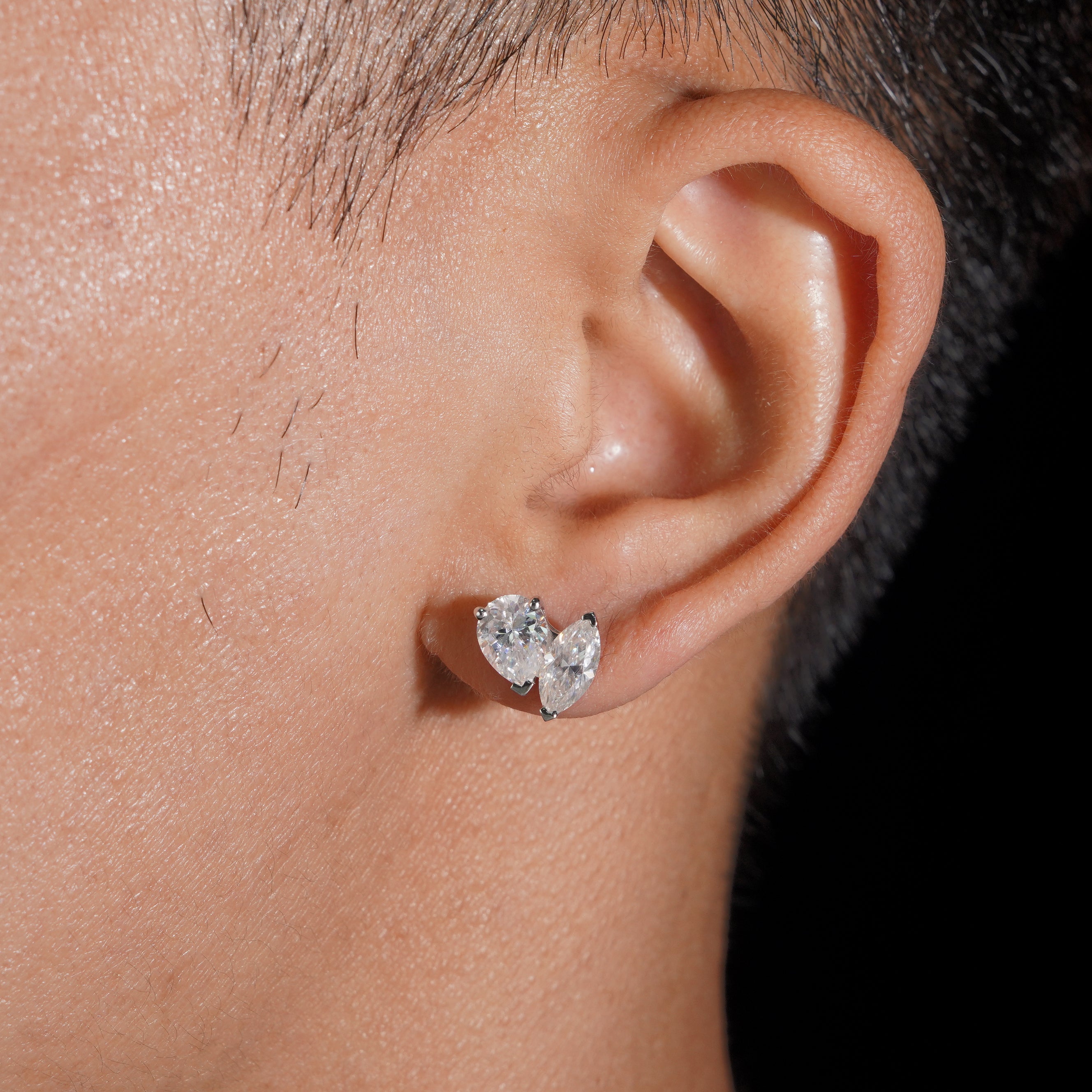
What Makes These Moissanite Earrings Different
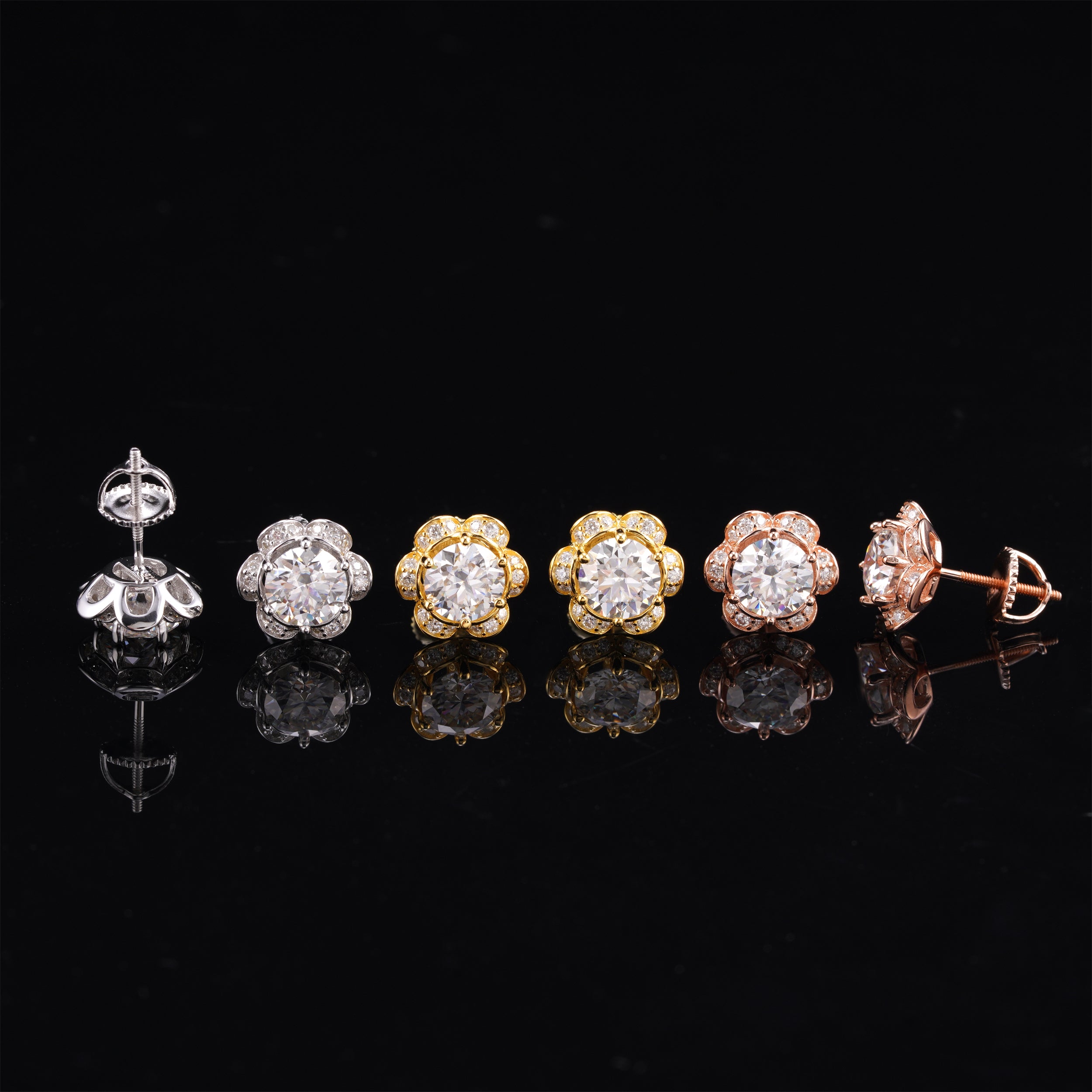
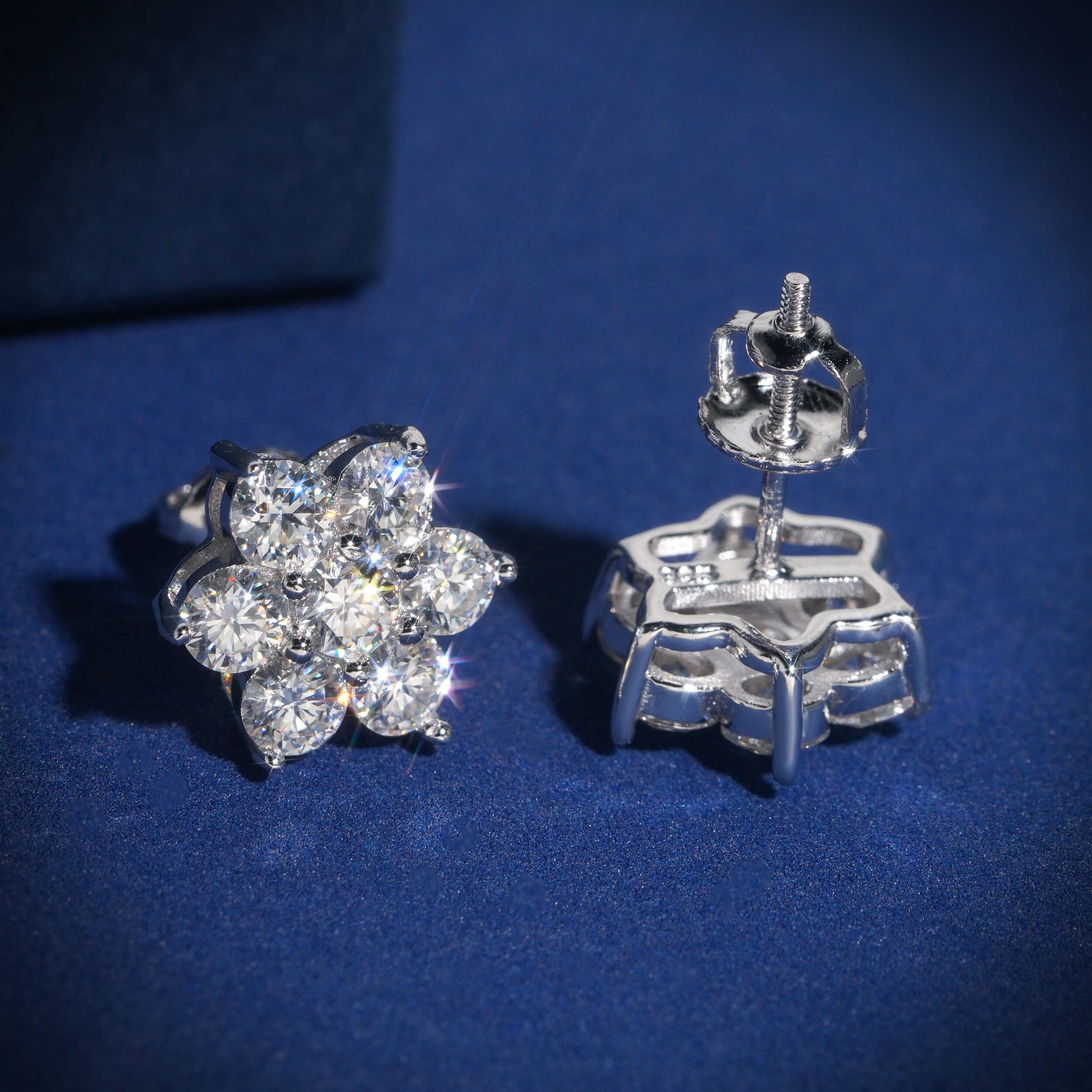
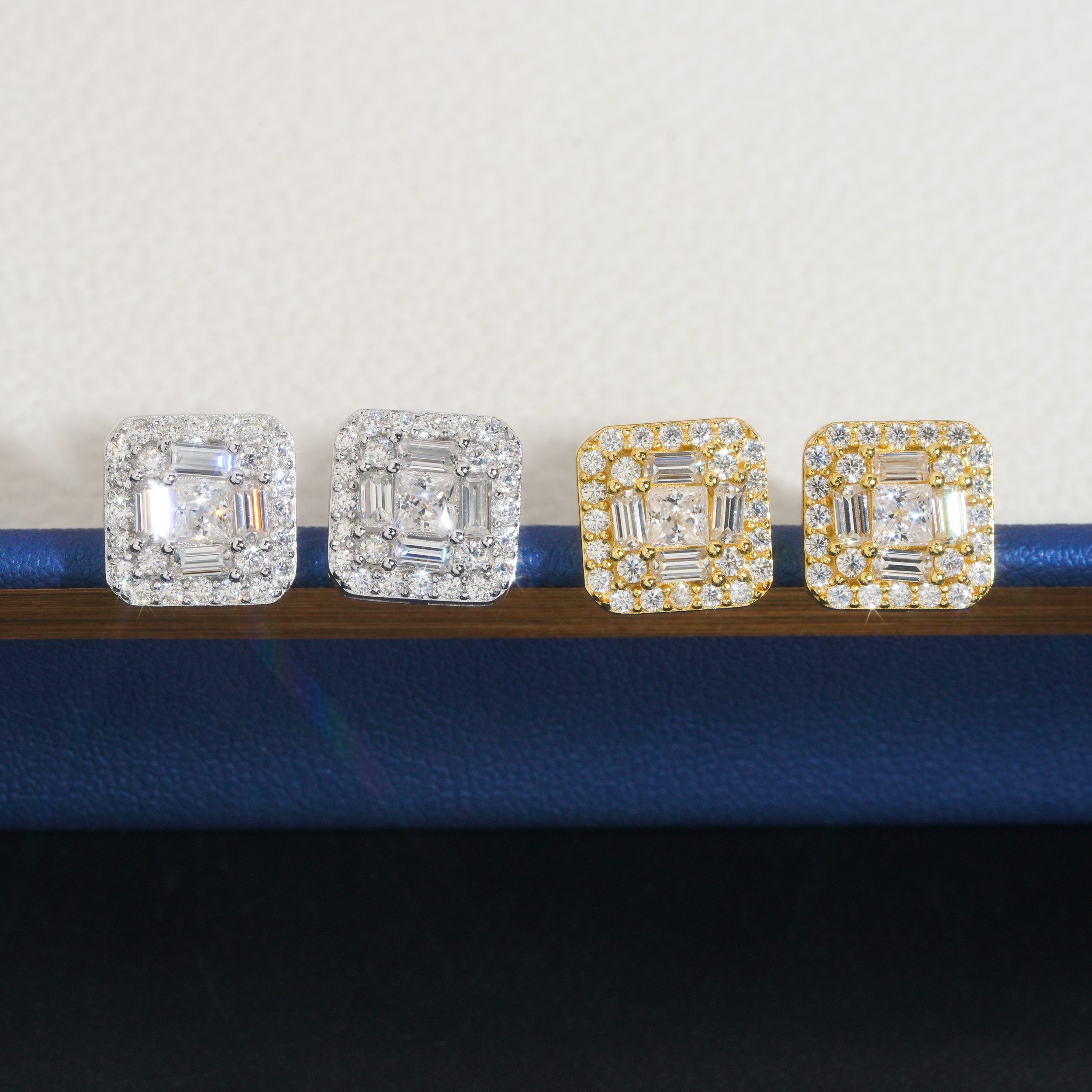
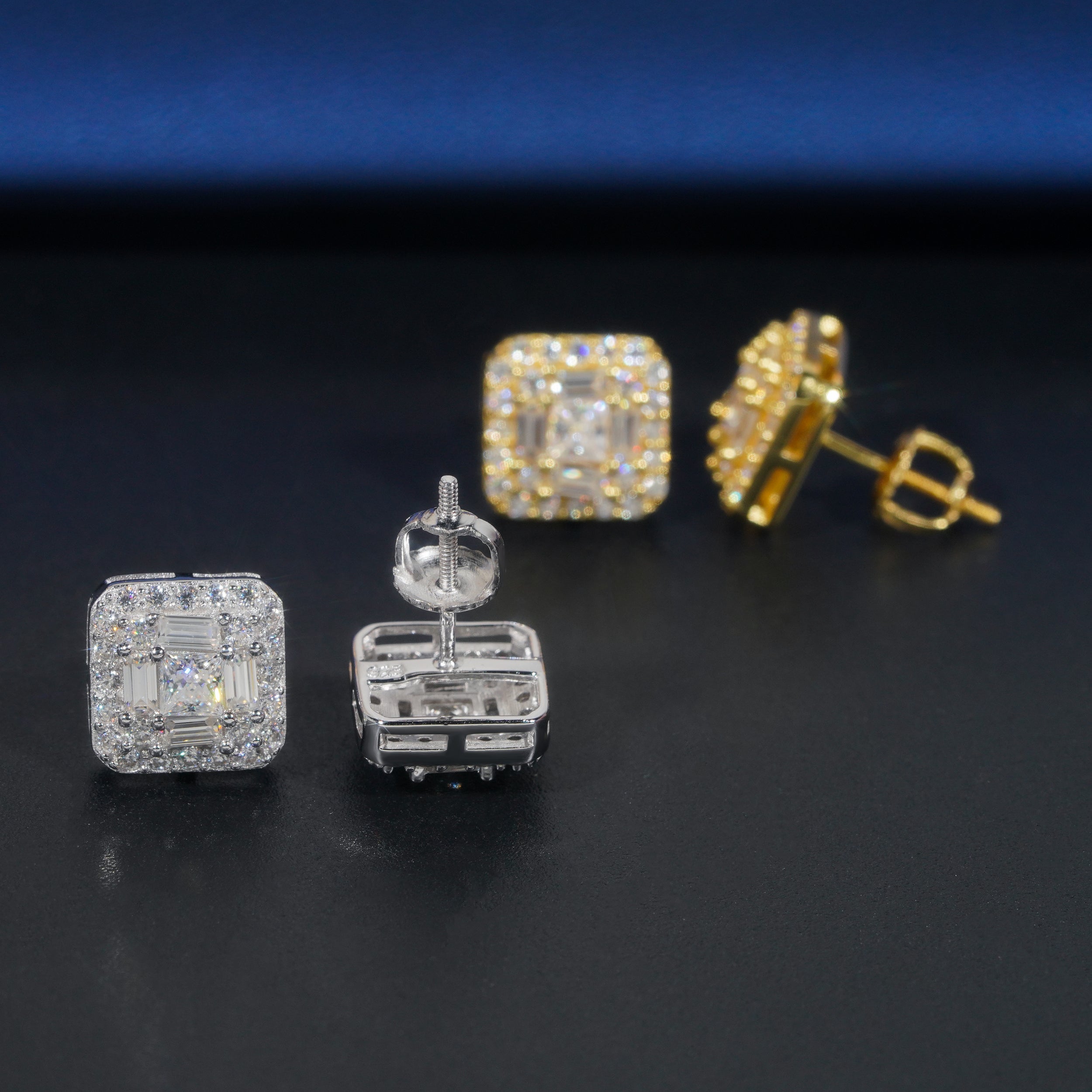
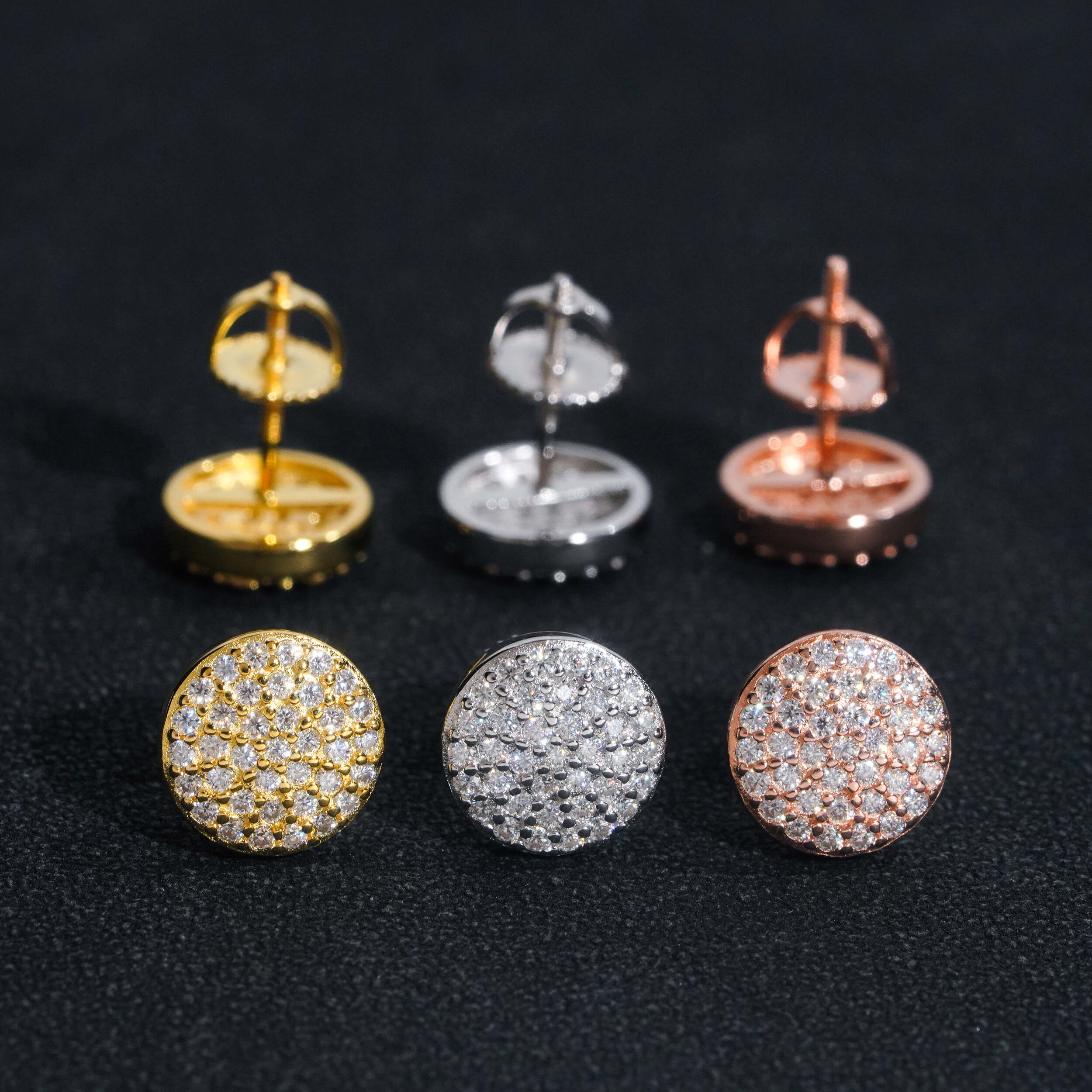
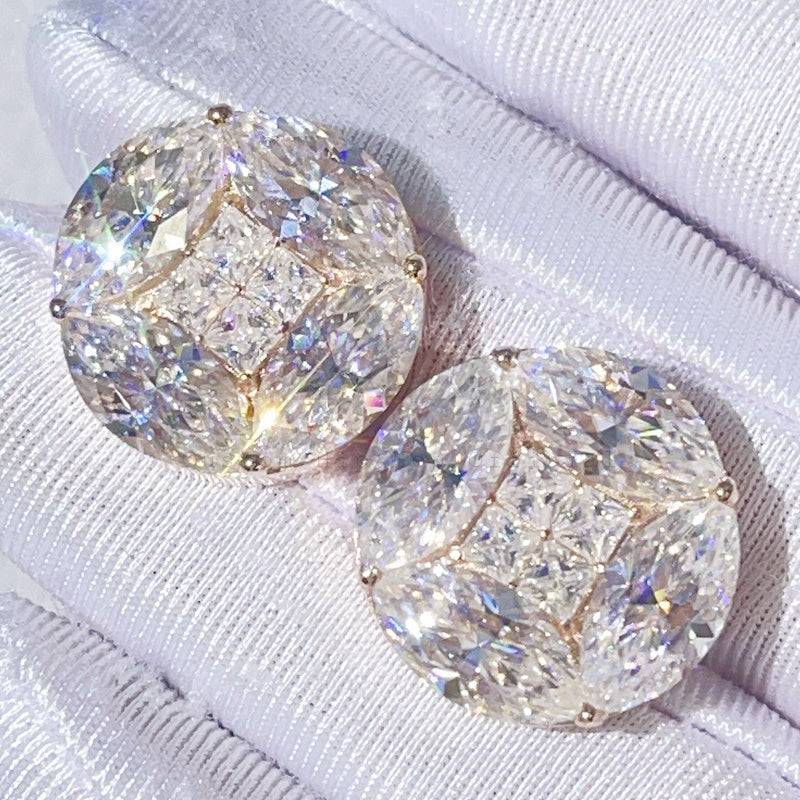
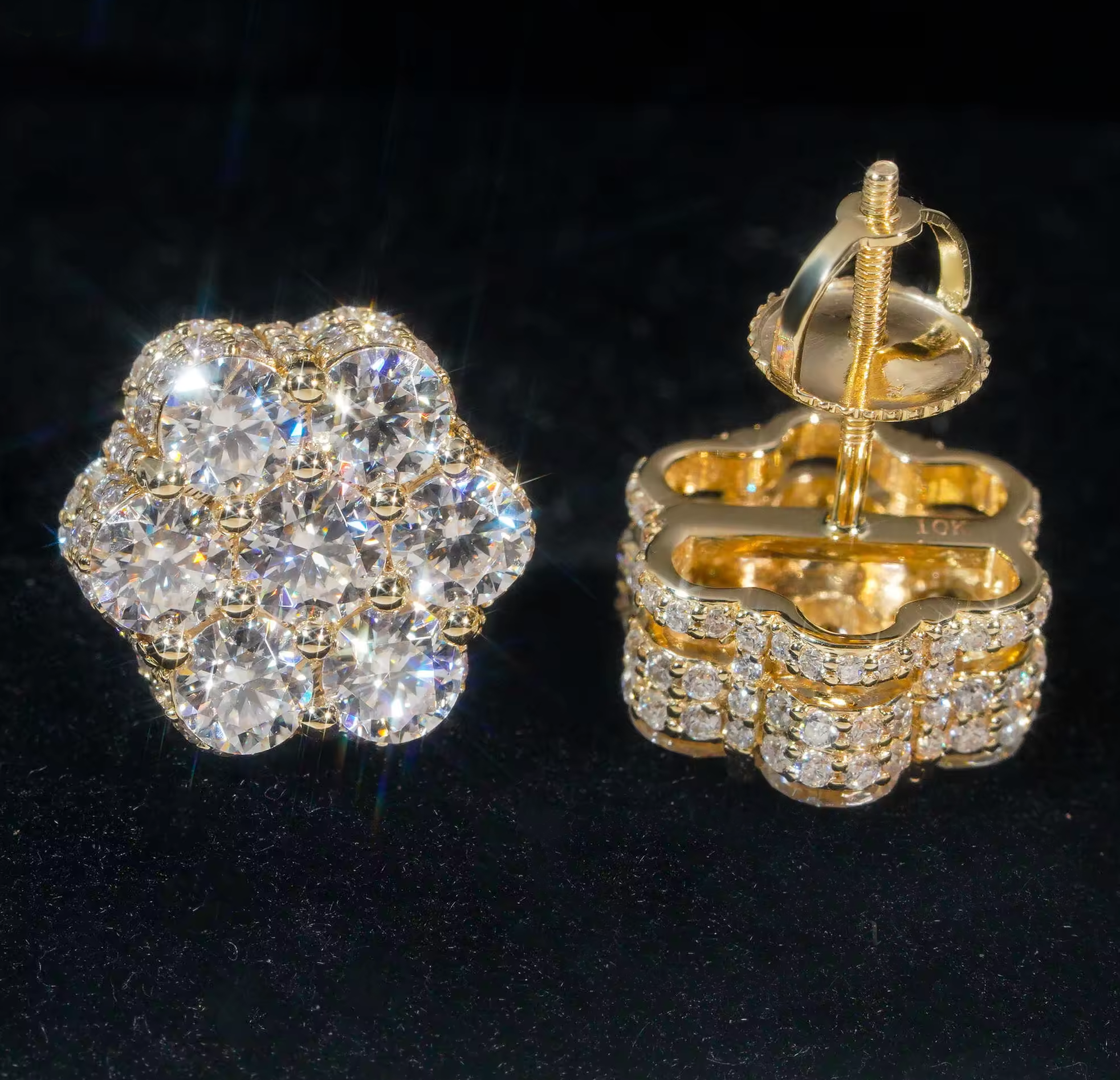
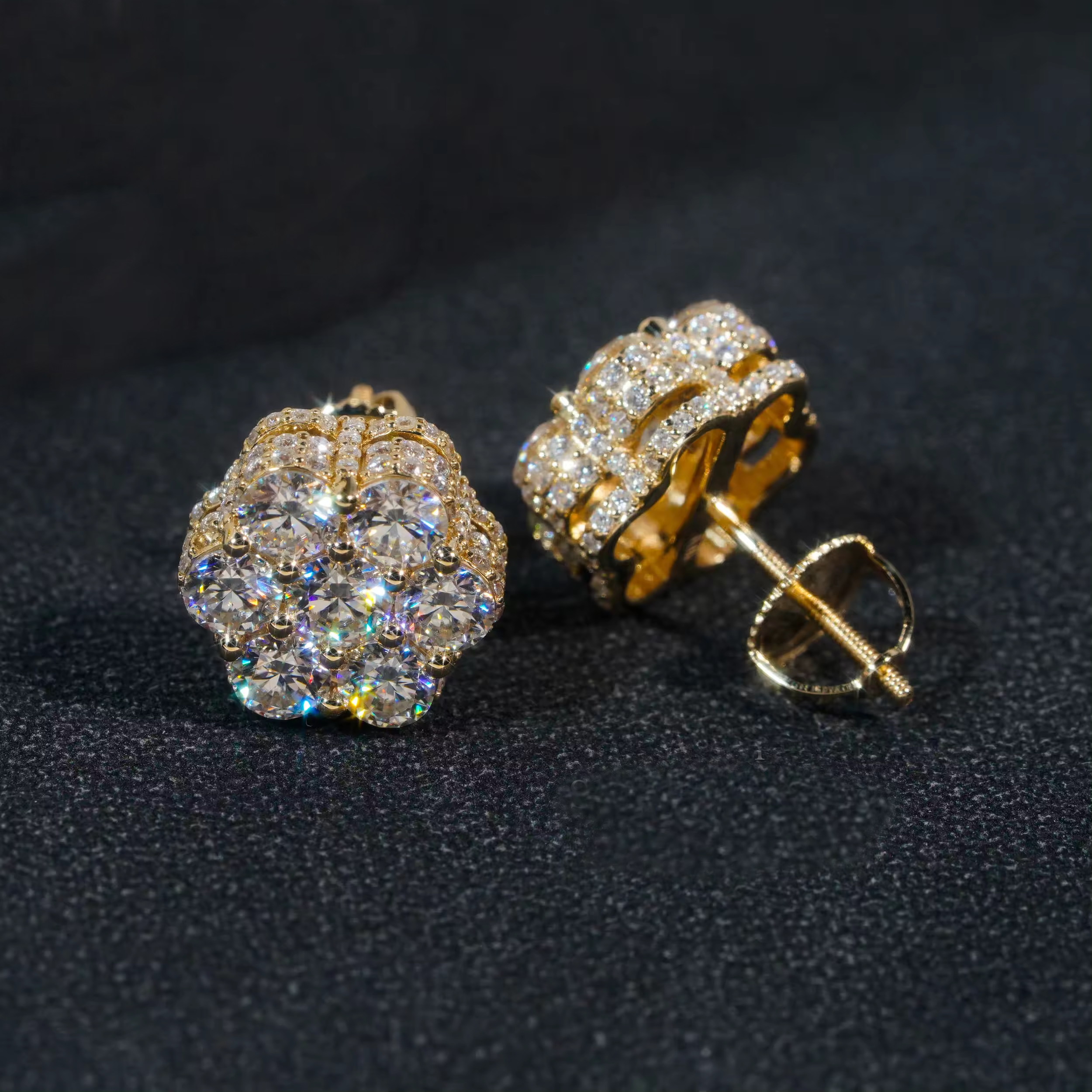
Three things: stones cut to throw more fire than a diamond of the same size, screw-back fastenings on most of the studs, and a GRA report in nearly every box. The range runs from 3MM solitaires you can wear to work up to 18MM statement pairs, in 925 sterling silver with a smaller run in 10K gold. Everything below is grouped by how you'd actually shop it.
Moissanite Stud Earrings
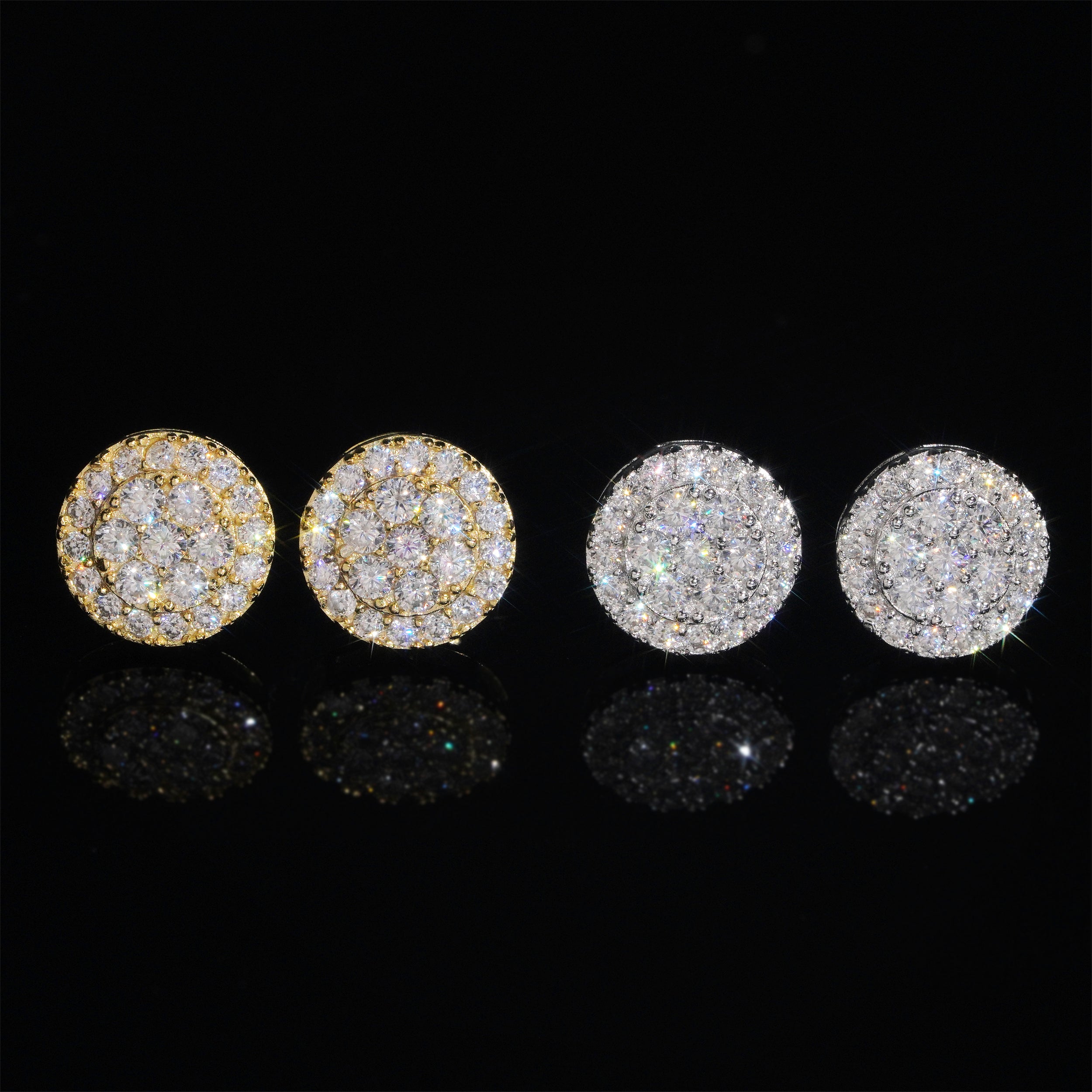
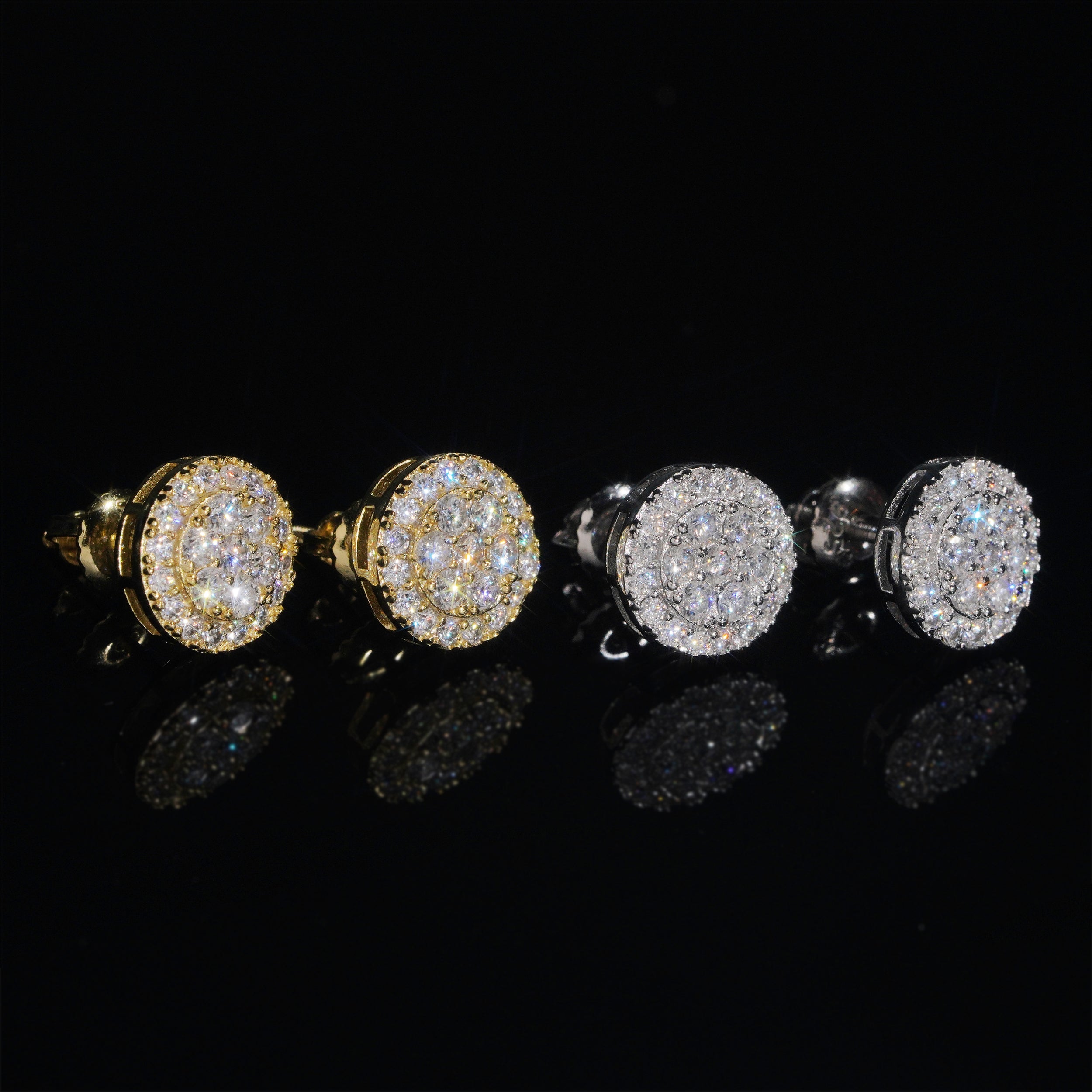
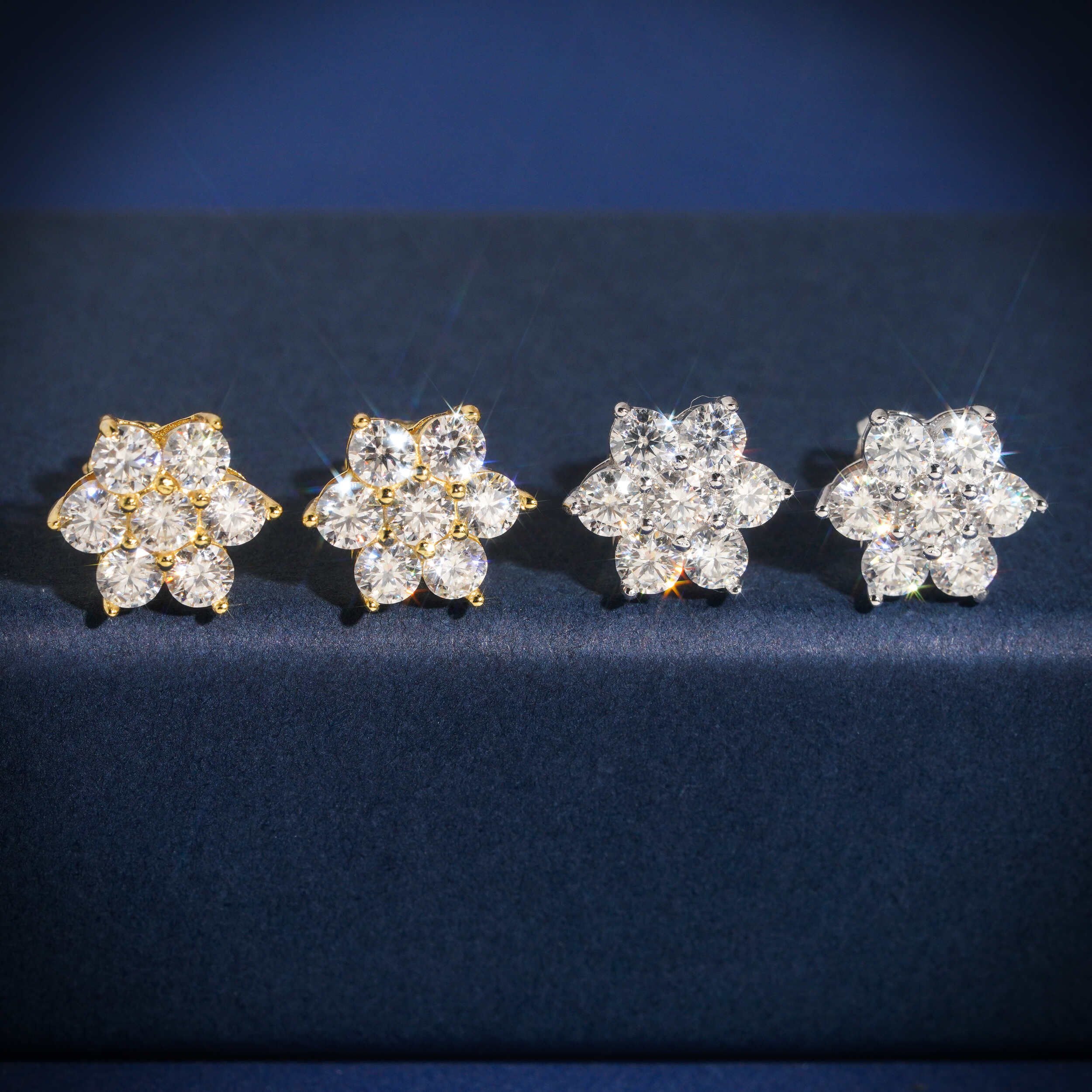
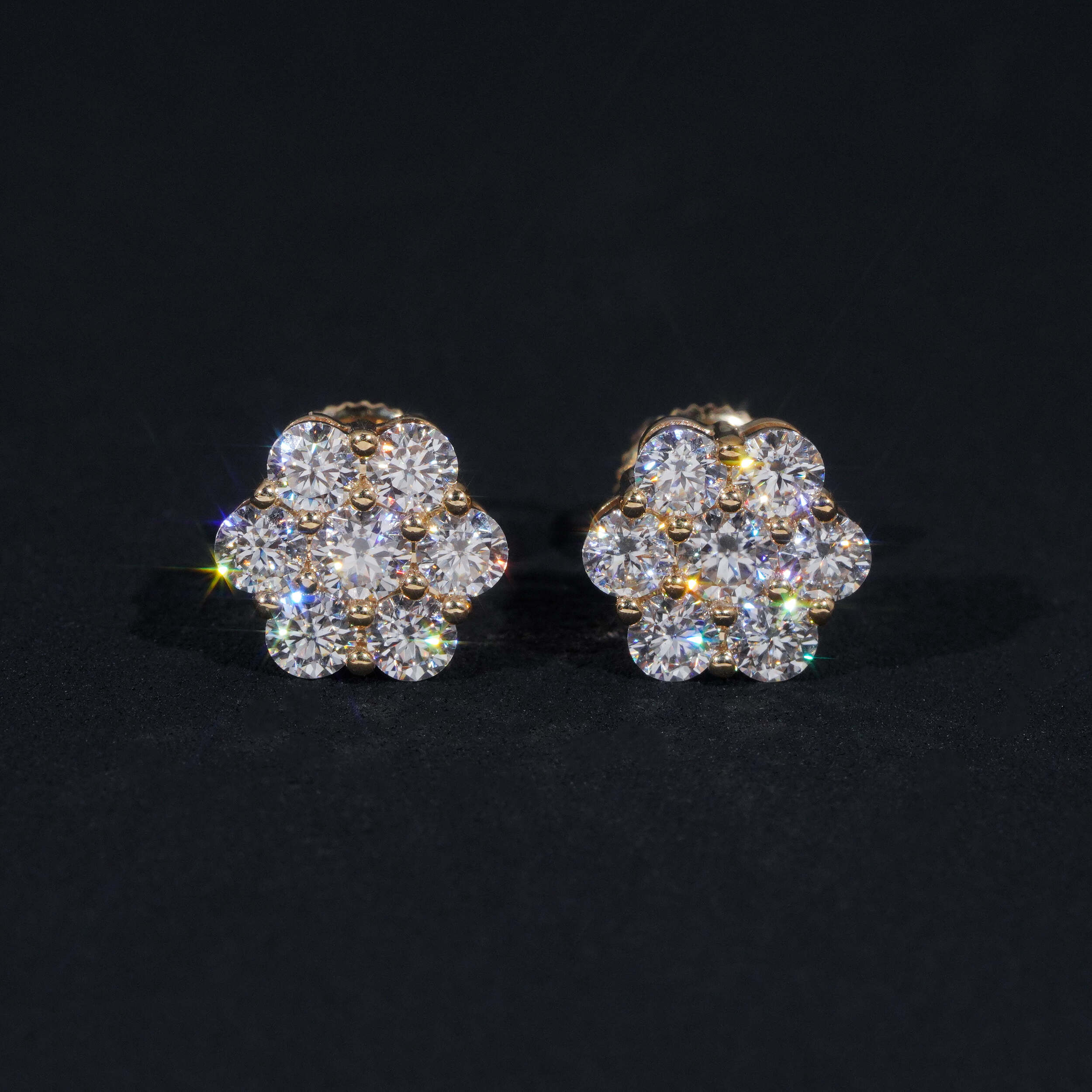
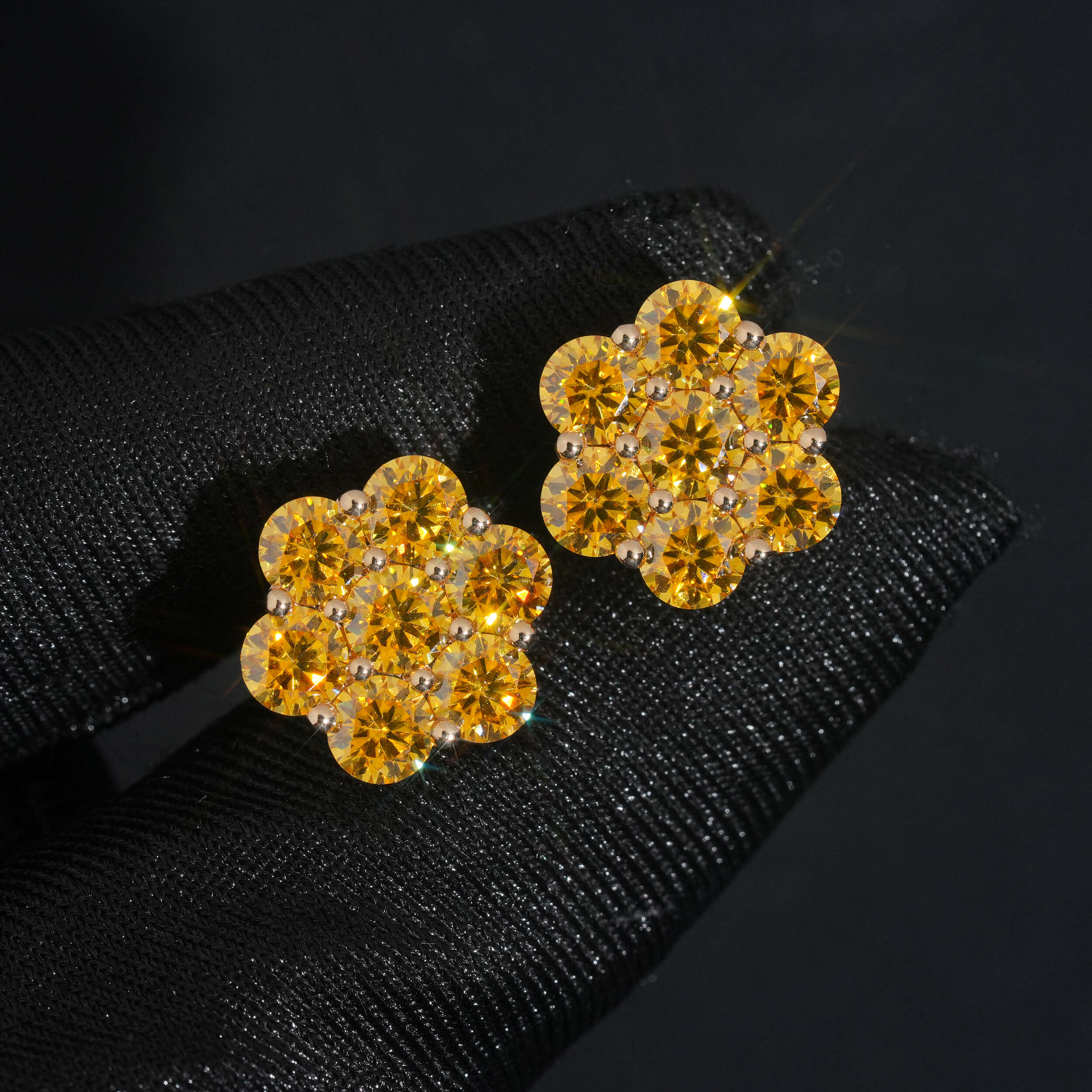
Studs are the backbone of this collection — more than half of everything here is a stud, and they carry the widest spread of cuts. Round brilliant and halo settings do the classic sparkle. Asscher and baguette are step cuts, meaning fewer and larger facets that draw clean lines instead of scattering light. Cluster settings group smaller stones into one bright face, so you get presence without paying for a single large stone.
That variety matters more than it sounds. The same 8MM measurement can read as a quiet everyday stud or as a fully iced statement depending entirely on which cut sits in it. Pick the cut first, then the size.
Moissanite Earrings for Men
The men's side runs wider and brighter: bigger faces on average, and a noticeably higher share of the fully-iced finishes. Past 10MM the weight is real, and that is where a threaded post earns its keep.
Nearly every pair here is cut to VVS clarity — the grade that keeps a stone reading clean under direct light instead of milky. It is also the line between these and the cubic zirconia that looks identical in a photo; the moissanite versus diamond breakdown covers where the two actually part ways.
Square and princess faces hold a hard edge that round cuts soften, which is why they keep turning up on the men's side.
If you're building the whole look, the moissanite chains and pendants are the usual next stop.
Hoops and Huggies
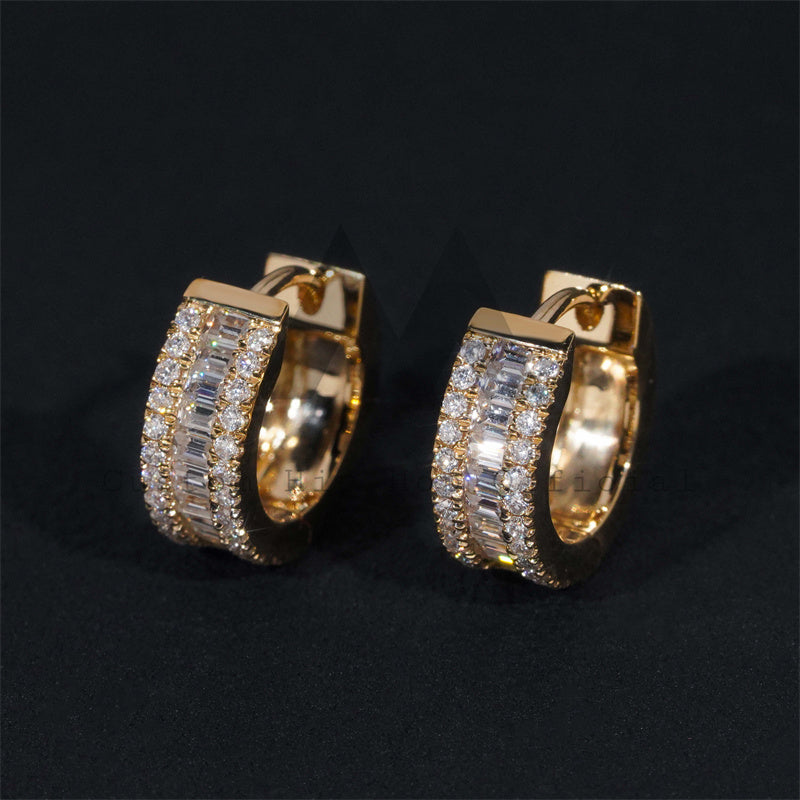
Hoops work differently from studs. They frame the lobe rather than sitting flat against it, which changes how the same measurement reads on the ear.
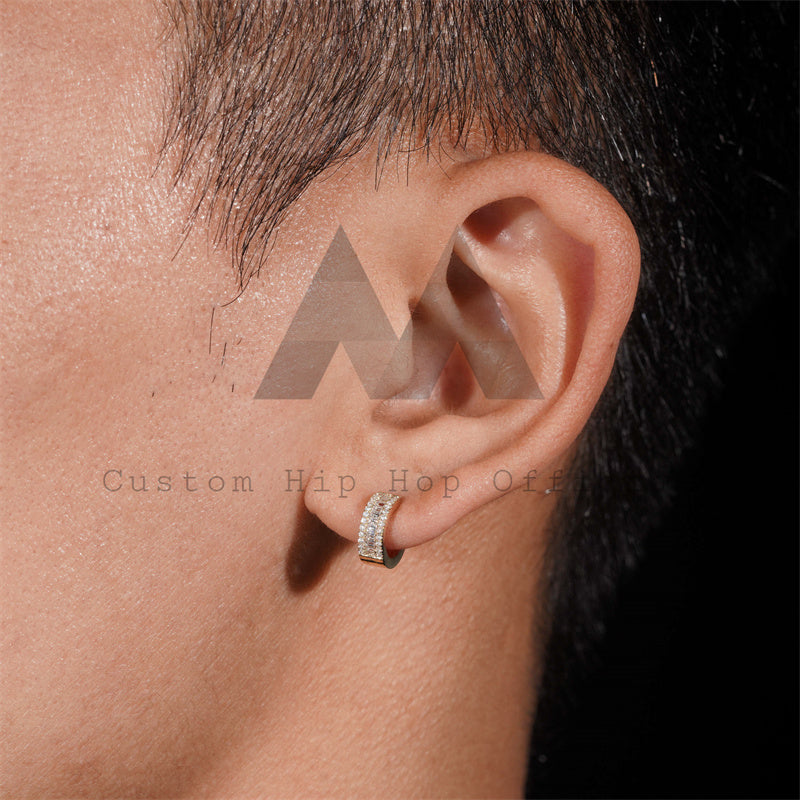
The lineup runs from snug huggies that sit tight to the lobe out to wider statement hoops, some set across the full width of the band rather than a single row down the middle.
Metals, Sizes and Certificates
Most pairs are 925 sterling silver finished in white, yellow or rose gold plating, with white the most common by a wide margin and rose the least. A smaller group is made in 10K gold, where the metal goes all the way through rather than sitting on the surface as a finish.
Sizes are quoted by the face measurement and span 3MM to 18MM, which covers everything from a detail you forget you are wearing to a pair built to be seen across a room. The FAQ below breaks down which band suits which occasion. Nearly every pair ships with a GRA report covering color grade, clarity and cut. Shopping for diamond rather than moissanite? The same stud shapes and screw backs run in our lab grown diamond earrings.
Same stones, different places to put them: moissanite rings and bracelets.
FAQ
Ears are the easiest place to wear a big stone. A ring takes knocks all day and a wide face gets in the way; an earring does neither, so scale costs you nothing in comfort. That is why a 13MM stud is ordinary and a 13MM ring is not. Moissanite makes that scale affordable, and on the two numbers that matter in daylight it stands on its own: hardness 9.25 on the Mohs scale against diamond's 10, and dispersion of 0.104 against diamond's 0.044 — the fire, meaning the flashes of color thrown as a stone moves, at more than double.
Nearly all of them, close enough to the whole collection that the exceptions are the thing to check rather than the rule — if paperwork matters to you, confirm it on the individual product page before ordering. The serial on the card can be checked against the lab's own database, and the report grades the stones rather than the metal they sit in.
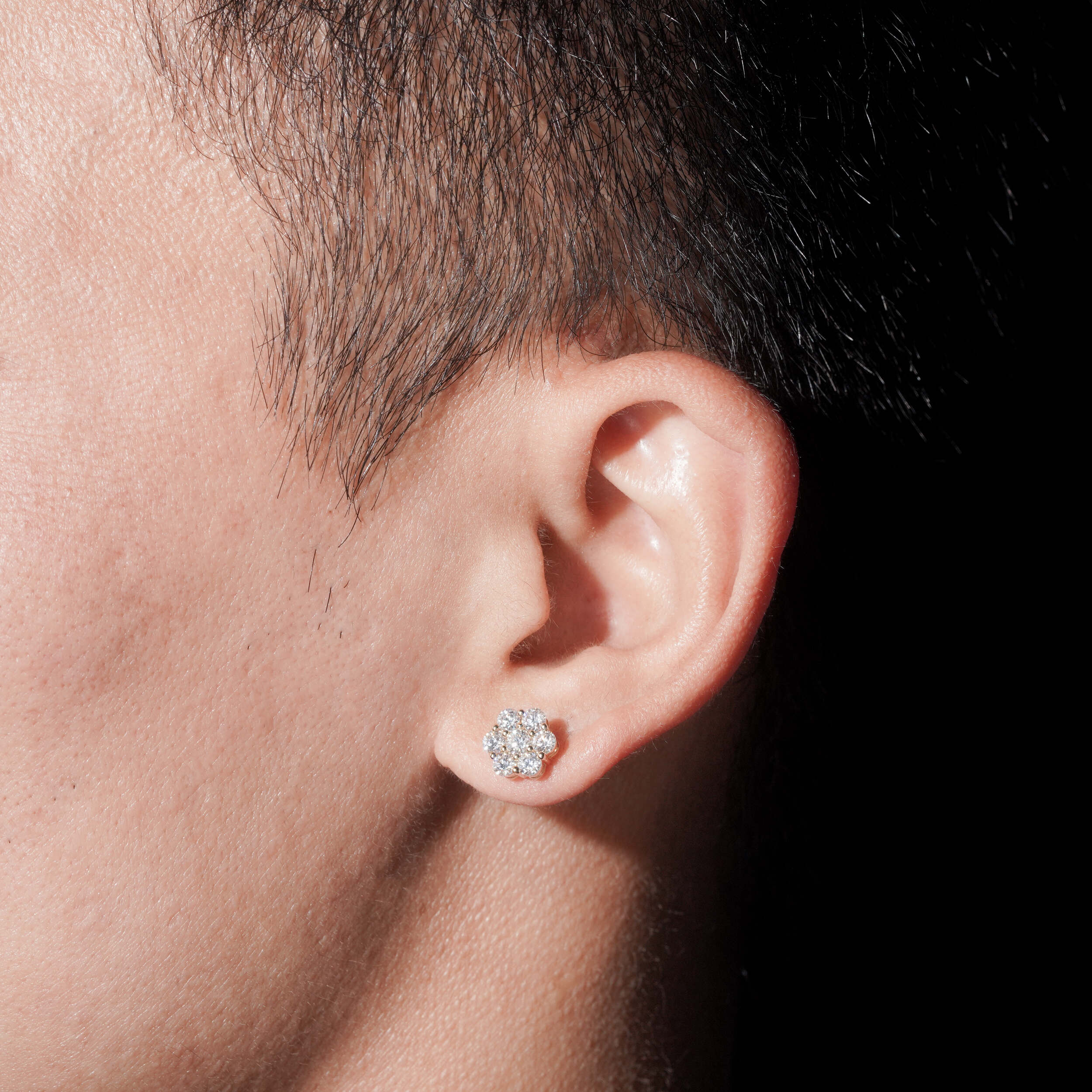
Most men land between 8MM and 10MM. Below 6MM a stud reads as a detail rather than a statement and tends to disappear at any distance. From 8MM to 10MM it is clearly visible without taking over the face. Past 13MM you are buying a statement pair, and at that point the weight is enough that the fastening stops being a minor spec.
A butterfly back grips by friction alone, and friction gives way — that is how one earring goes missing and the other stays in the drawer for a year. A screw back threads onto the post, so it releases only when turned. Most of the studs here use them, and on the heavier sizes that fastening is what makes the earring practical rather than merely wearable.
The stone is built for it. At 9.25 hardness it sits just under diamond and above anything else you would normally put on, so daily contact is unlikely to scratch the face. Earrings also take less abrasion than rings or bracelets, which spend the day against desks, keyboards and door handles — one more reason a stone this size holds up better in an ear than on a hand.
A stud sits flat against the lobe and shows a single face from the front. A huggie is a small hoop that wraps close around the lobe, so it reads as a curve and stays visible from the side as well. A huggie also looks larger than a stud of the same measurement, because the whole circle is in view rather than just the front of it.