





Every Handshake, Noticed
A ring does more work than anything else you wear. It moves when you talk and catches light every time you reach. Iced-out bands built to be seen from across a room sit here alongside single-stone rings meant to be looked at up close.




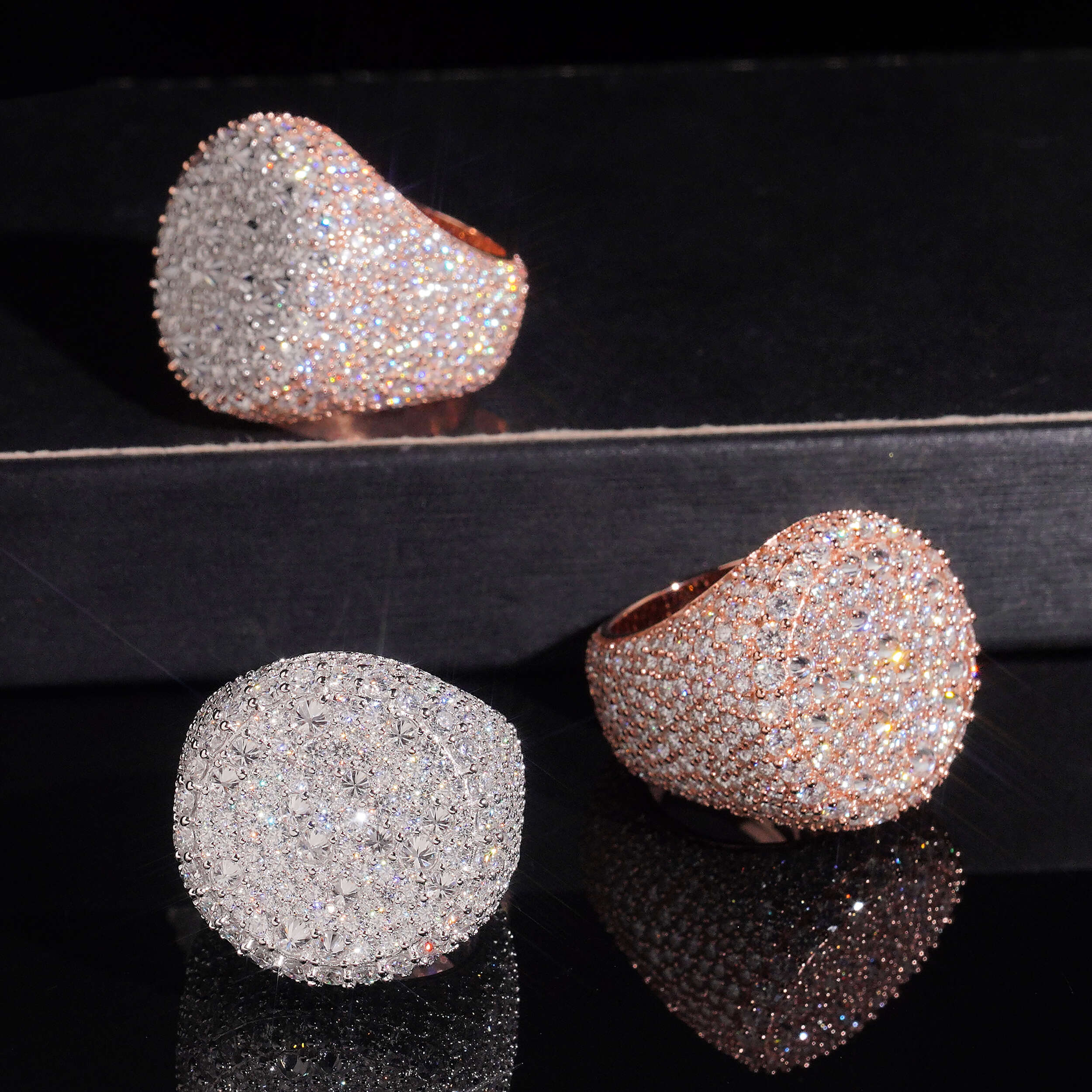
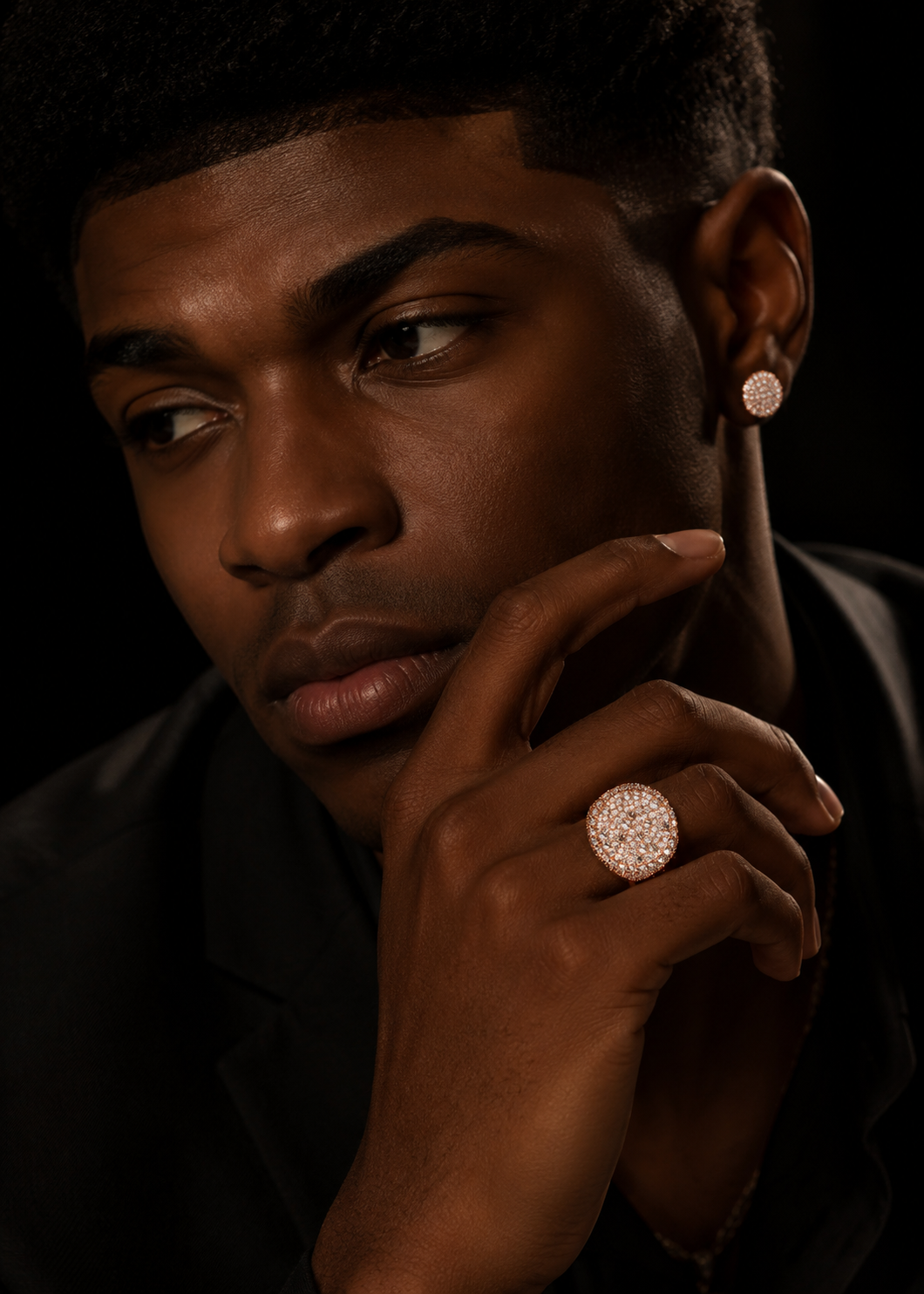

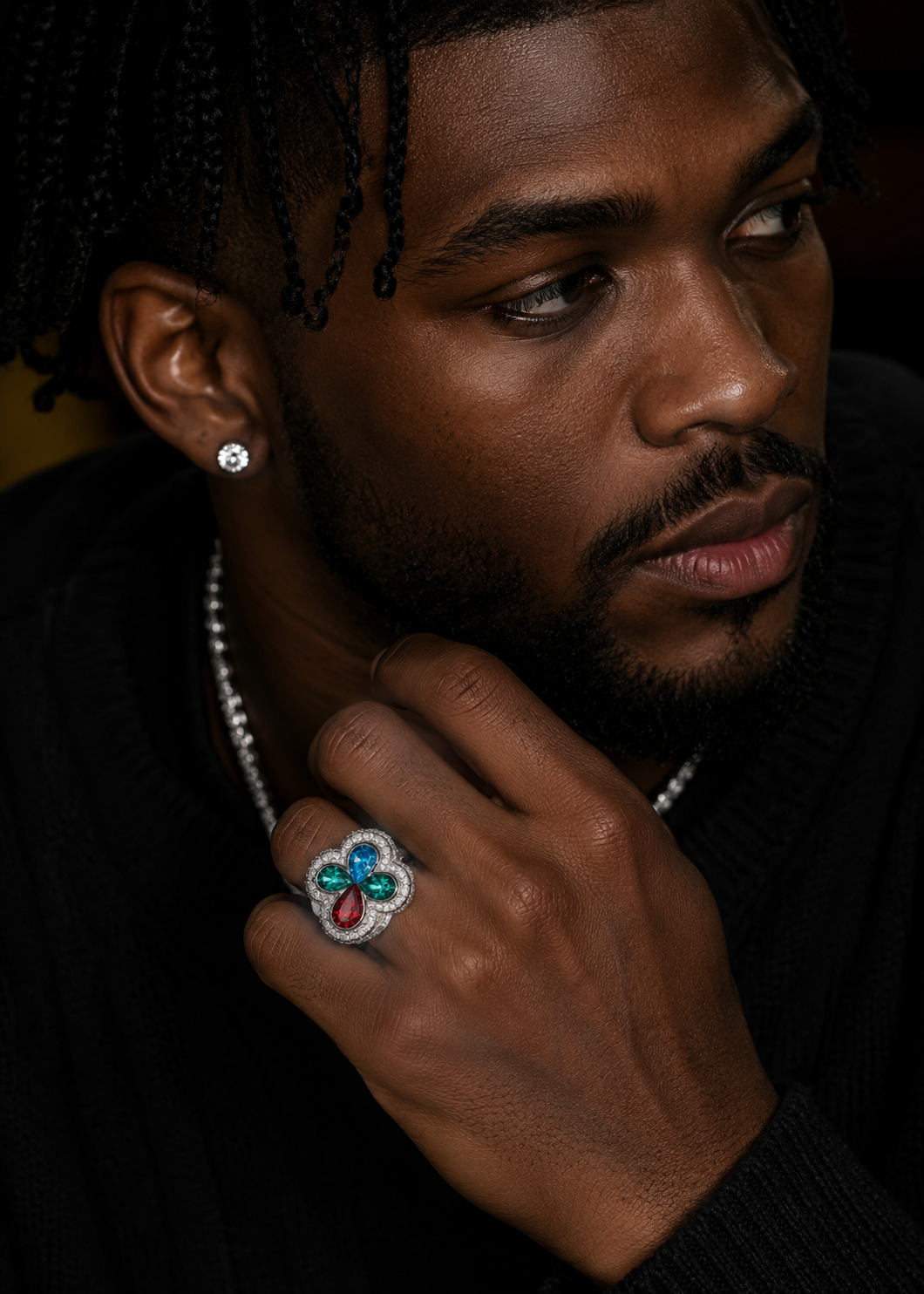
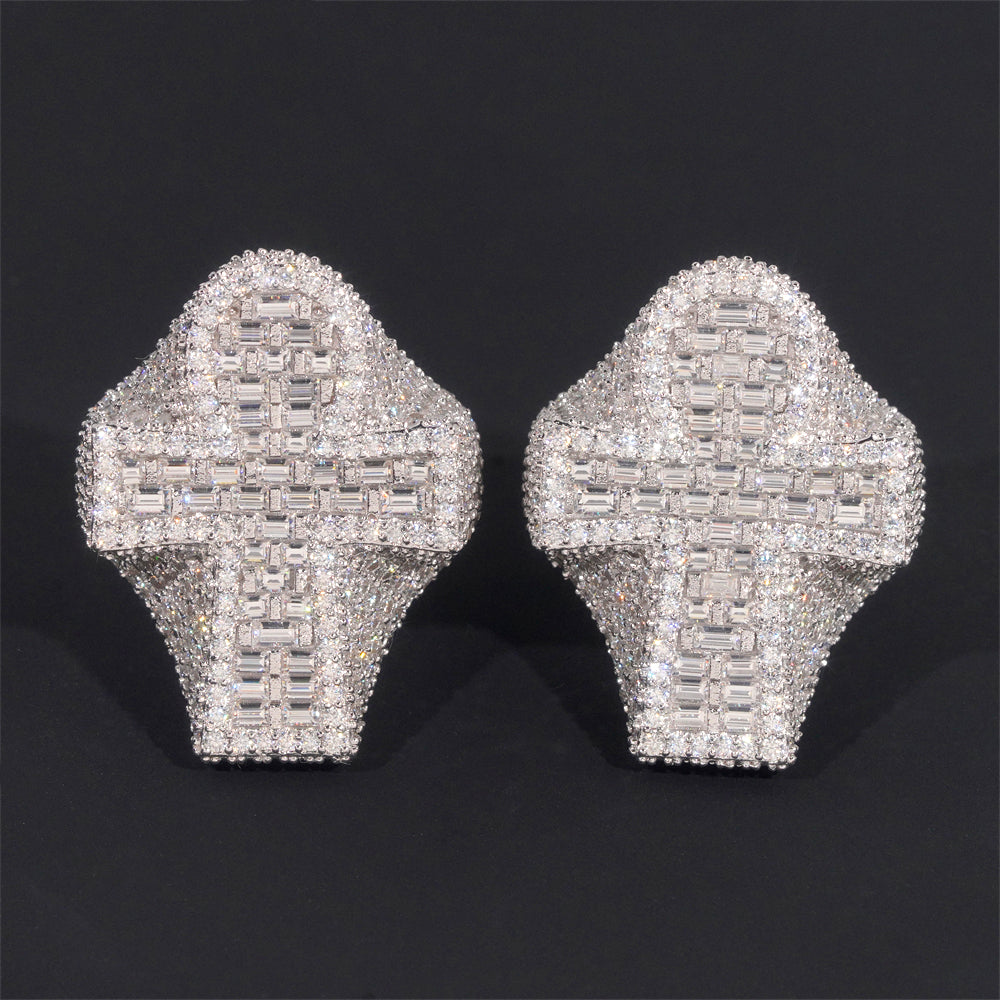
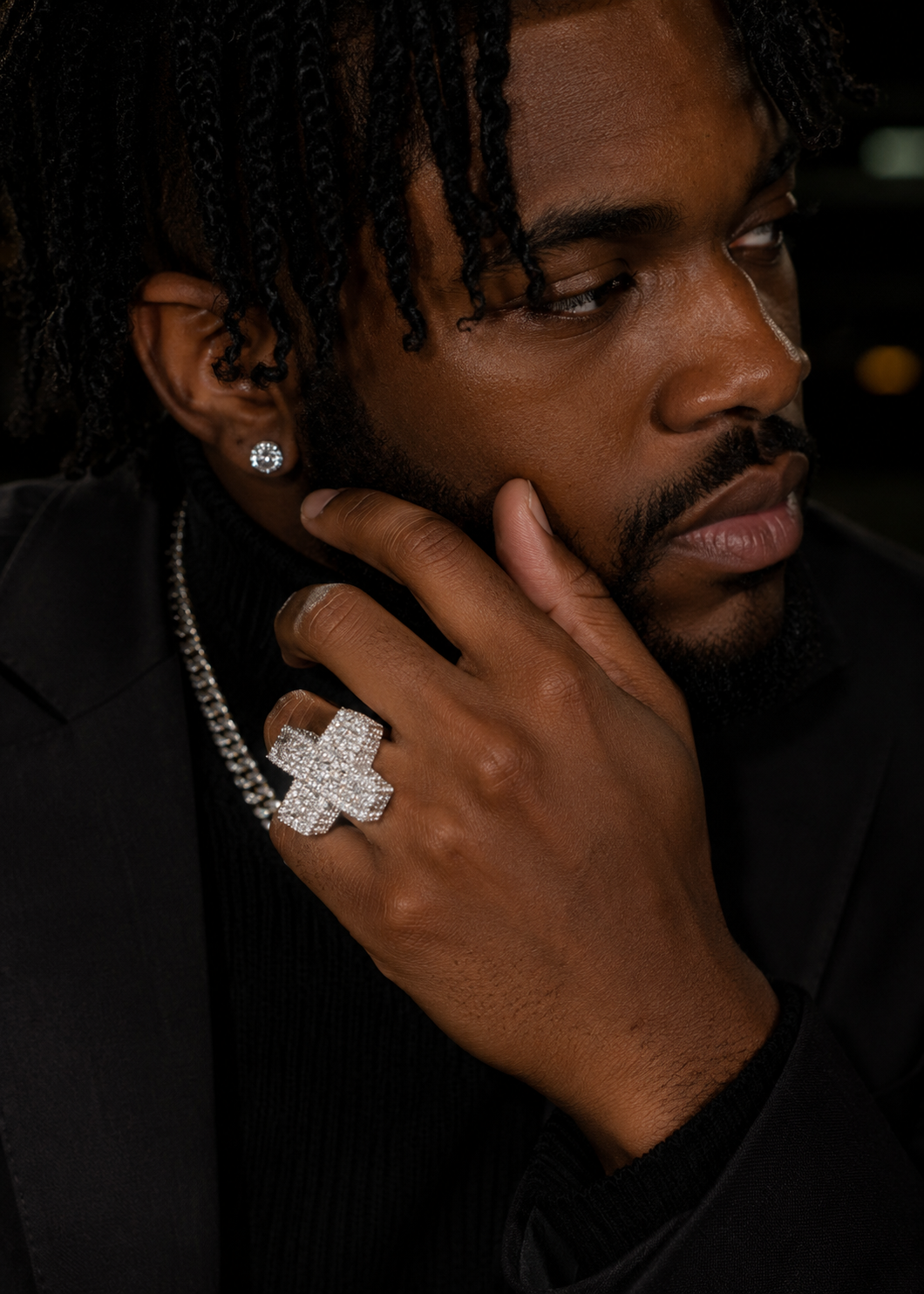
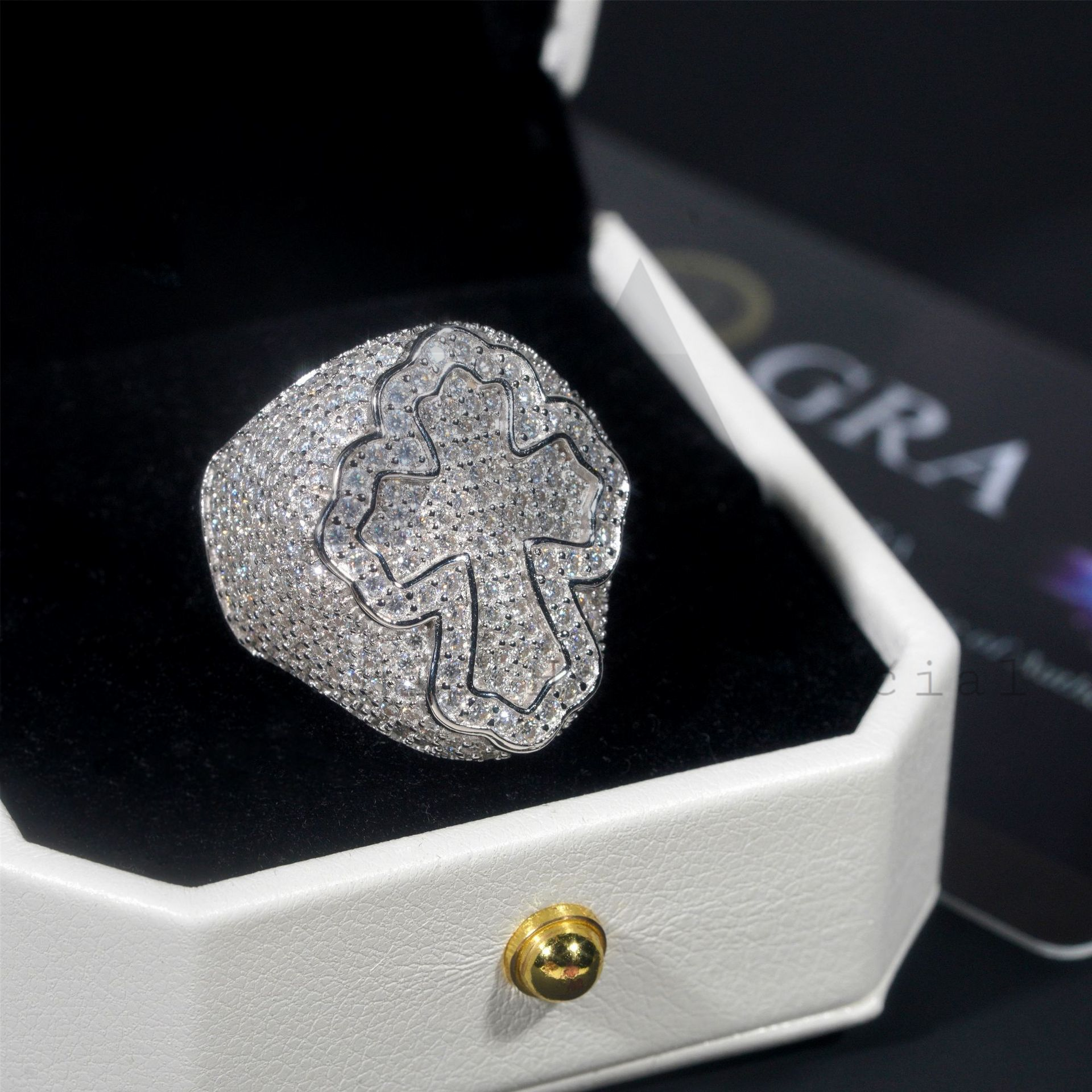
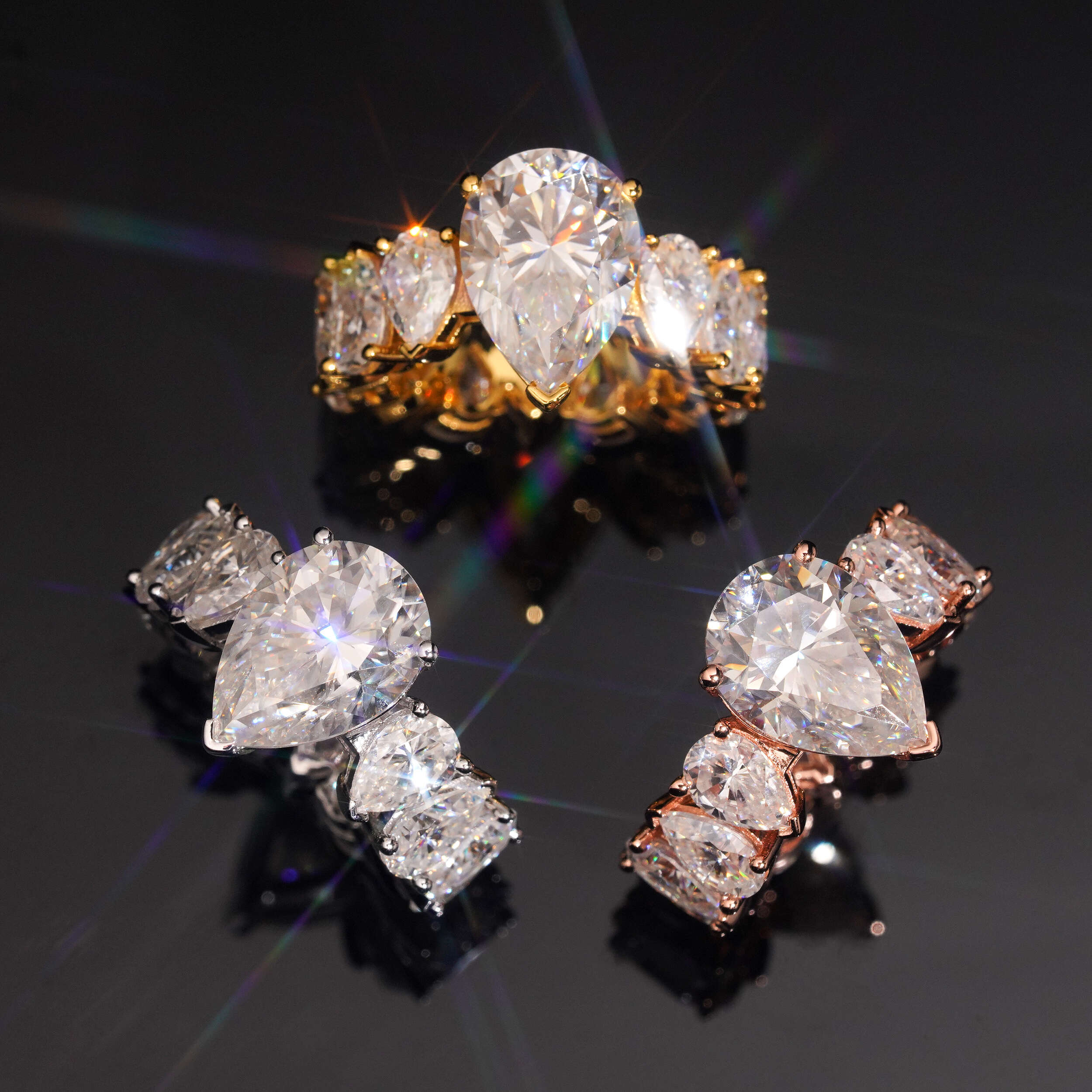
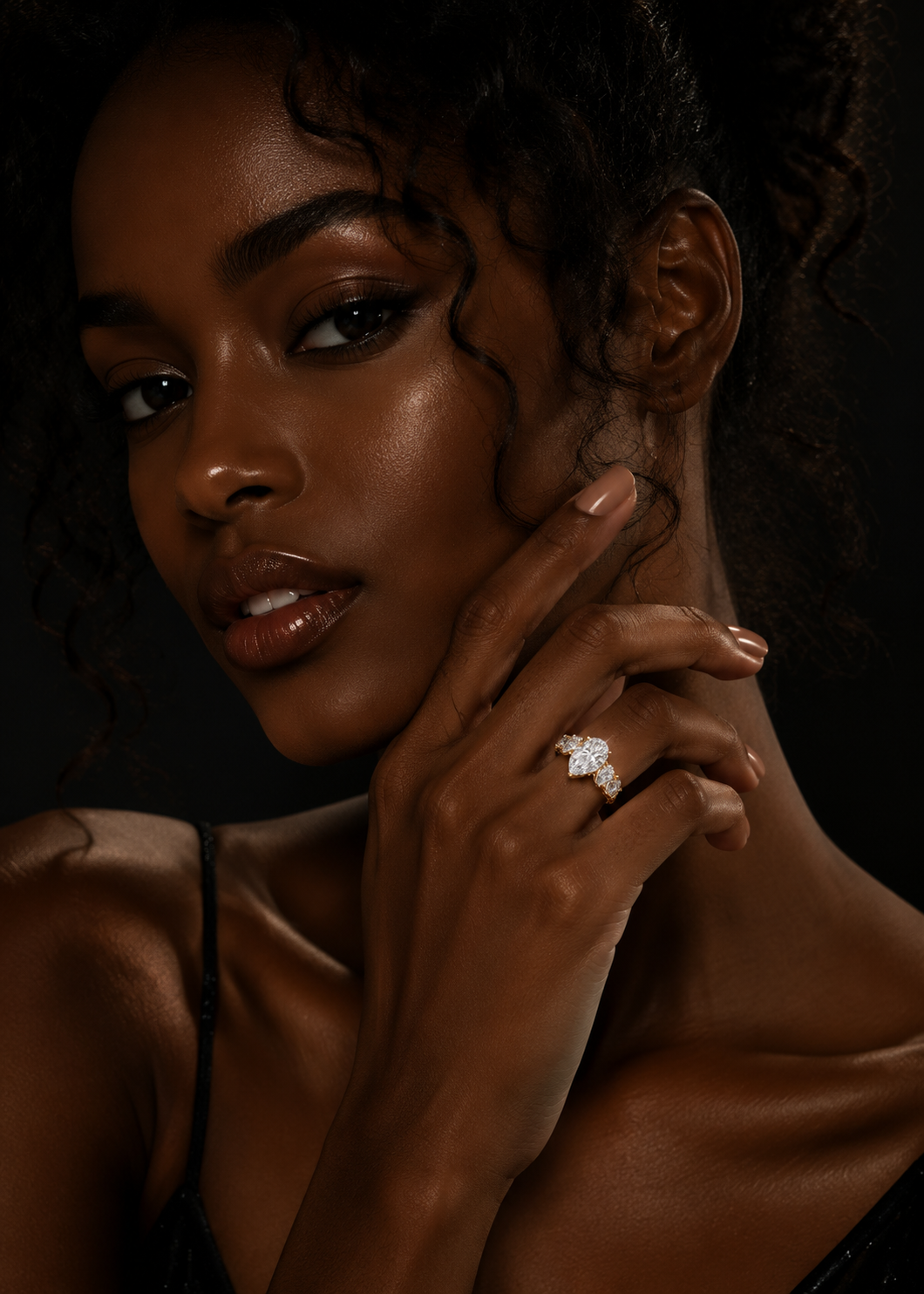
Fully Iced and Bust Down Rings
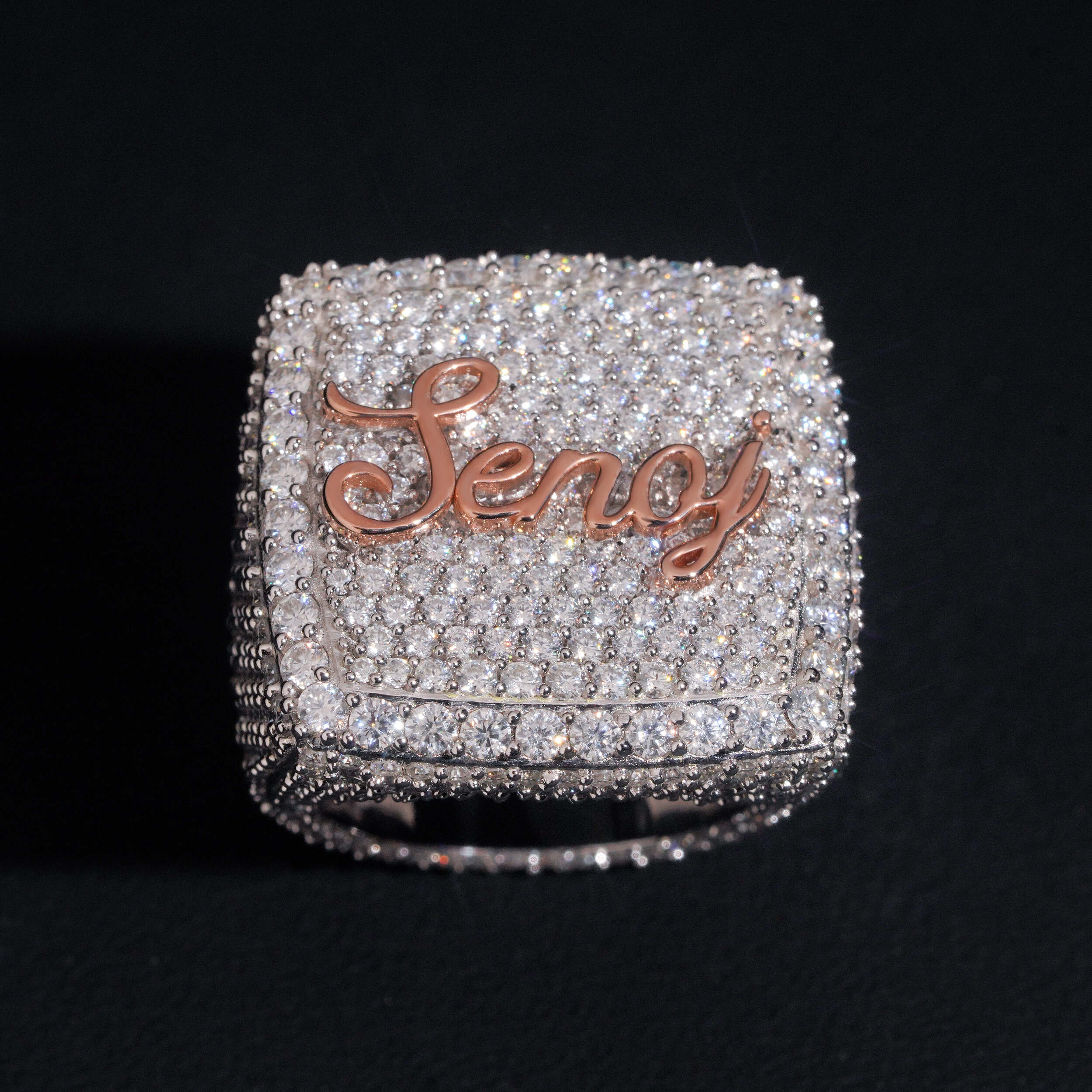
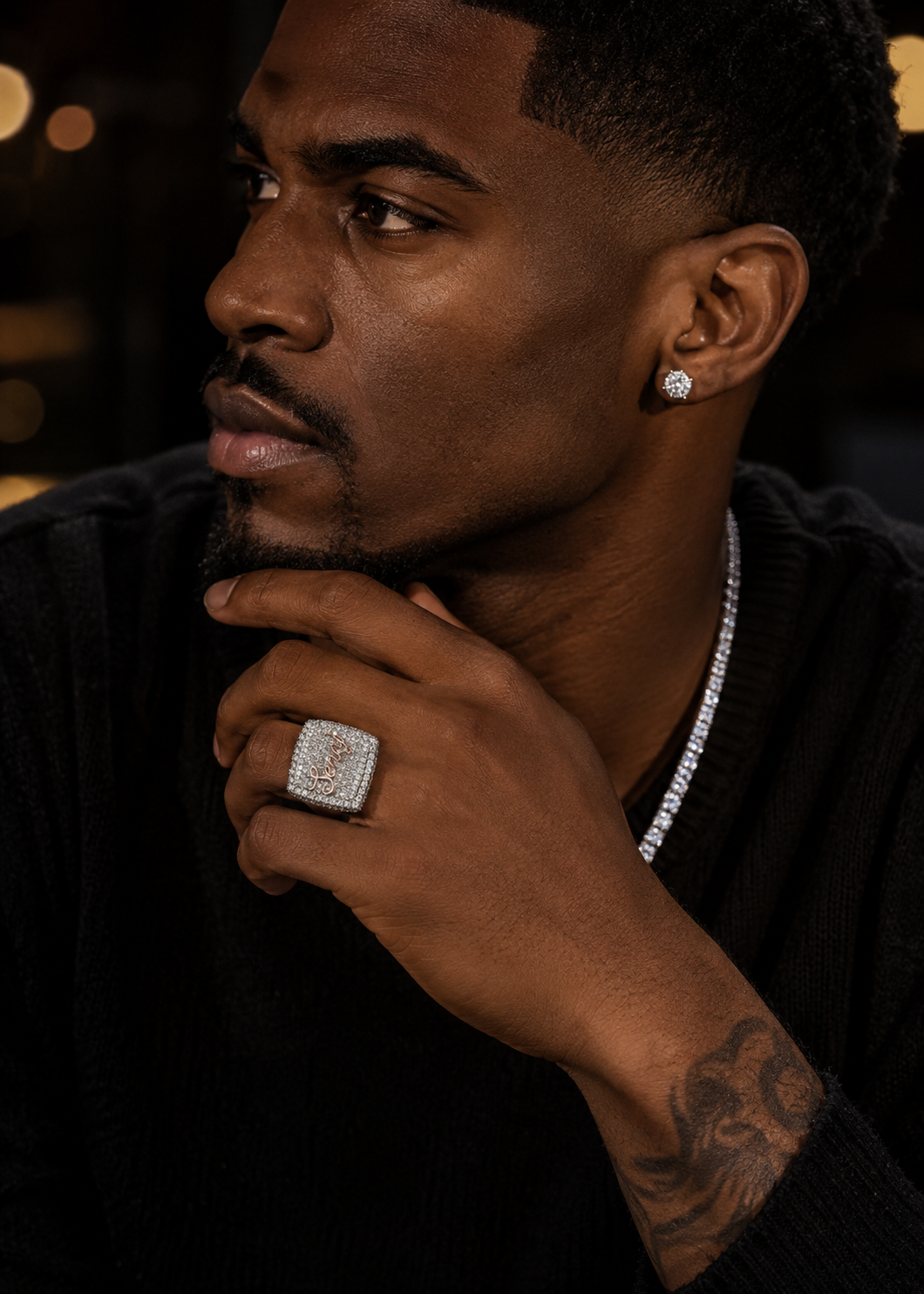
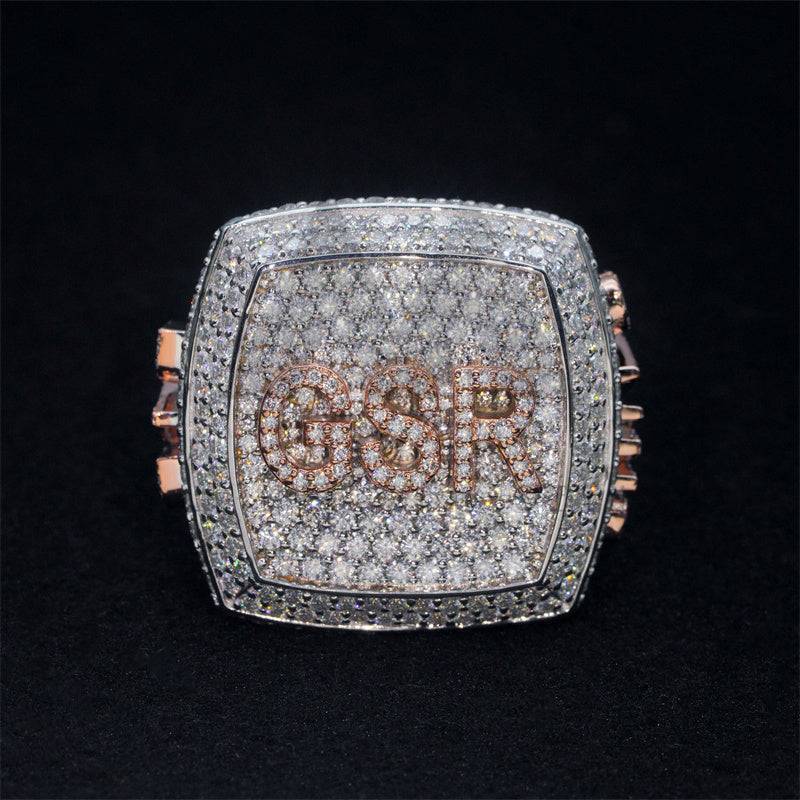
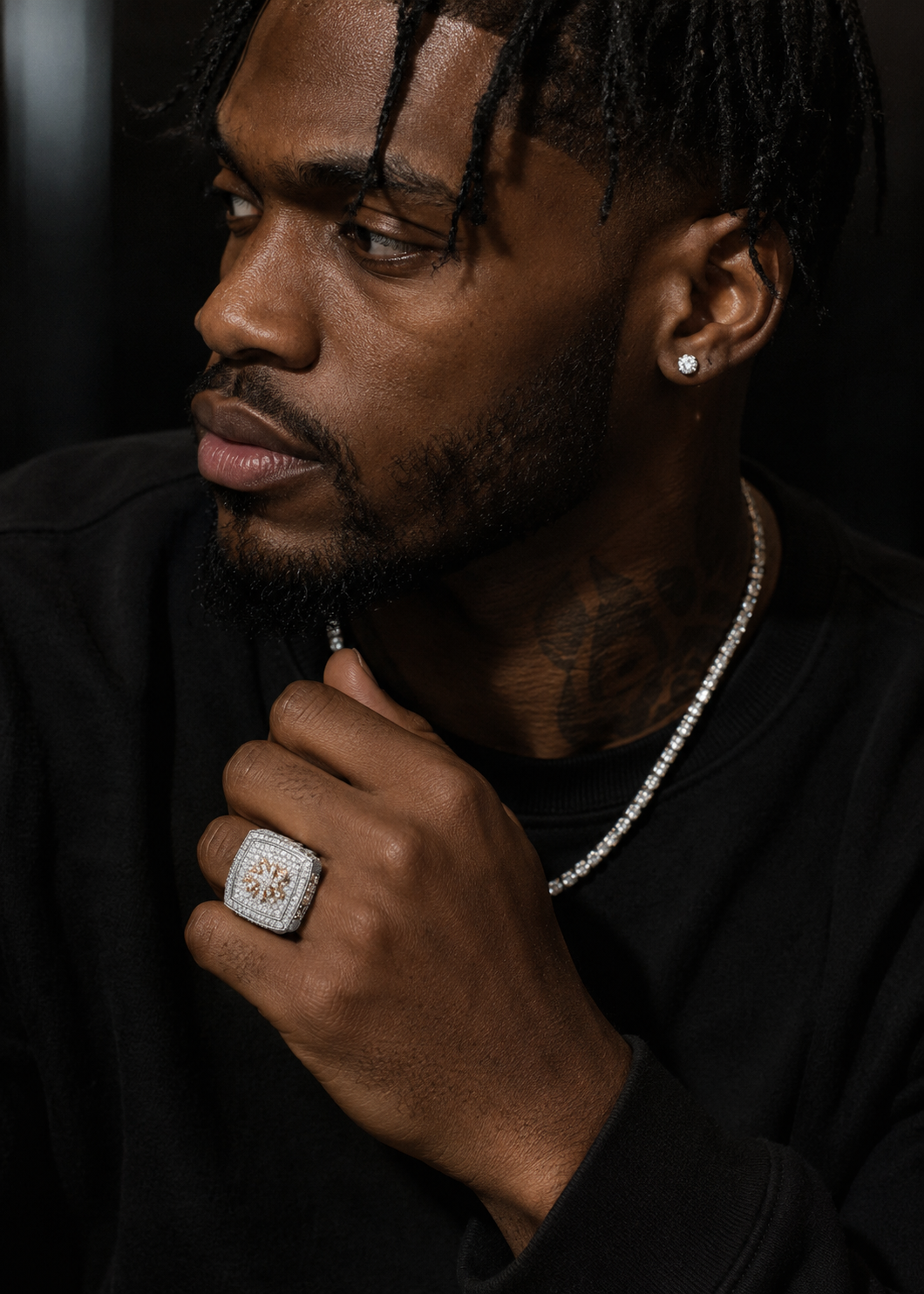
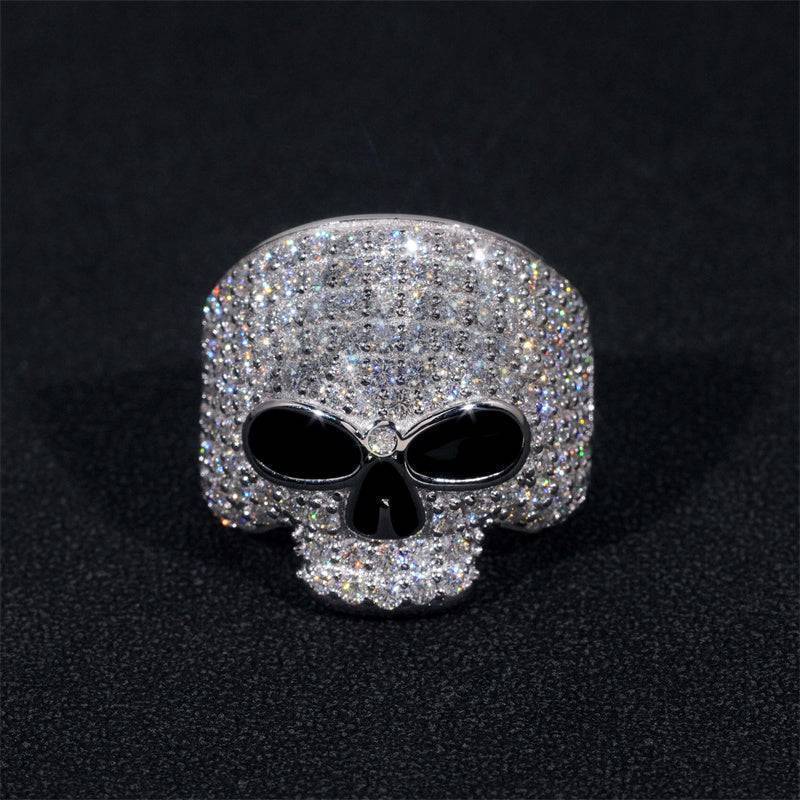
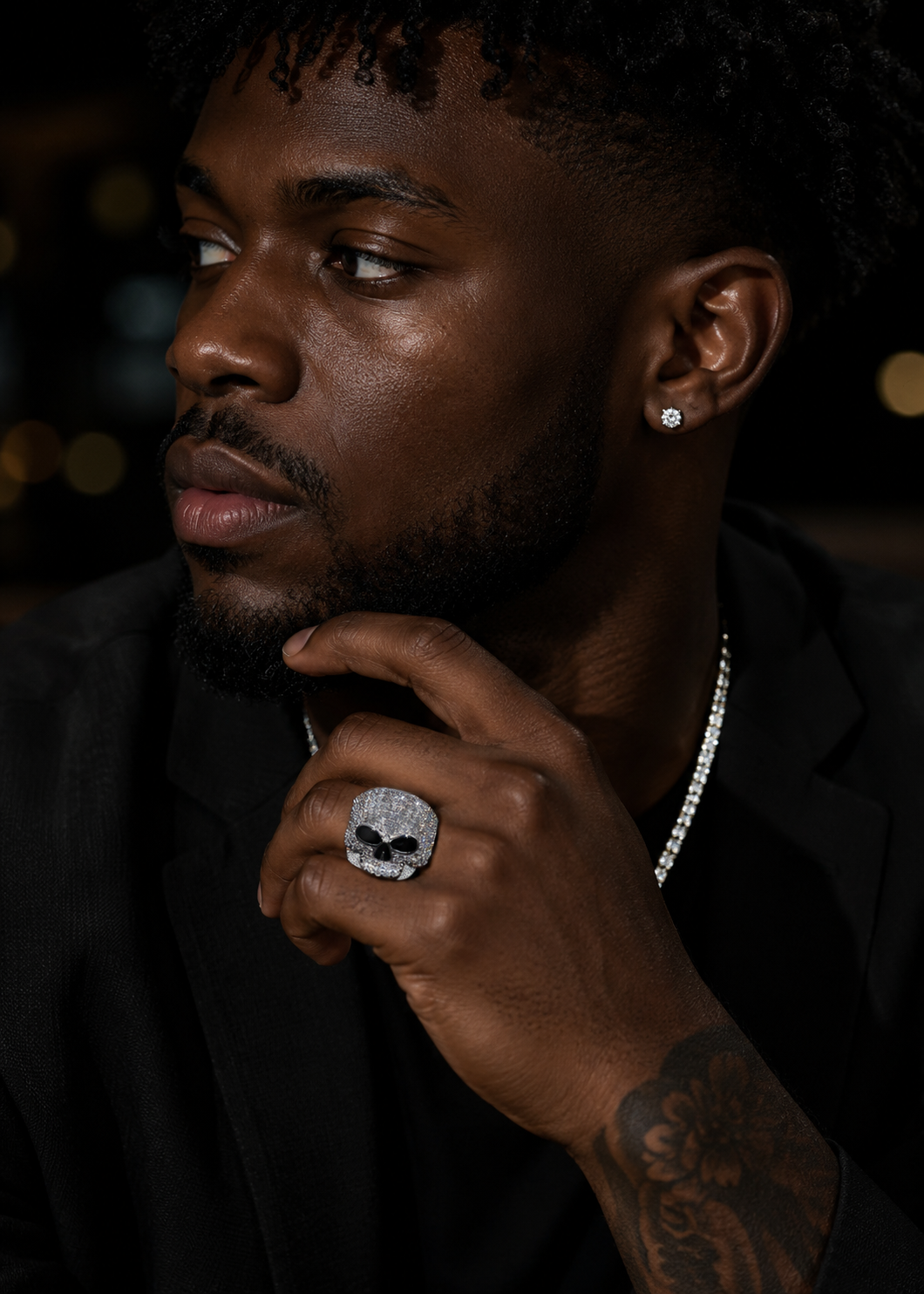
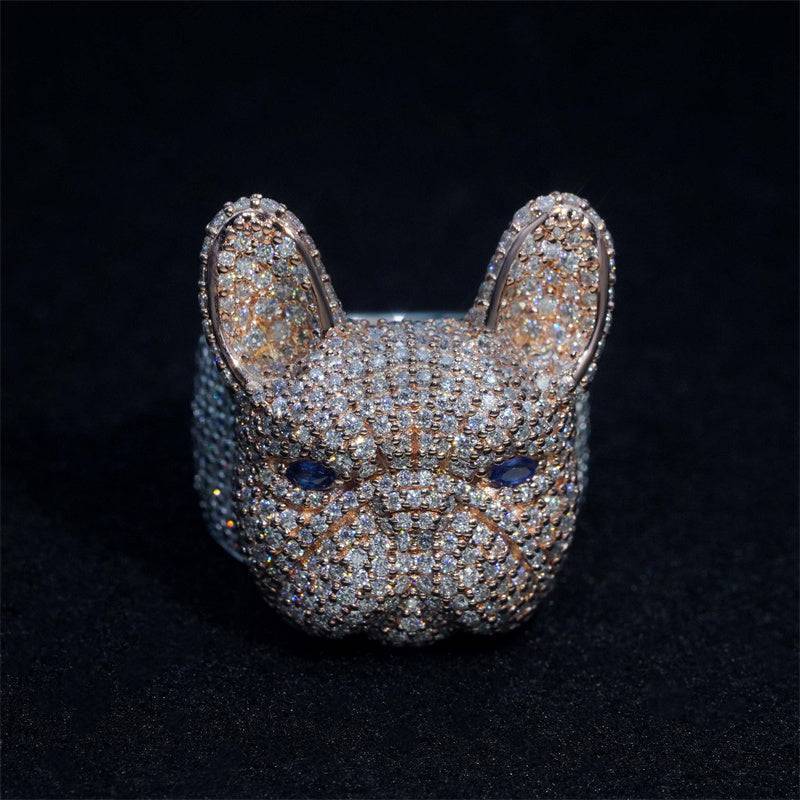
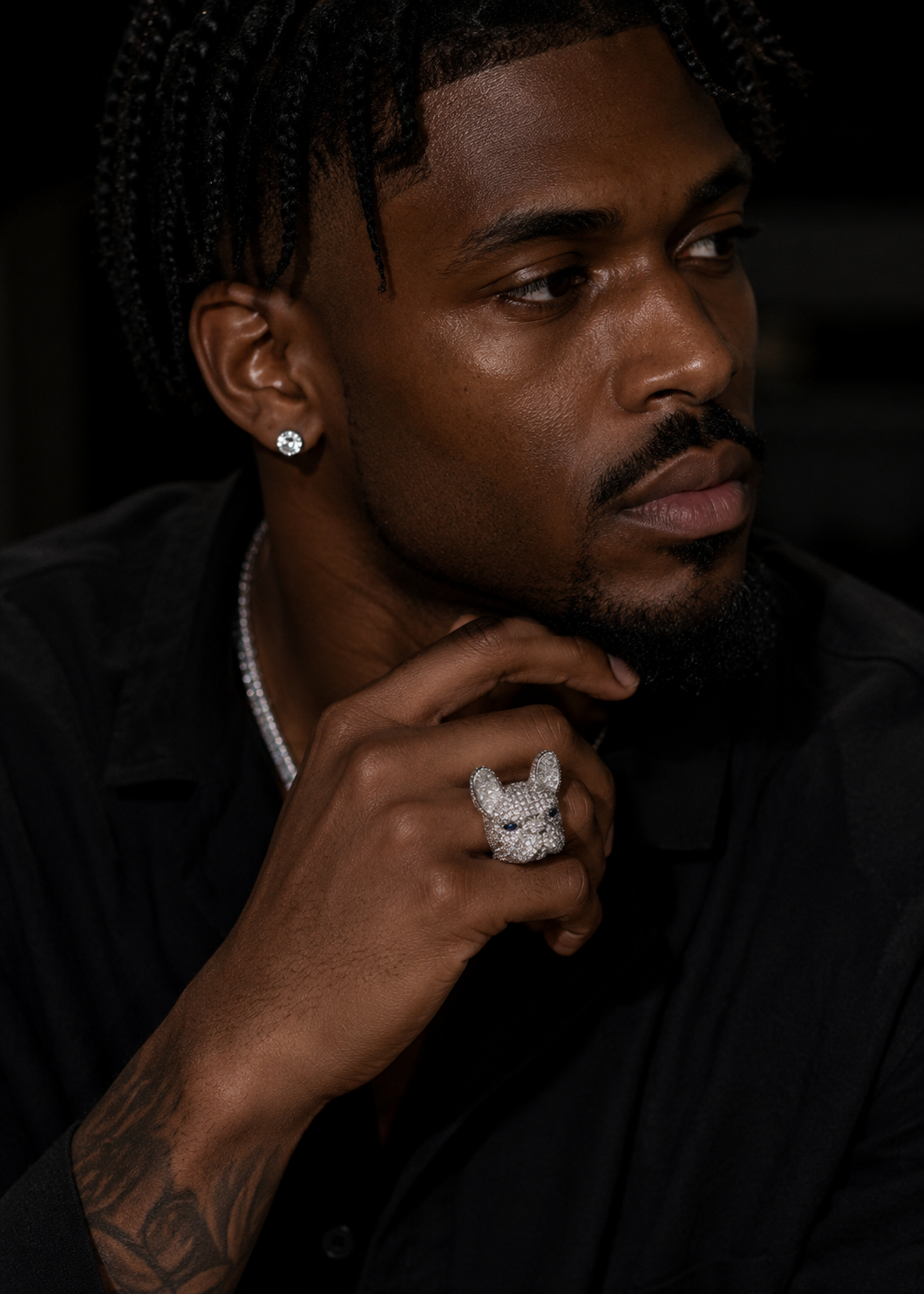
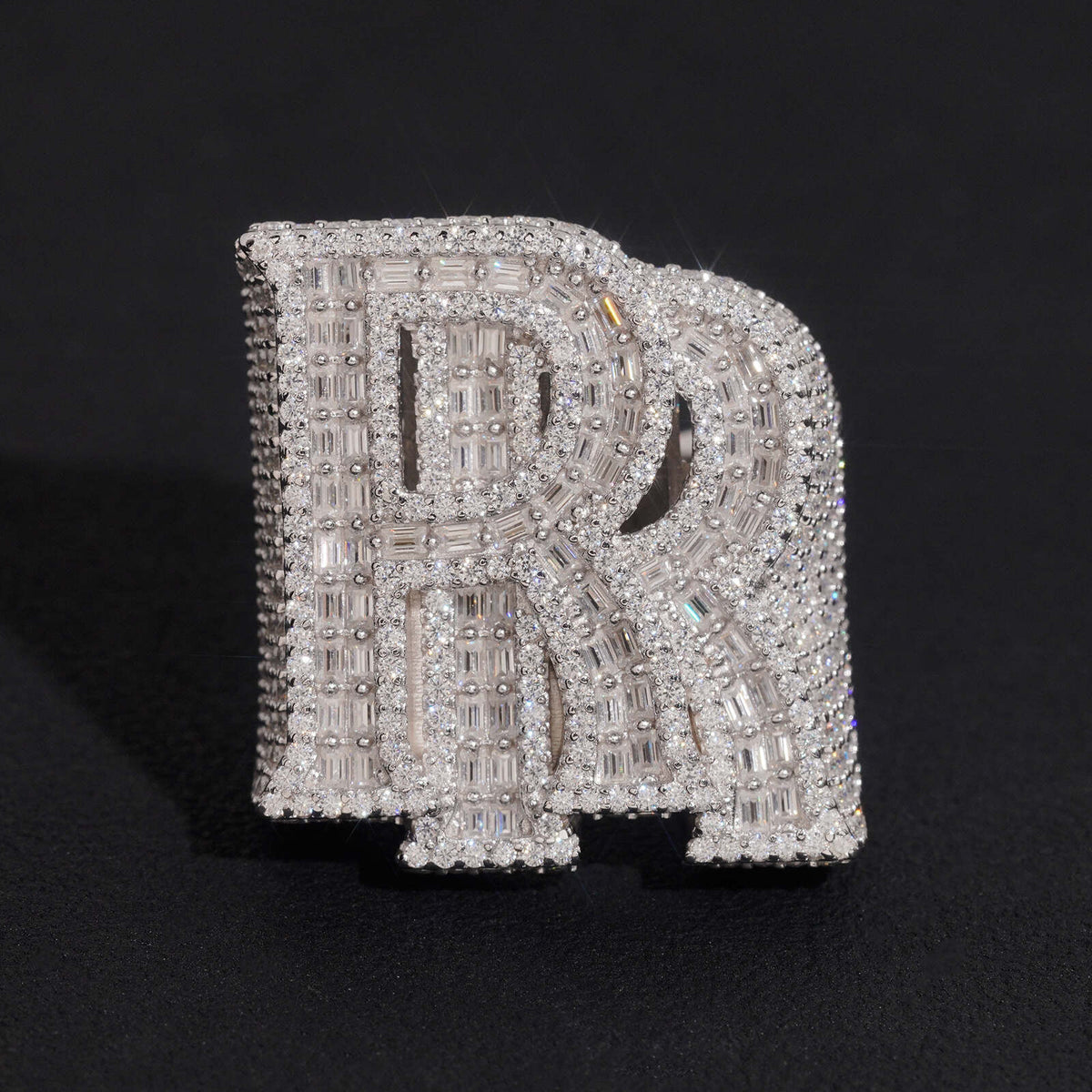
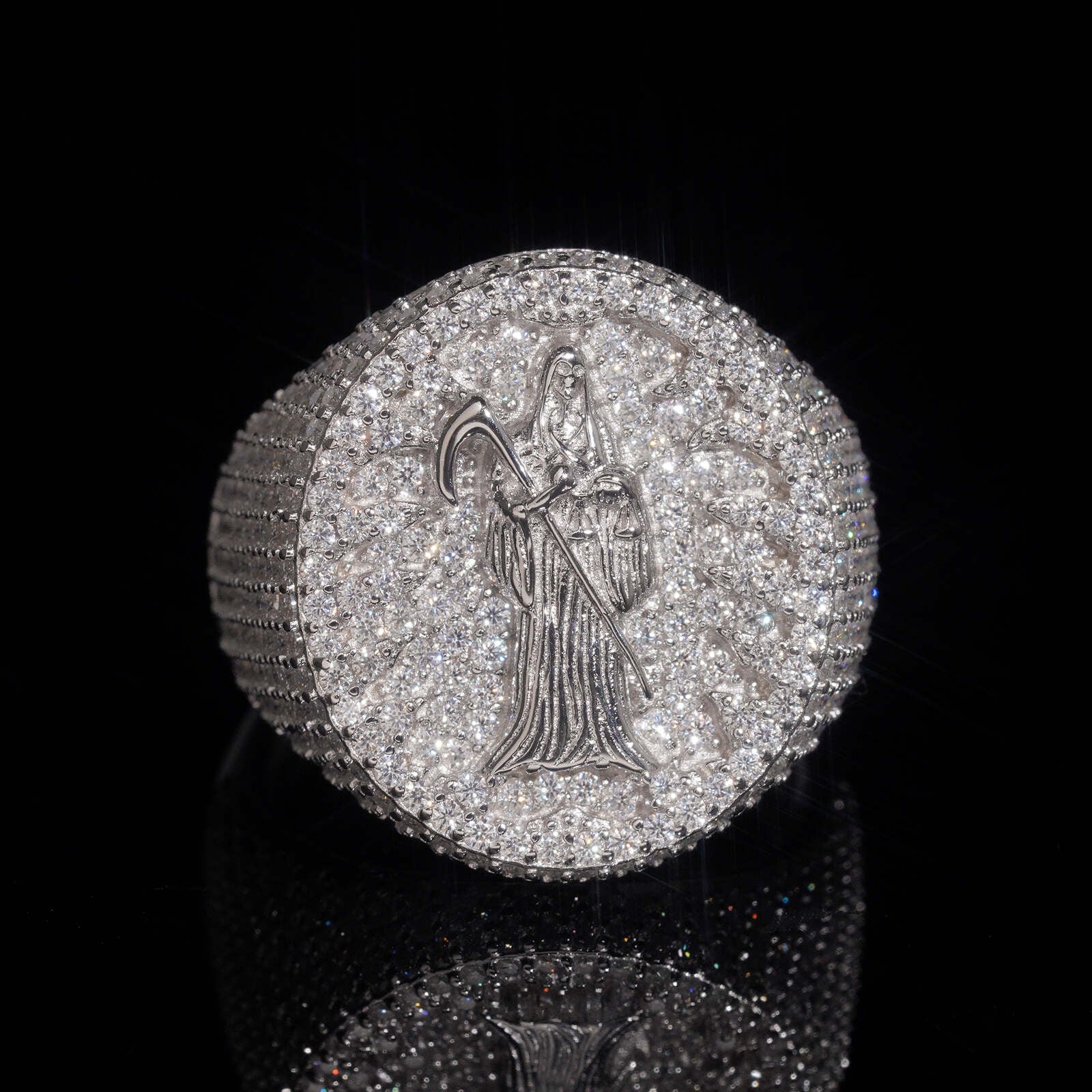
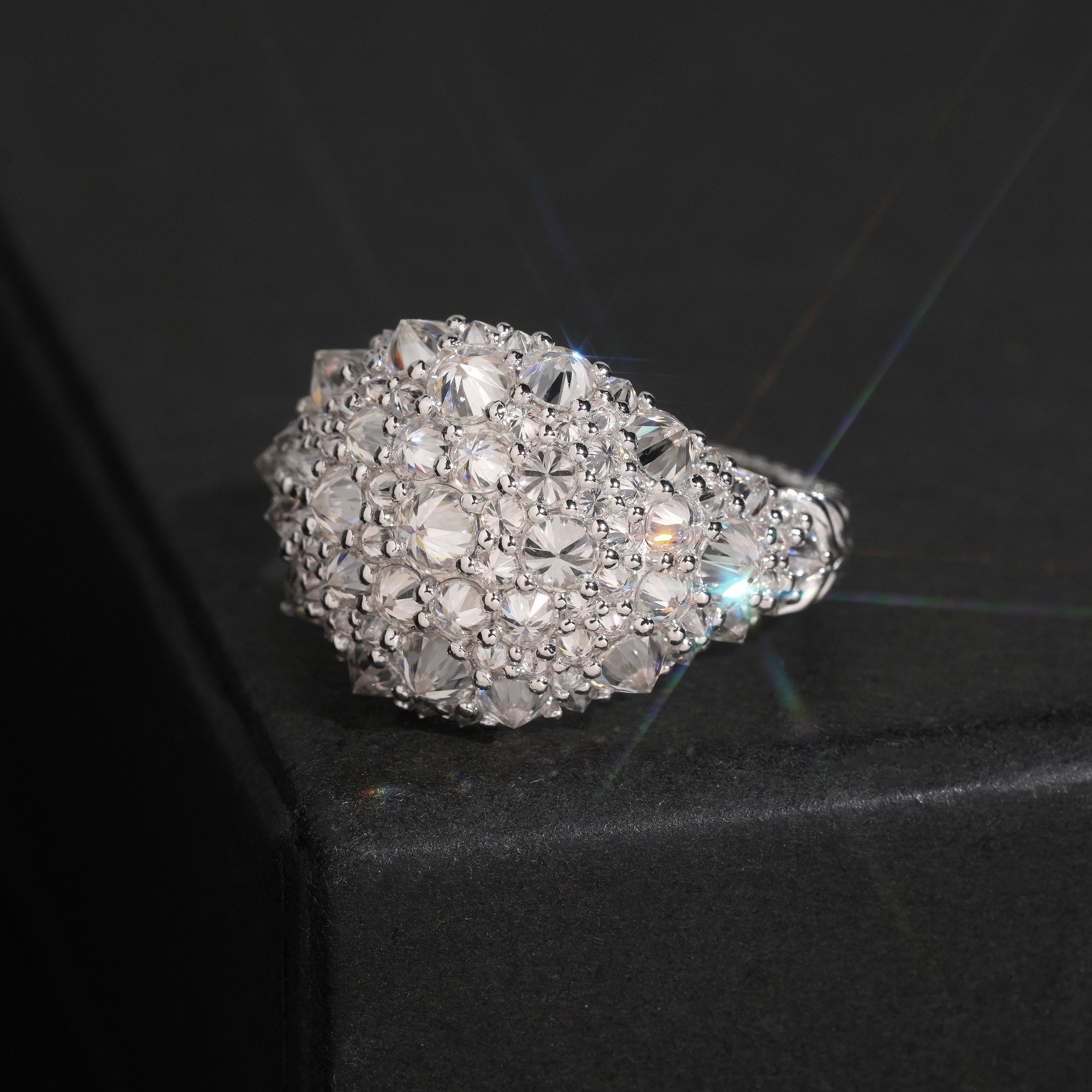
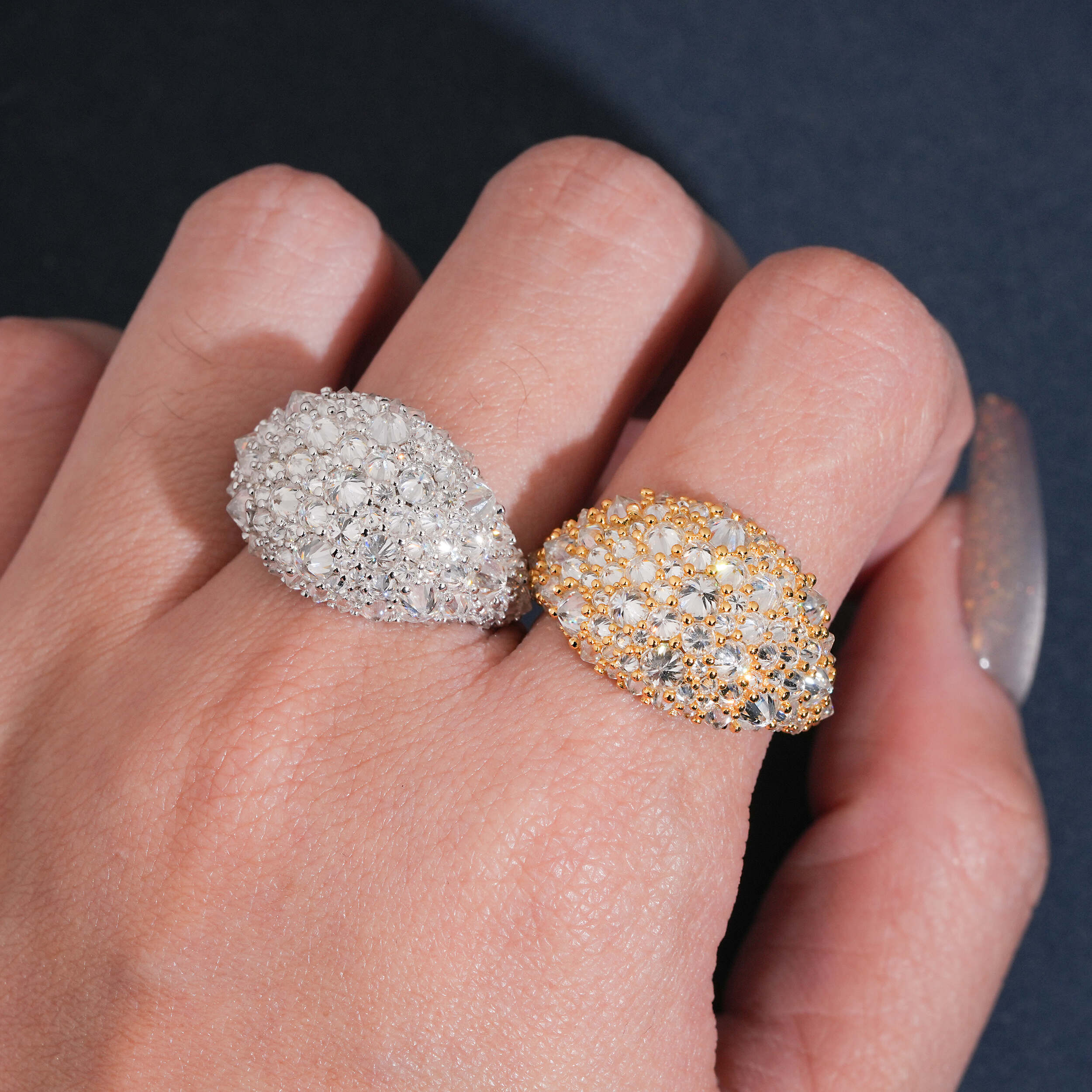
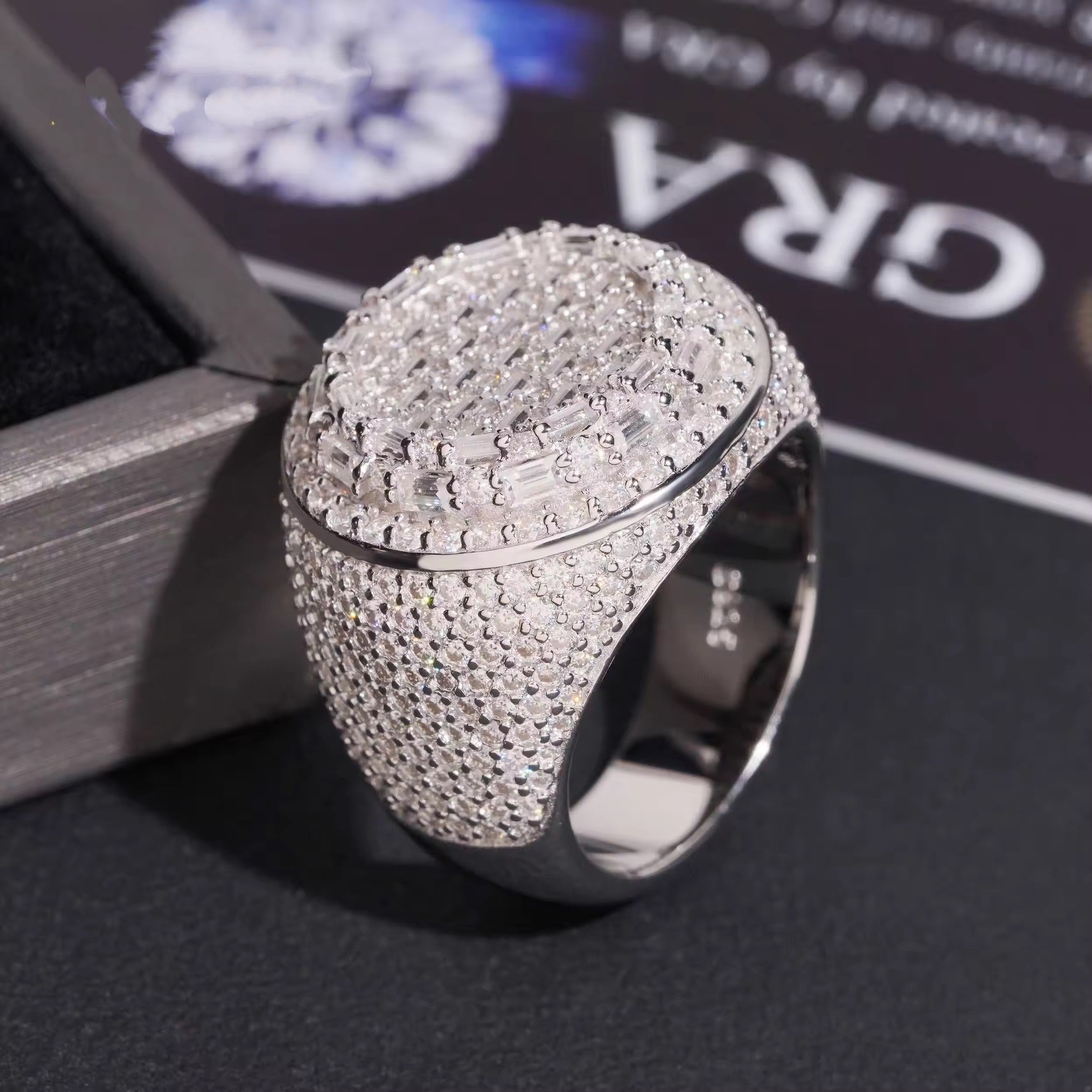
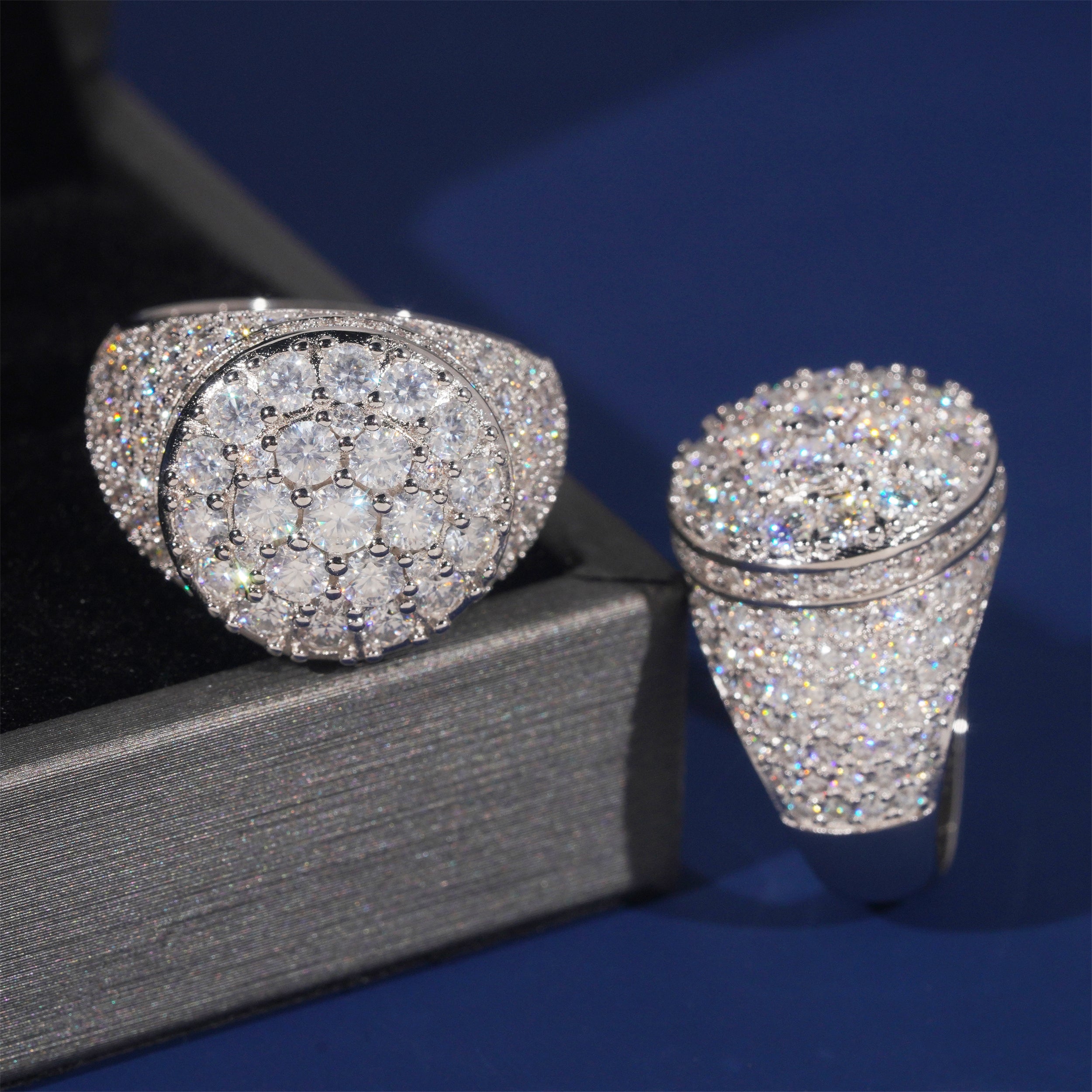
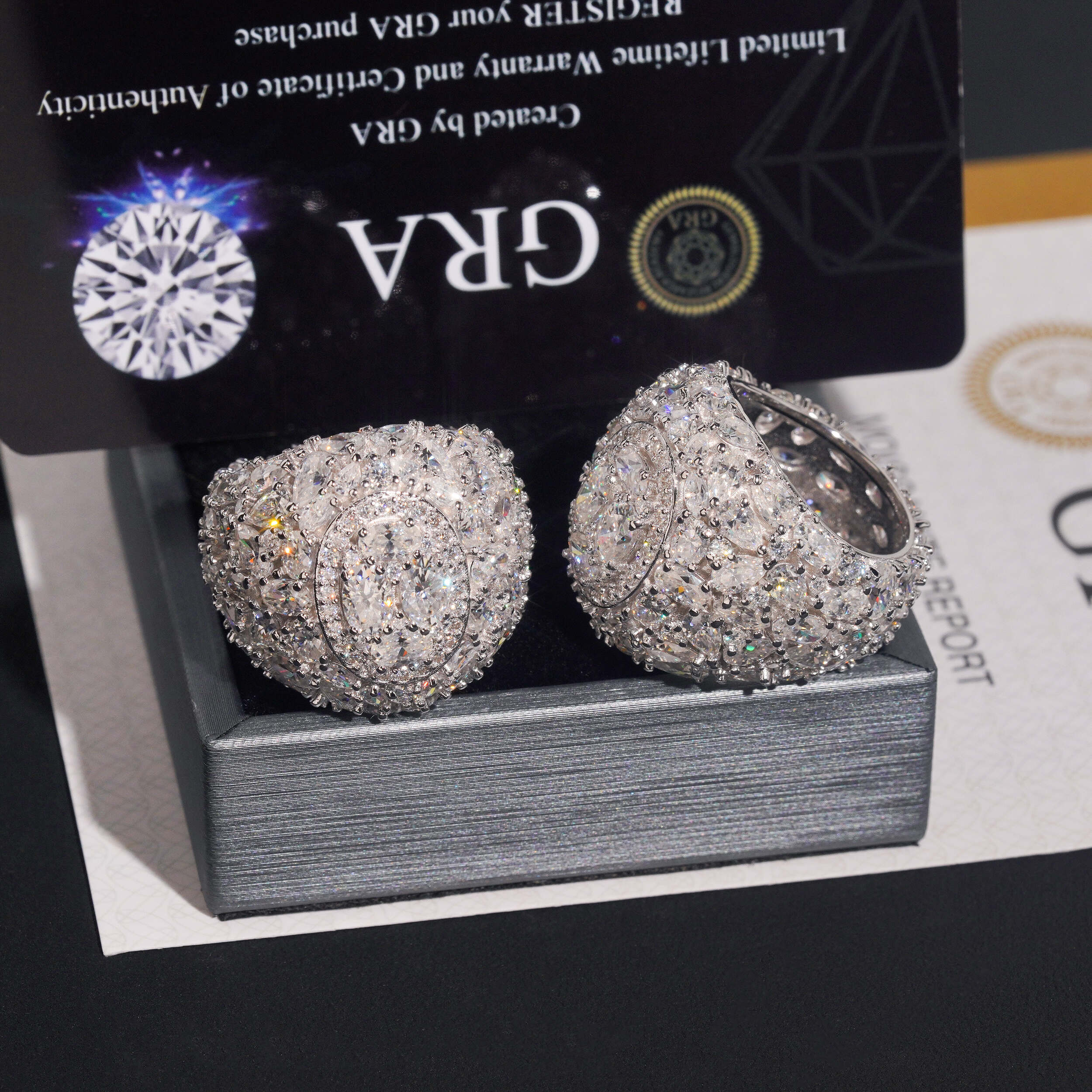
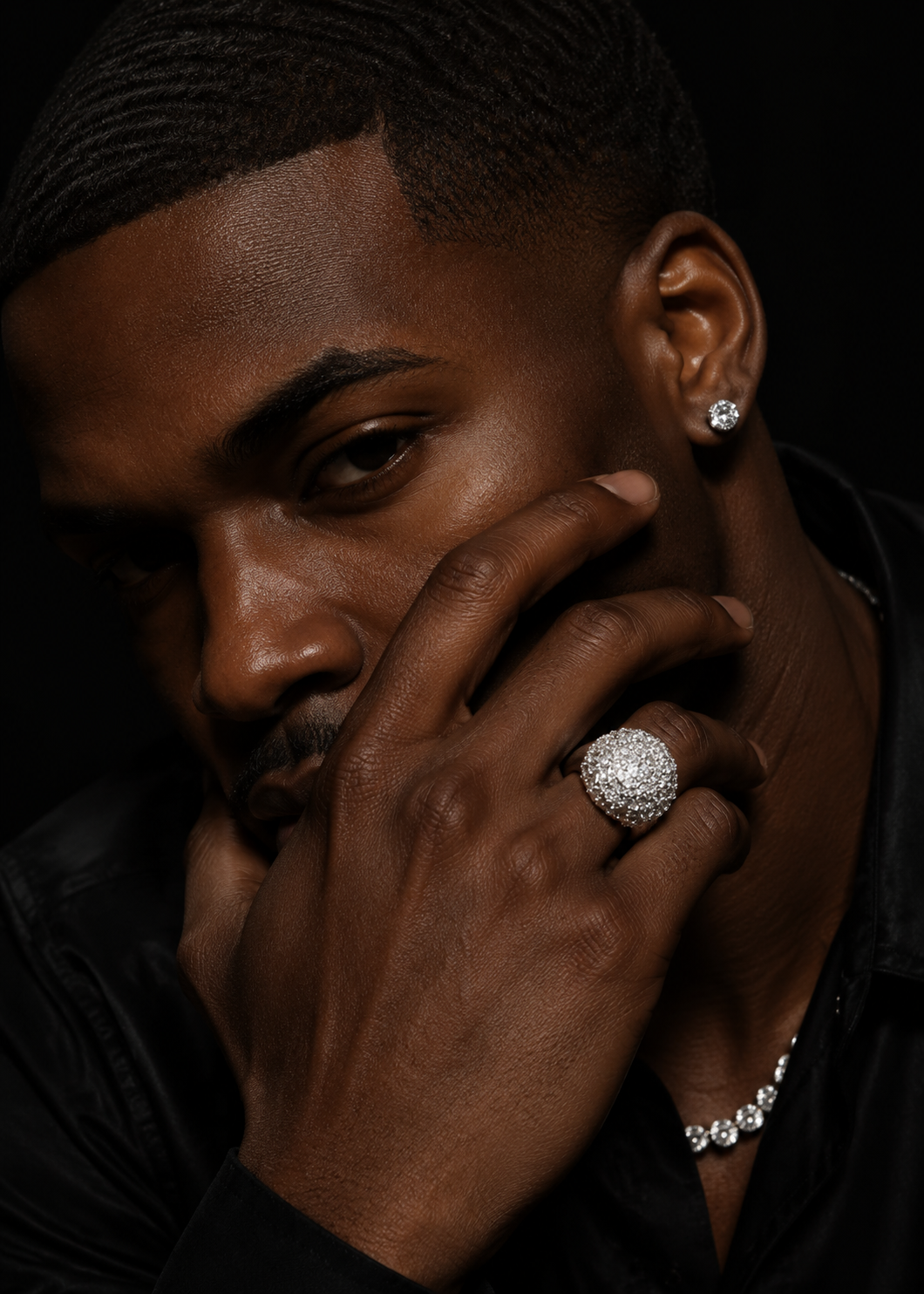
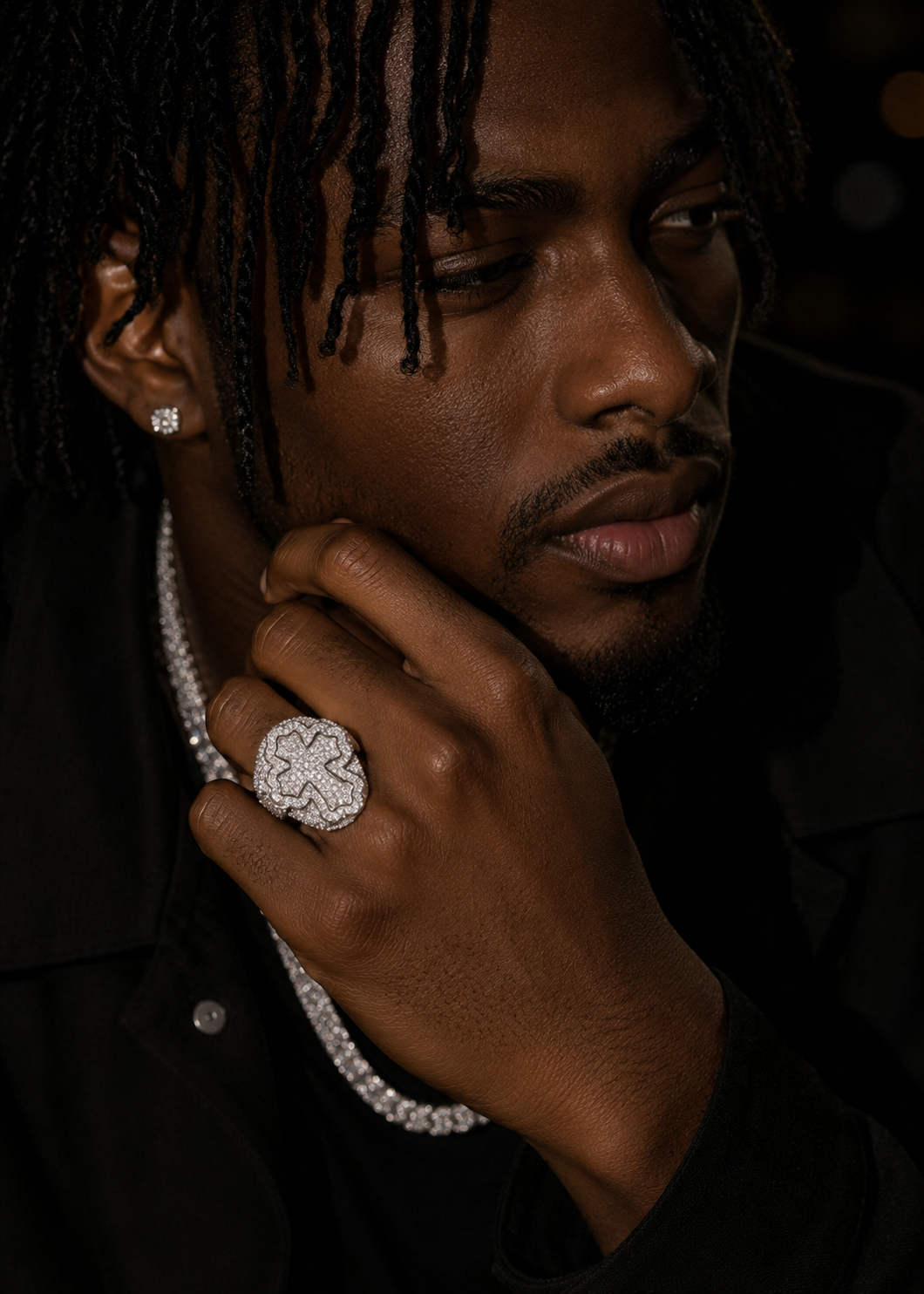
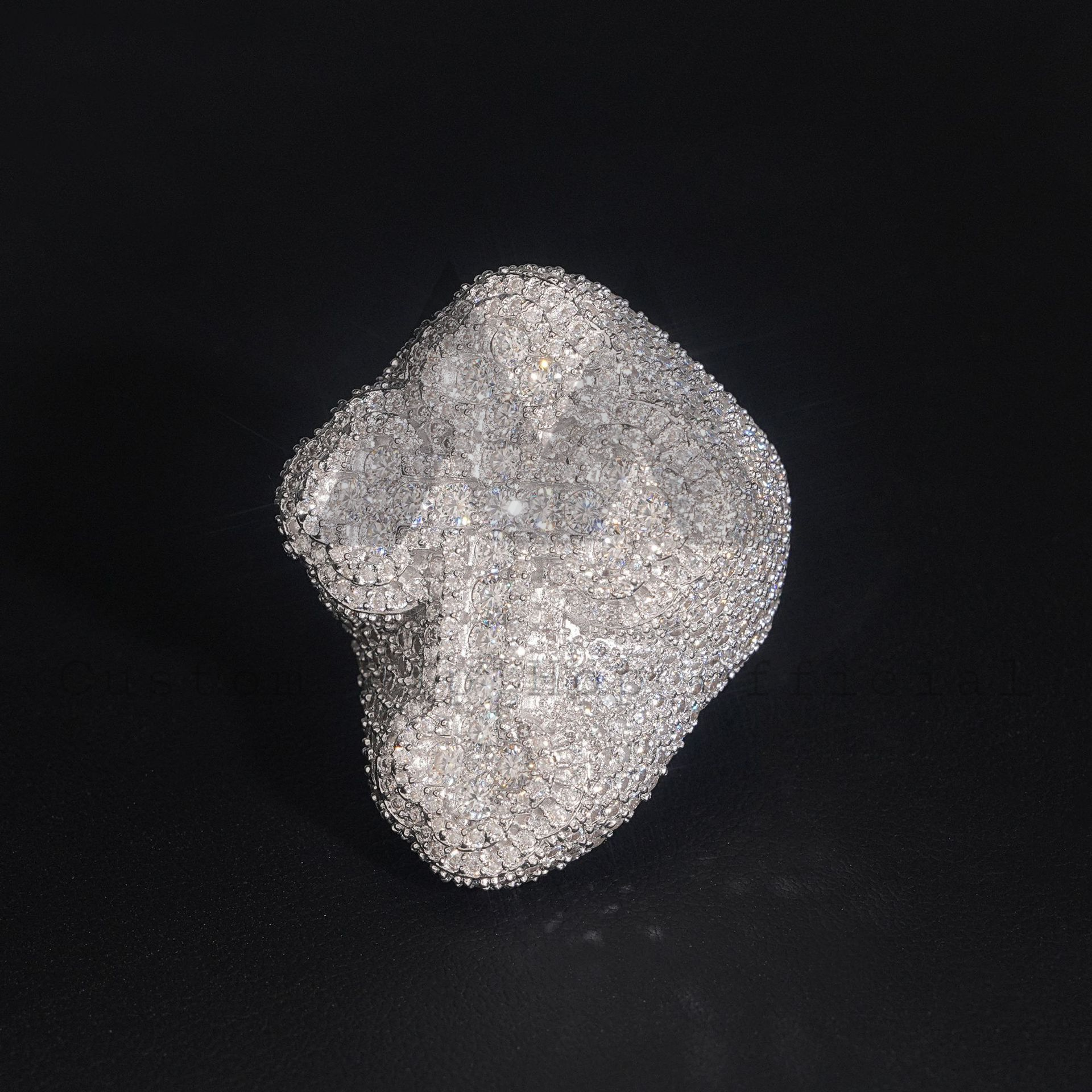
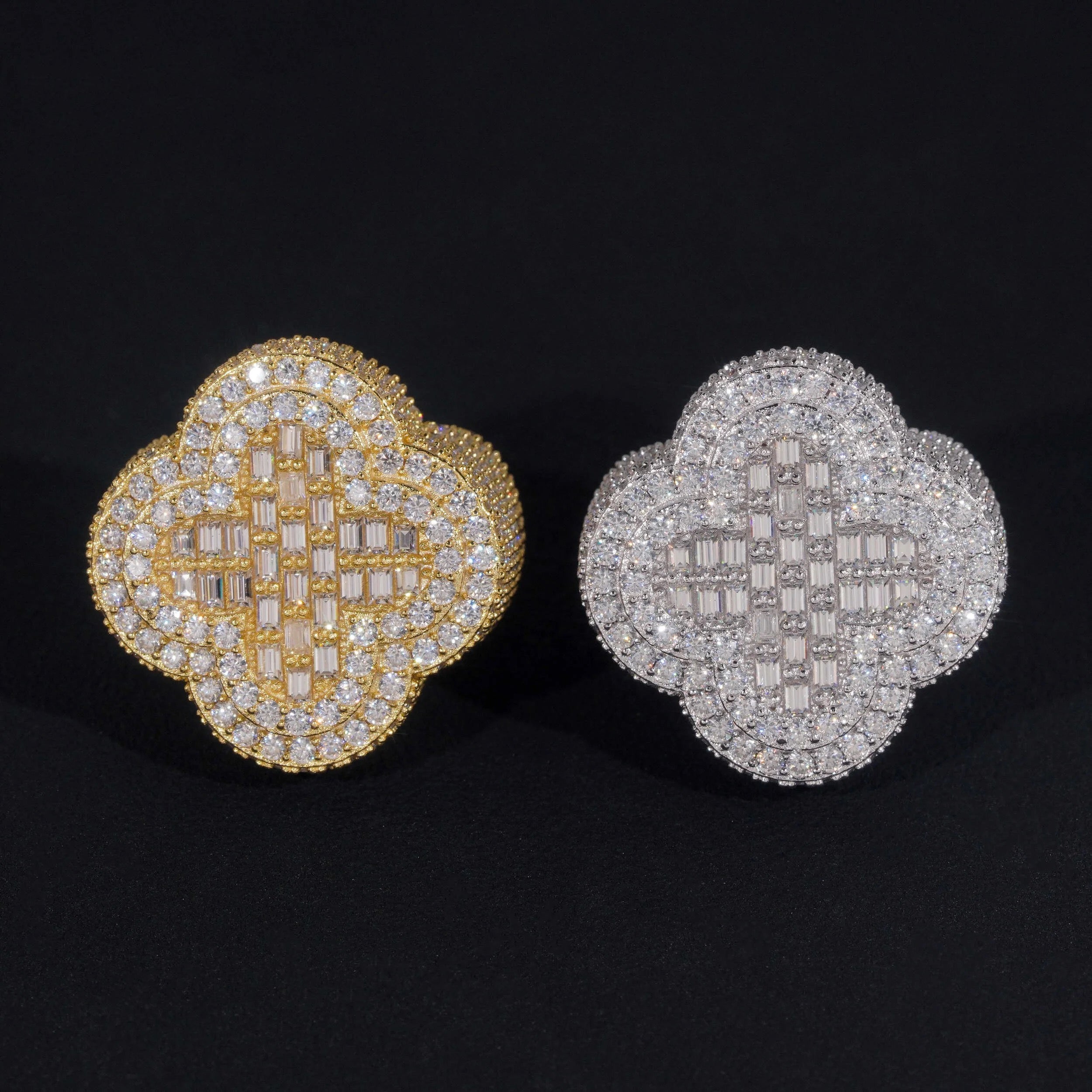
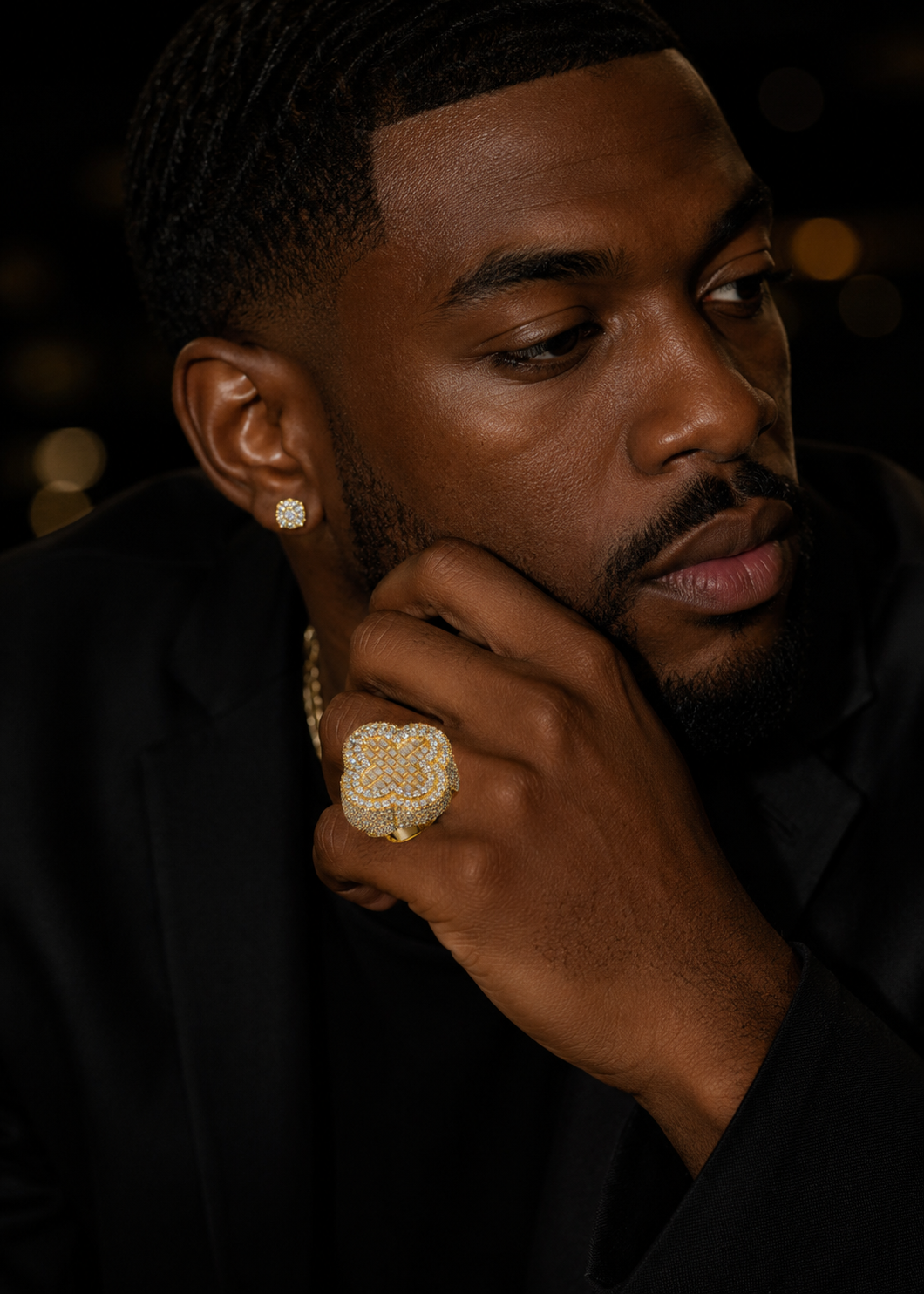
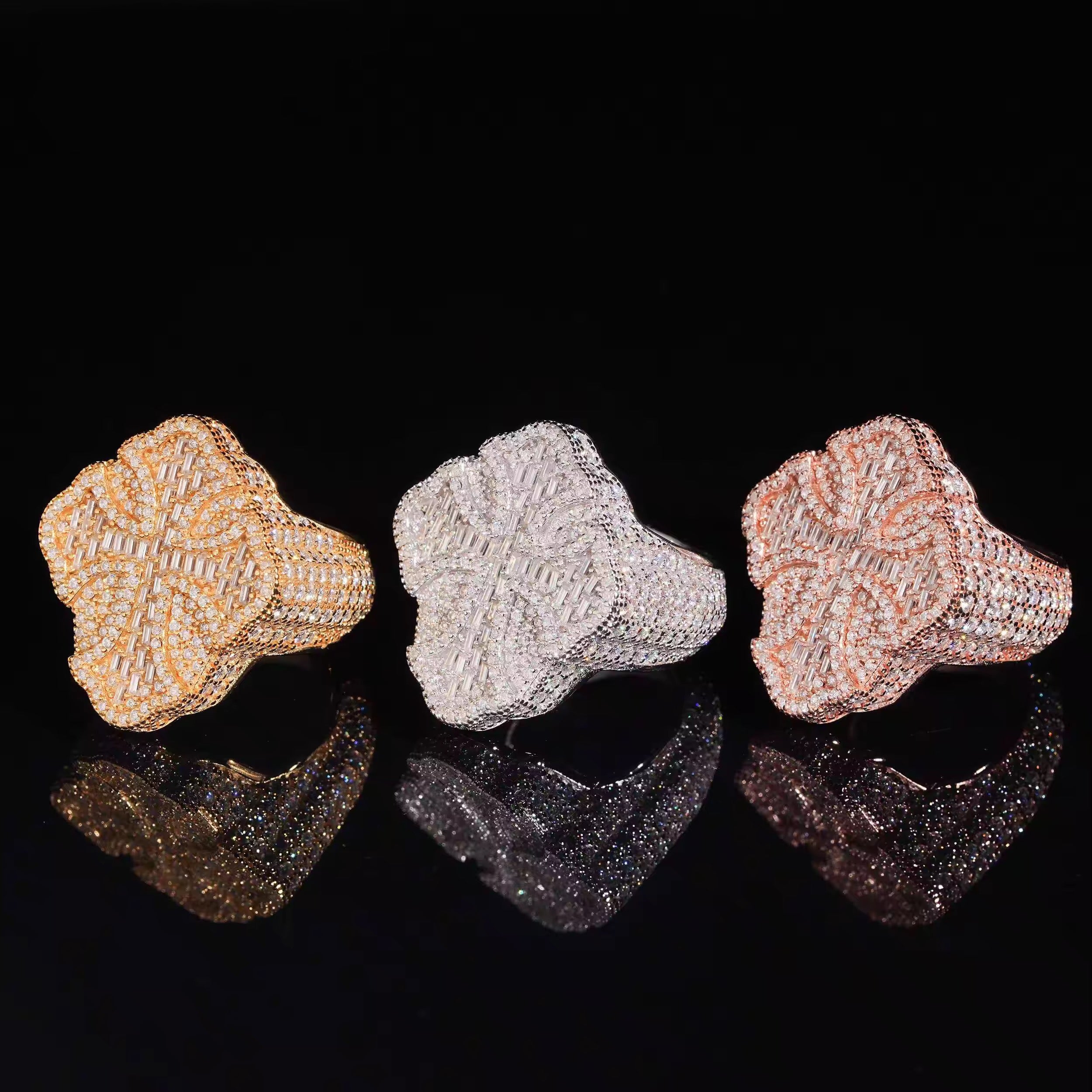
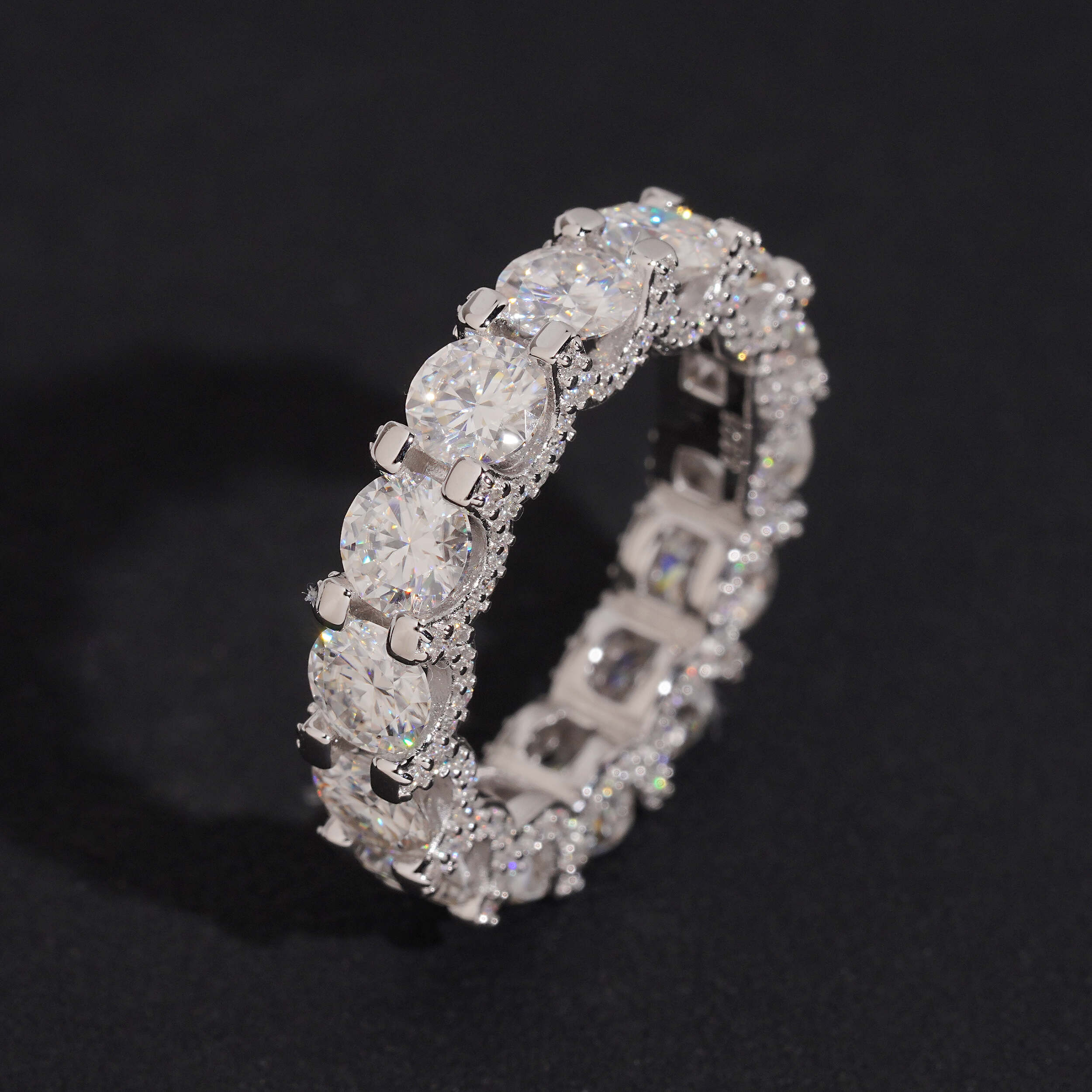
Bust down is what buyers actually call it: a ring packed so tight with stones that no metal shows through. Close to a third of the collection is iced to some degree, from side-iced bands with stones down the shoulders to wide domed faces covered corner to corner. What keeps that surface unbroken is how tightly the setting sits — stones placed shoulder to shoulder, with no metal gaps left showing between them.
Moissanite Eternity Bands
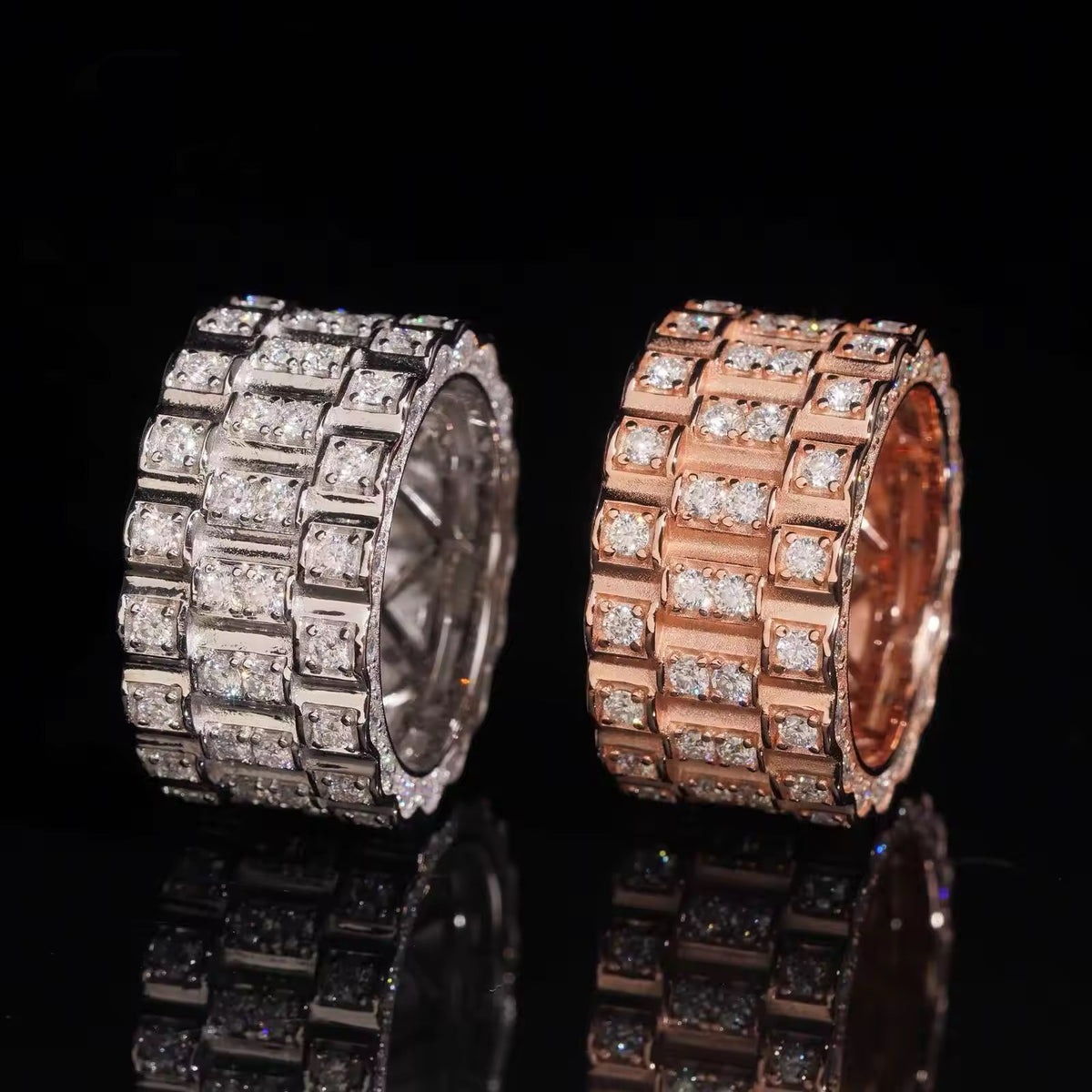
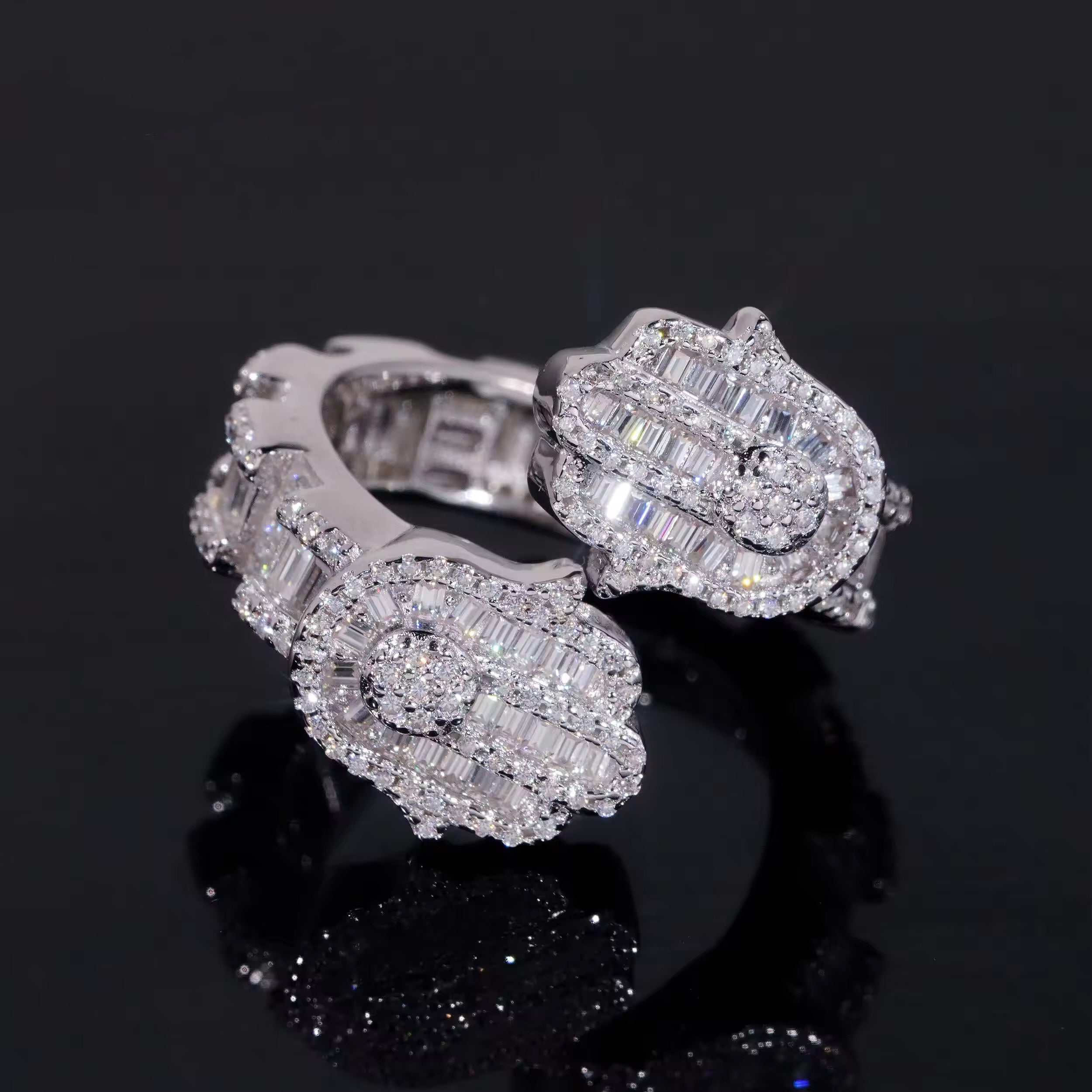
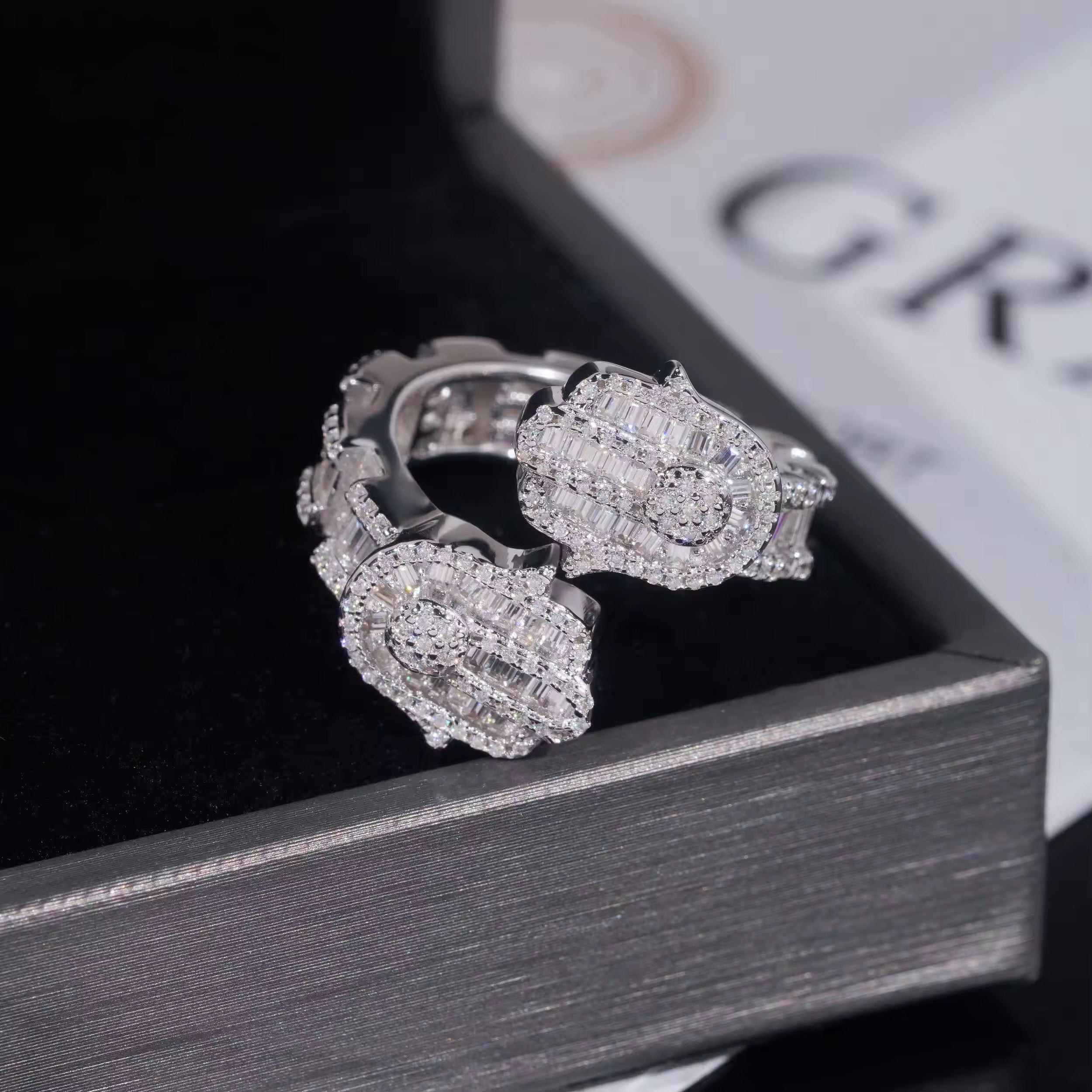
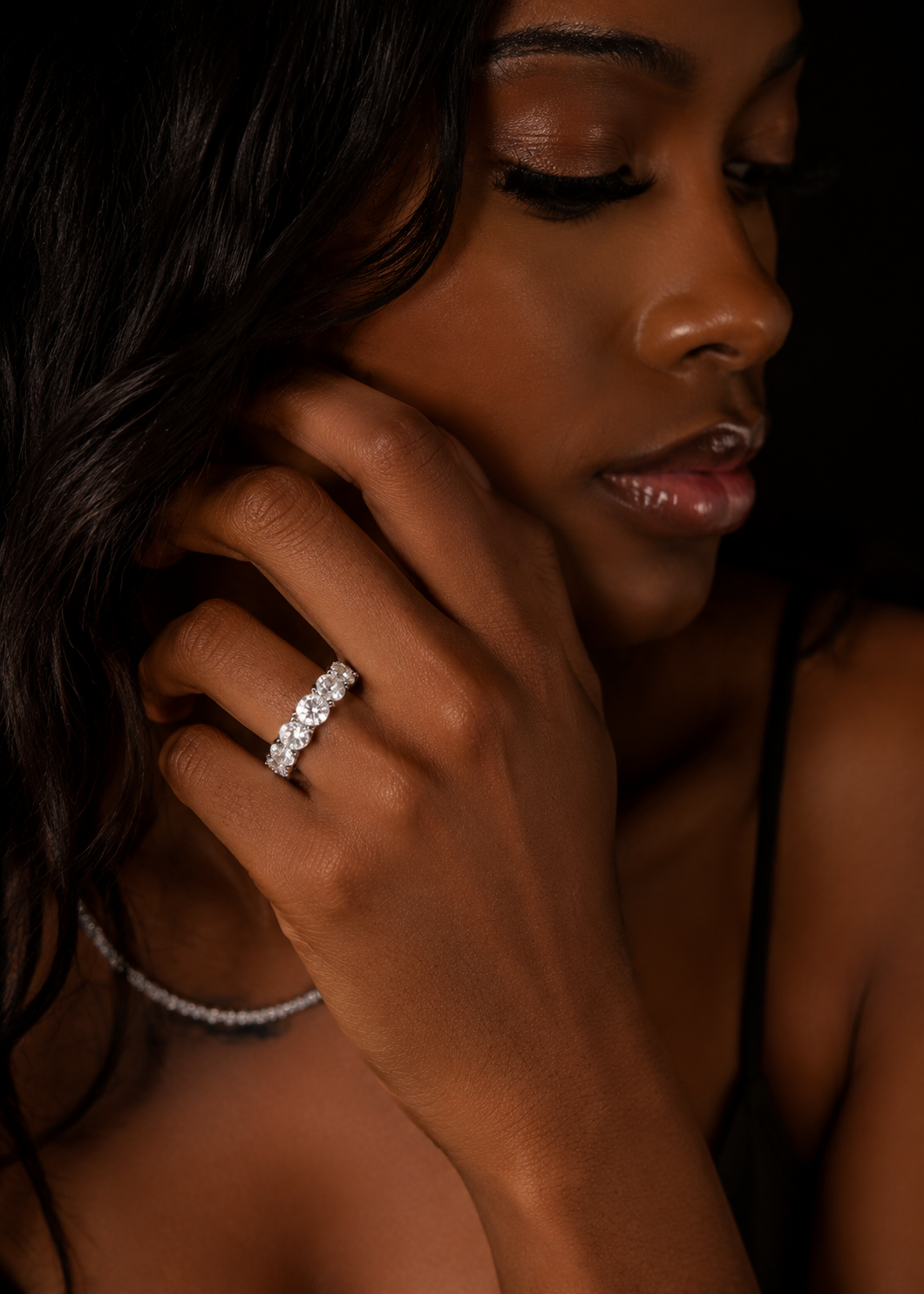
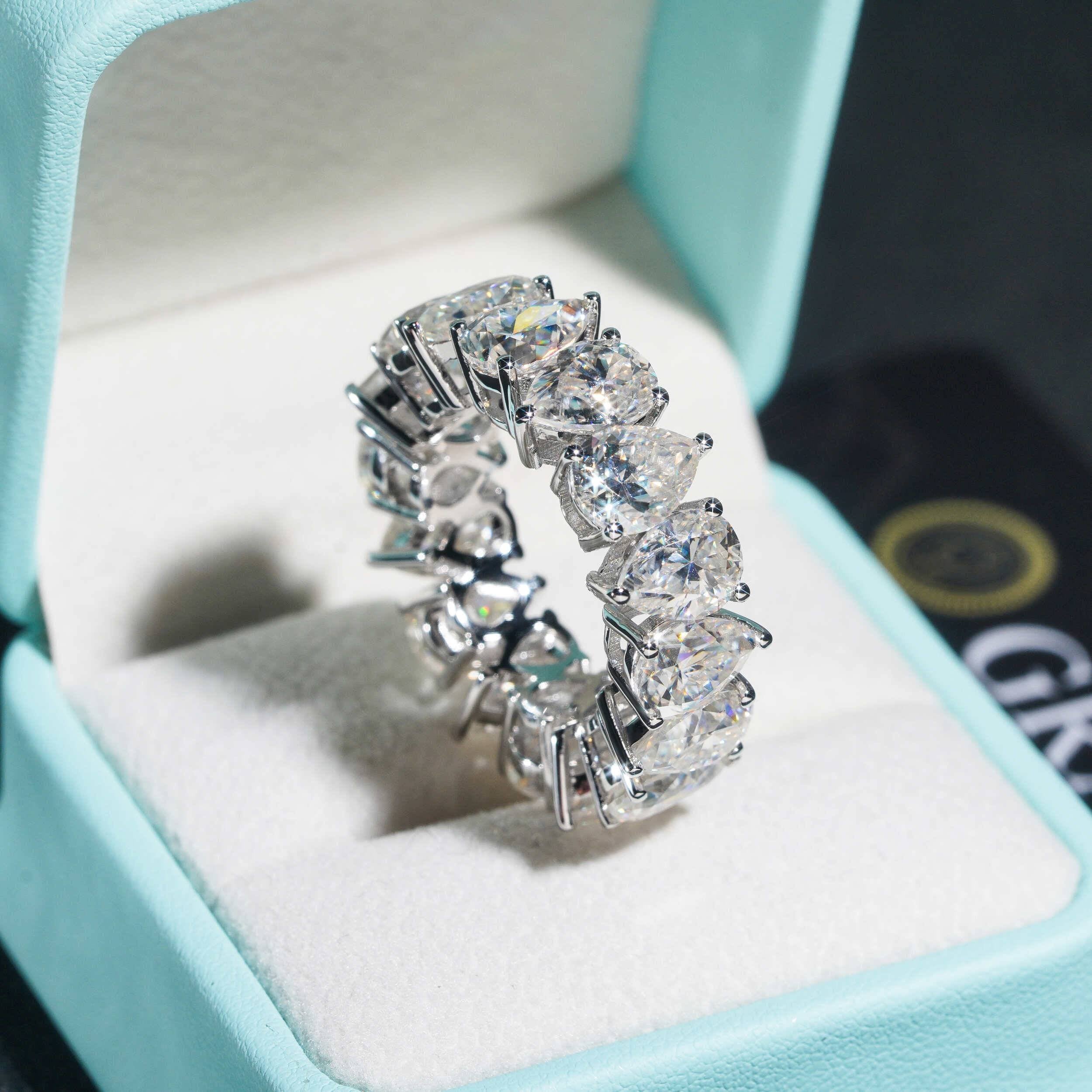
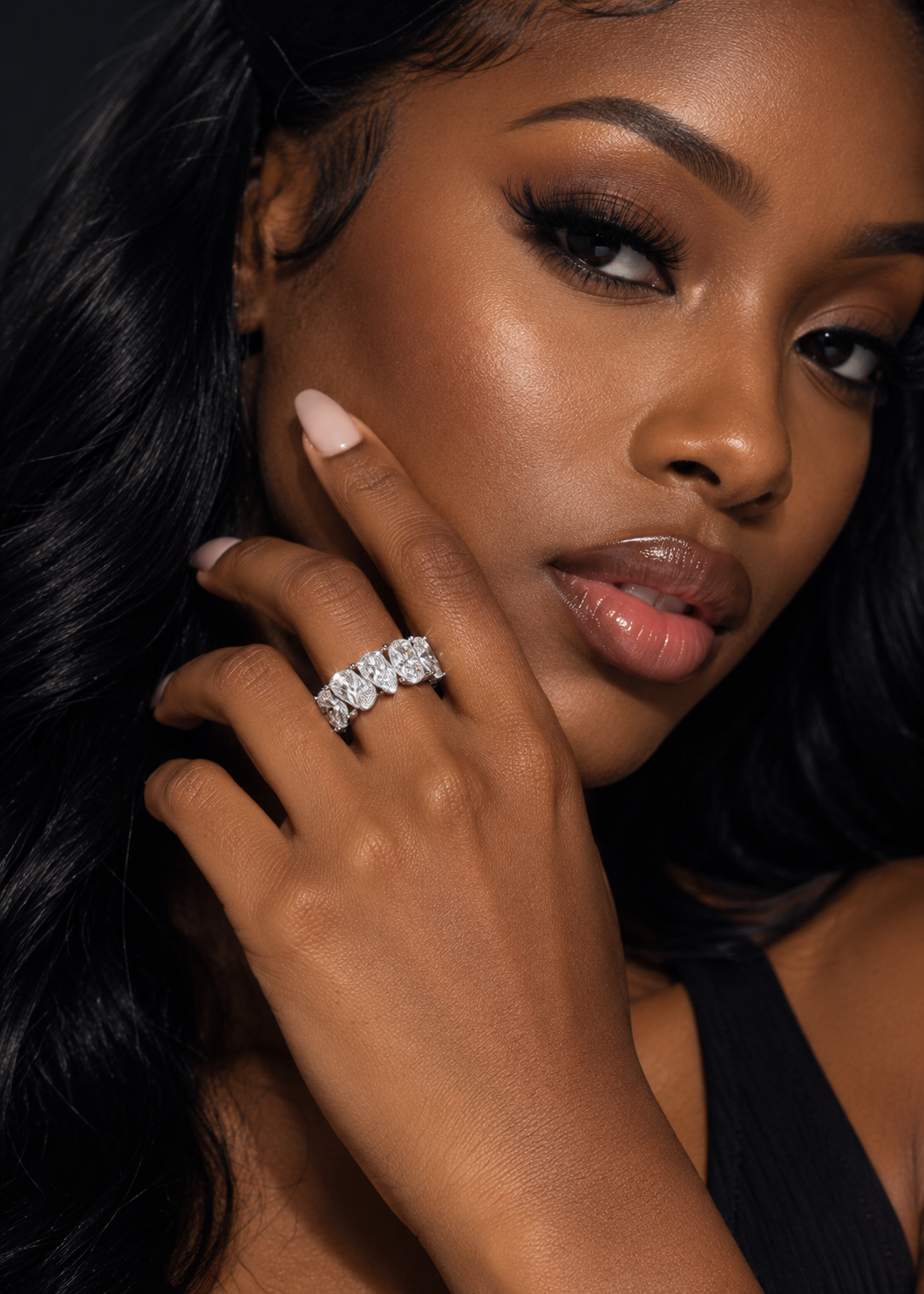
Eternity bands are the easiest thing here to wear every day. Stones run the full circle so the ring throws light from any angle, and there is nothing to spin out of place. Slim 3MM bands sit alongside 4MM and 5MM builds. Settings include round, princess and pear, plus baguette rows where the step-cut stones line up flat and glassy rather than scattering light the way a brilliant cut does.
Hip Hop Rings for Men
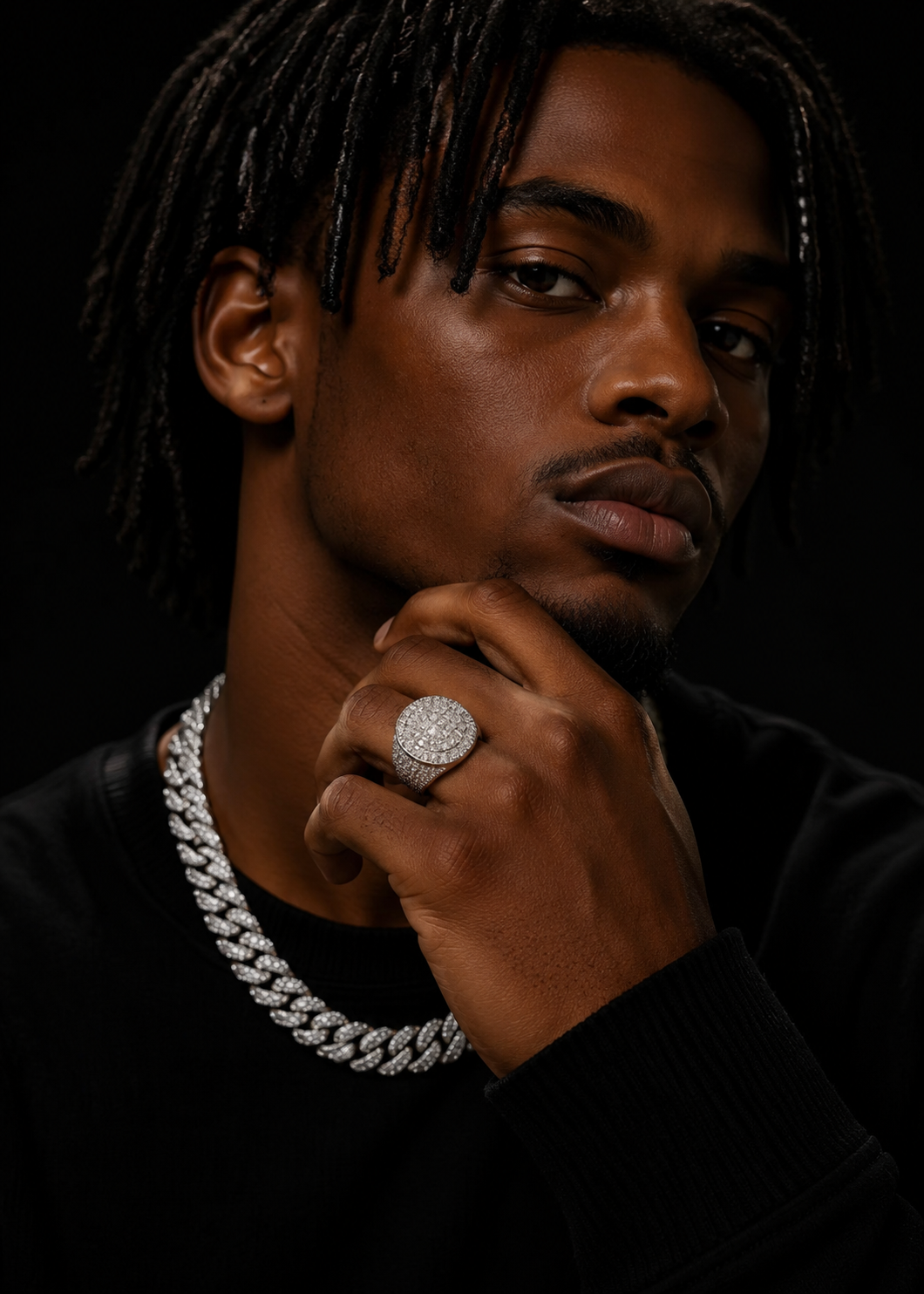
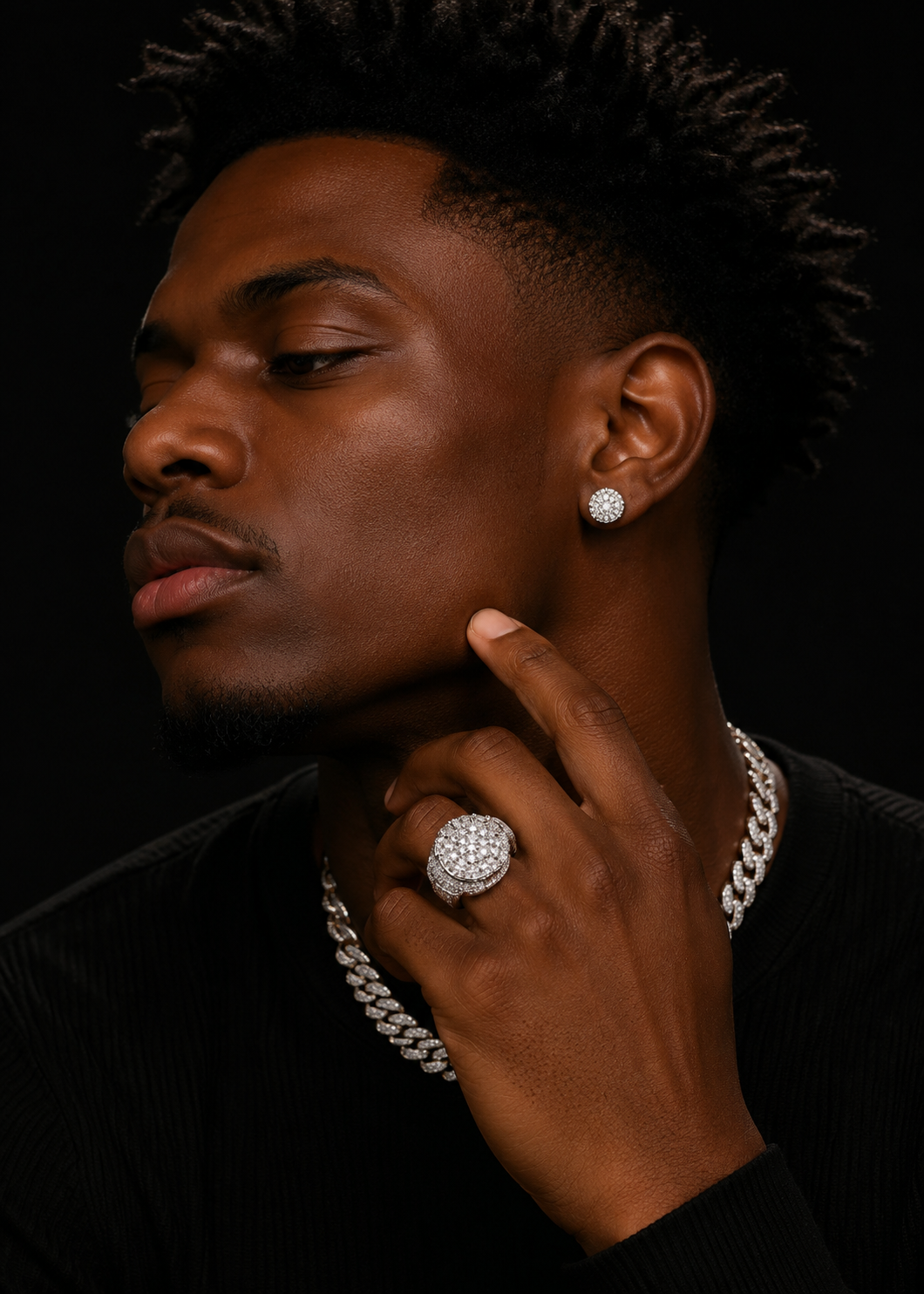
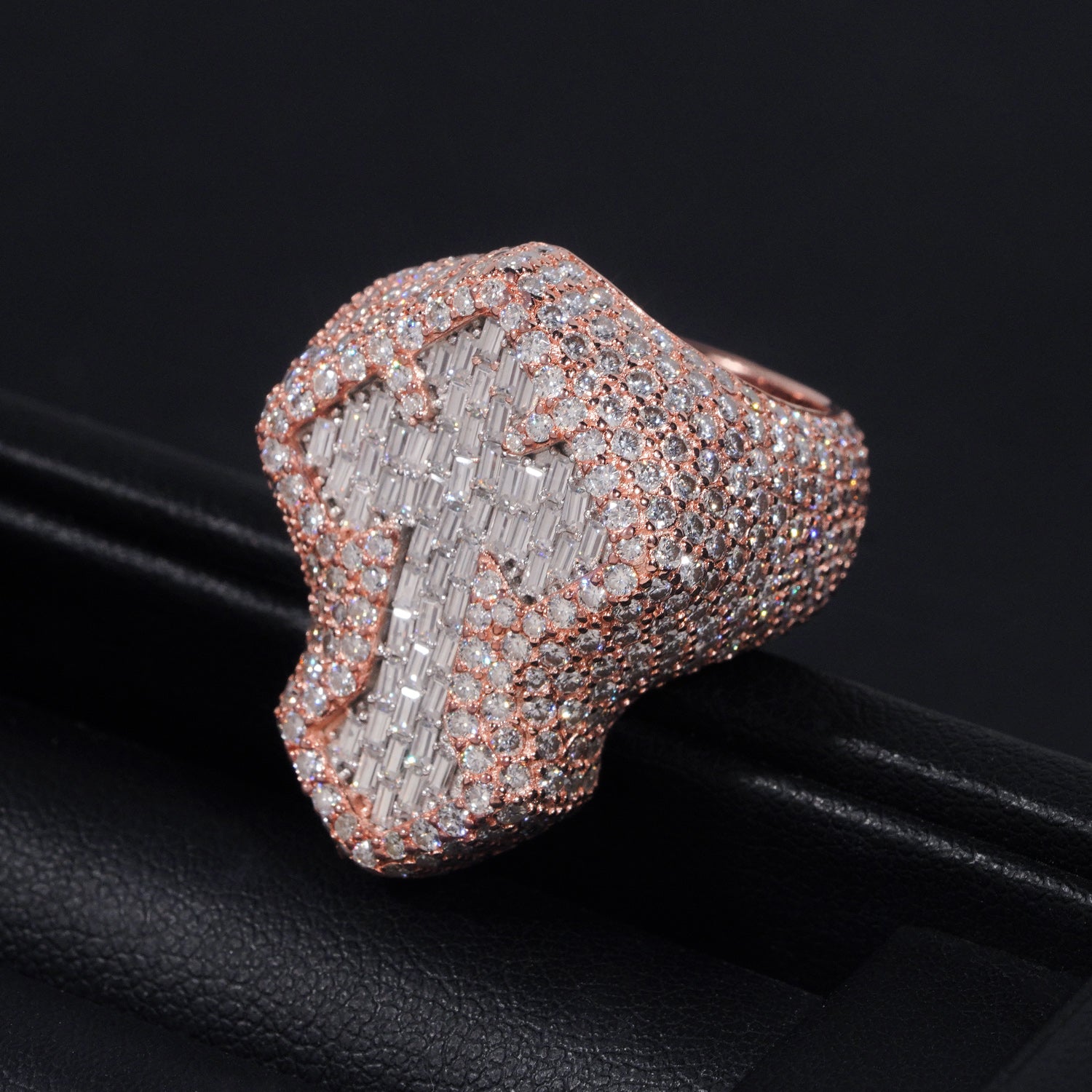
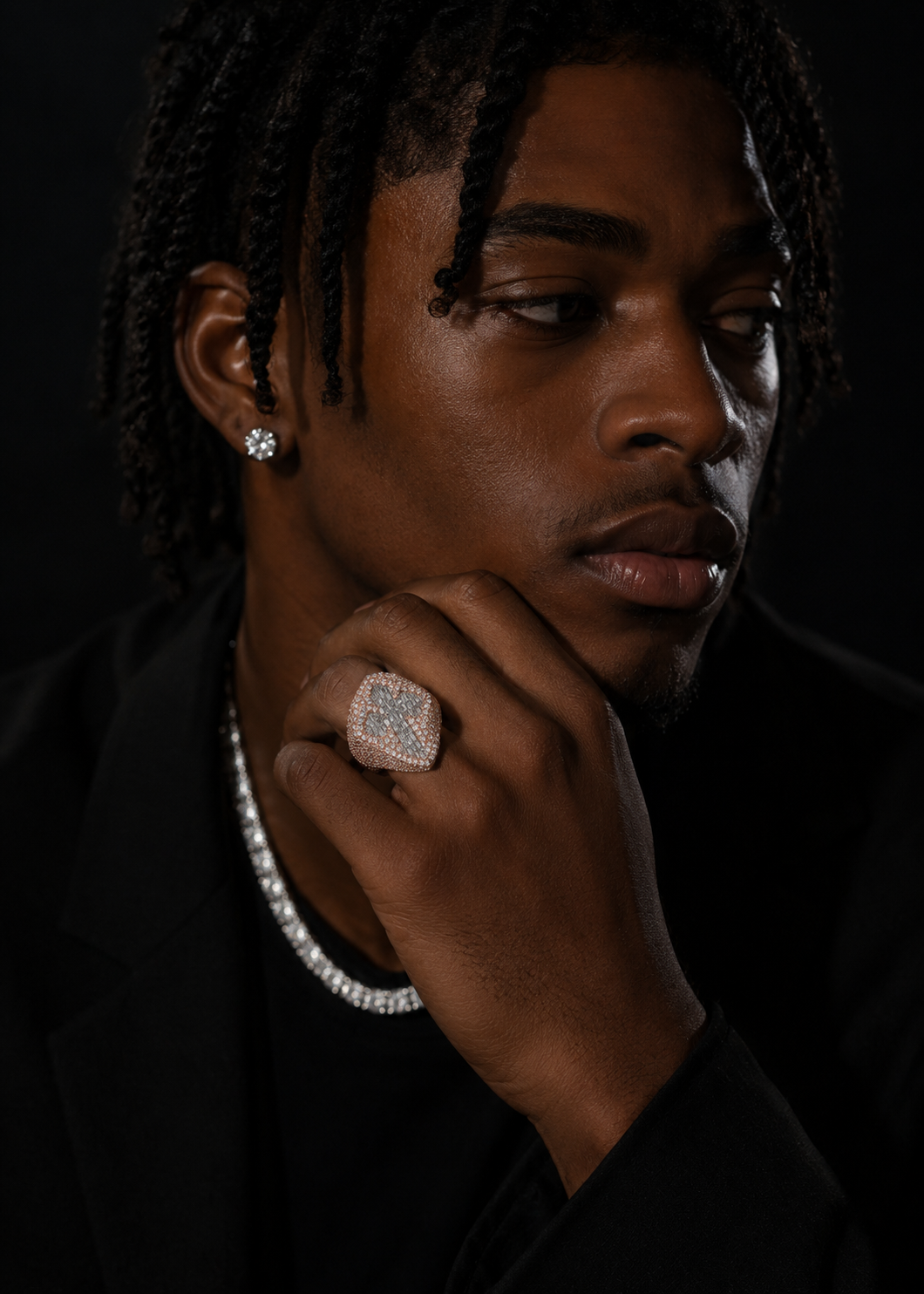
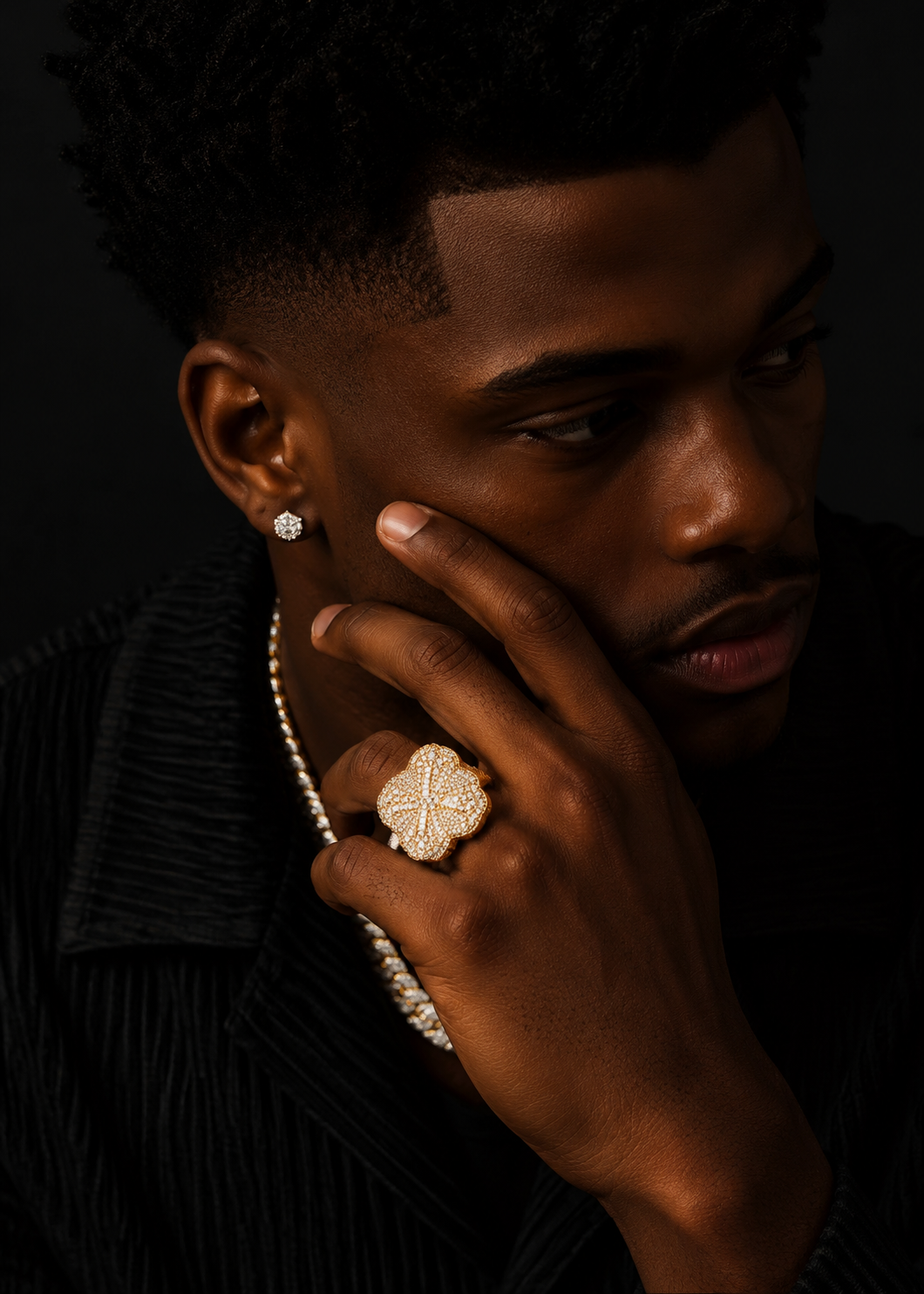
The men's side of this collection runs wider, heavier and brighter than the bridal side. Cross rings, clover shapes, cluster faces and Cuban-link bands all show up, with enough weight that the ring stays put when you gesture. Baguette work turns up often on the men's pieces, especially on cross motifs where a straight line of step-cut stones cuts through the surrounding pave. Pair one with a moissanite chain or a moissanite pendant to build the full set.
Moissanite Engagement Rings
Not everything here is built to shout. About a third of the collection is bridal: single-stone engagement rings in oval, emerald, pear and princess cuts, most set off by a halo or pave shoulders, with center stones starting at one carat and running well past five. Moissanite is what puts those larger center stones in reach, since you're paying gemstone prices rather than mined-diamond prices for the same presence on the finger. If you'd rather have the mined-stone equivalent grown above ground, those sit separately in lab grown diamond rings.
Sterling Silver, Gold Plating or Solid Gold
Three different things get called gold here, so it's worth reading the label. Six in ten rings offer 925 sterling silver, often under a plated finish in rose, yellow or white, which buys you the color at silver pricing. More than four in ten offer solid 10K, 14K or 18K, where the karat carries all the way through the piece. Some rings list both, so you pick the metal at checkout. Solid gold costs more and holds its finish far longer, while plating eventually wears at the points that rub. Check the material option on the product page to see which one you're buying.
GRA Reports, D Color and VVS
More than nine in ten rings here ship with a GRA report covering the stone's color, clarity and carat weight, so the grade is documented rather than claimed. D color means the stone reads ice-white with no warmth to it. VVS describes clarity clean enough that inclusions are very hard to spot even under magnification. Moissanite is its own gemstone — not a diamond, and not cubic zirconia — and it bends light more sharply, which is why it flashes harder at the same size. The full breakdown lives on our moissanite vs diamond page.
FAQ
Discoloration comes from the alloy, not the stones. 925 sterling silver is 92.5% silver mixed mostly with copper, and copper is what can react with skin oils on some people, more so in heat or humidity. Most plated rings here are gold over that same 925 silver, so if the plating thins at the knuckle you are back to sterling underneath rather than a cheaper metal. Solid 10K, 14K and 18K carries its alloy all the way through, with no layer to wear off at all.
Most rings here list finger size as an option at checkout. If you already own a ring that fits the same finger, measure its inside diameter and match that number rather than guessing. It is worth getting right first time on this page: a full eternity band has stones running the whole way around, which leaves no plain stretch of metal to cut into later.
That comes down to the setting more than the wearing. Prong-set stones sit higher and can catch on fabric; bezel and channel settings sit level with the metal and take knocks better, which is why several of the eternity bands here use them. Whichever you pick, take the ring off for gym sessions and manual work, because that is where most stone loss actually happens.
The slim bands are built for it. 3MM and 4MM eternity bands sit flat enough to wear two or three deep without crowding the knuckle, and pairing a plain-edge band with an iced one reads better than a solid block of stones. Wide bust down faces and halo engagement settings sit too high to stack cleanly, so those work better worn on their own.