





Sleeve Up, Ice Out
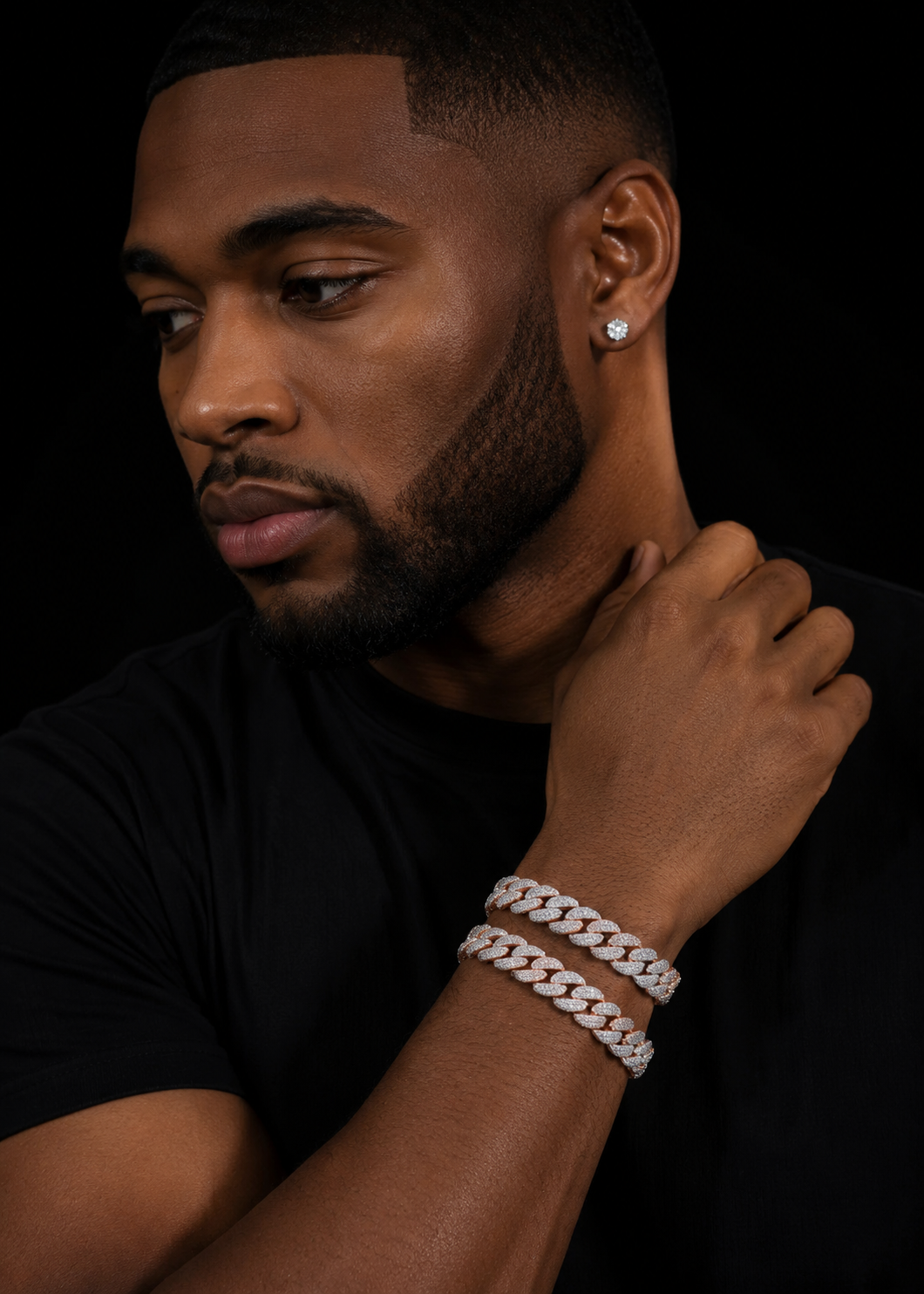
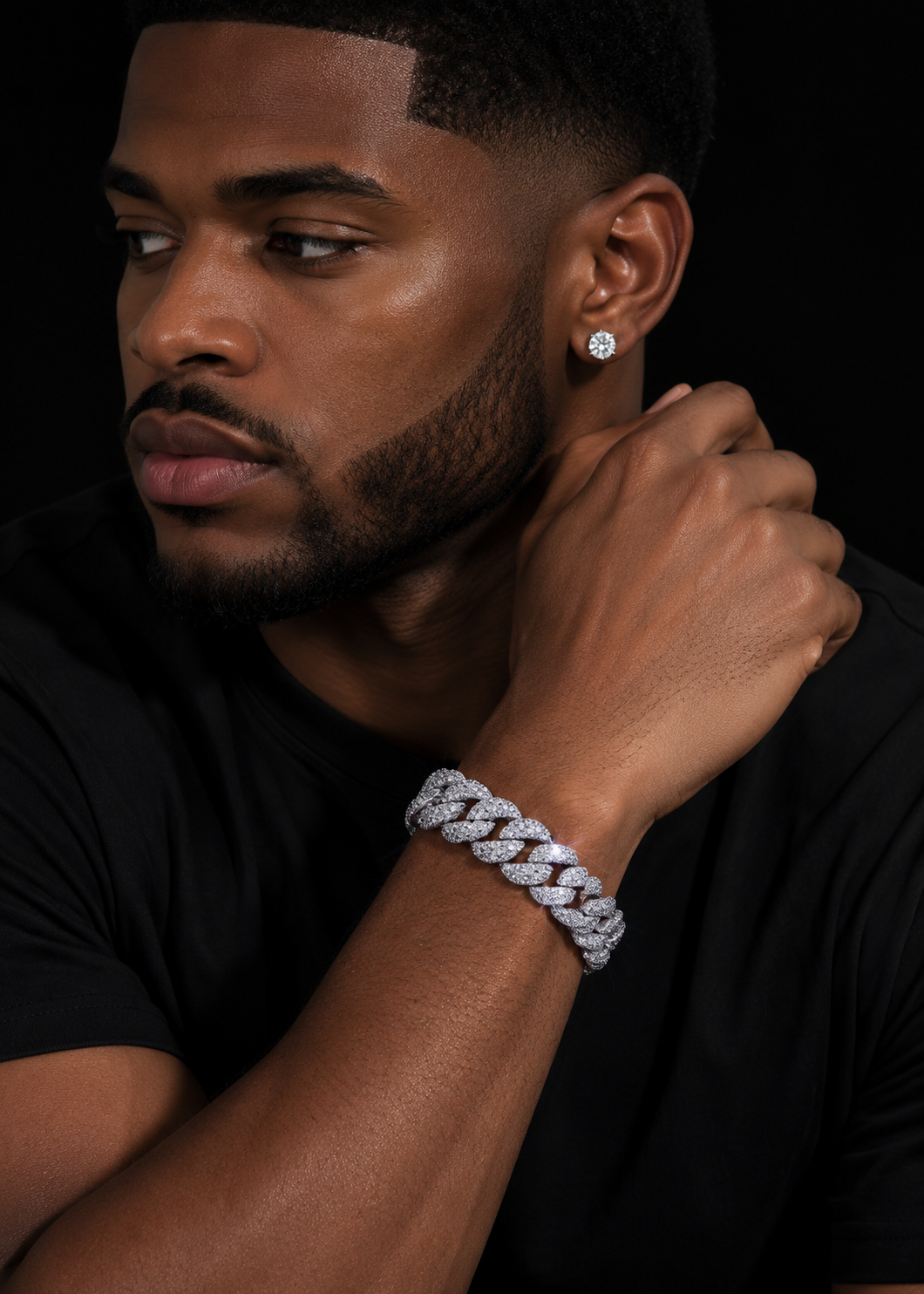
The same link that made the neck famous, cut down to 6 to 21 millimeters and built to sit beside your watch. Single-row for the everyday, three-row when the room needs to know — VVS moissanite, in silver, white gold and rose gold.


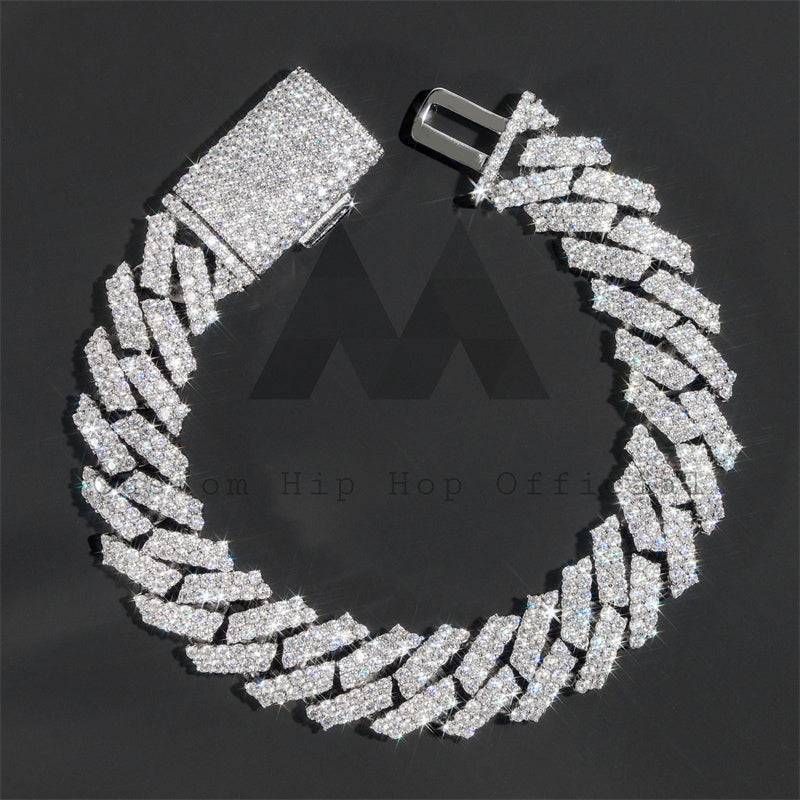
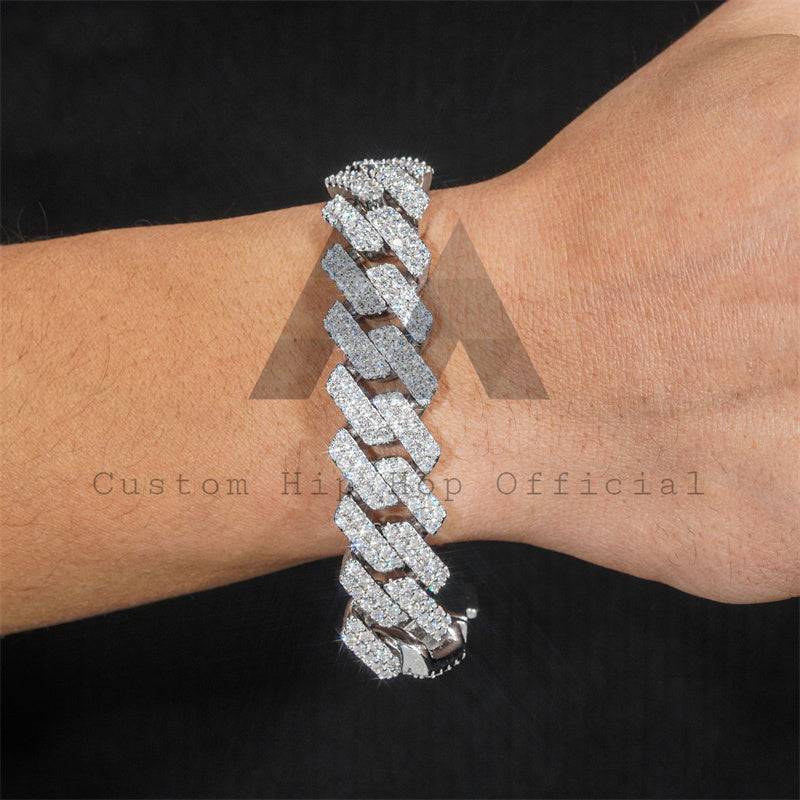
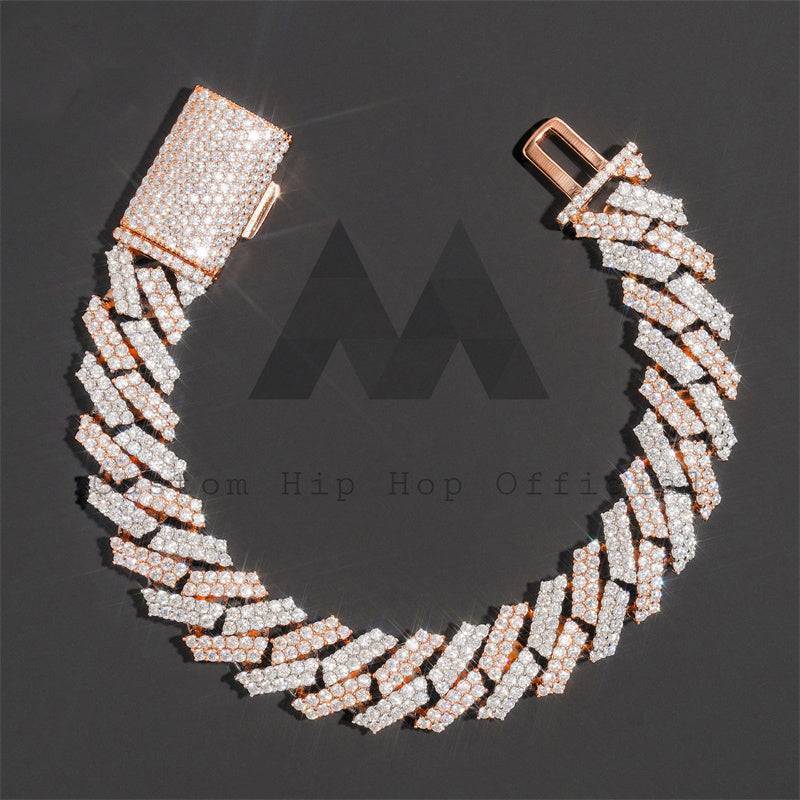
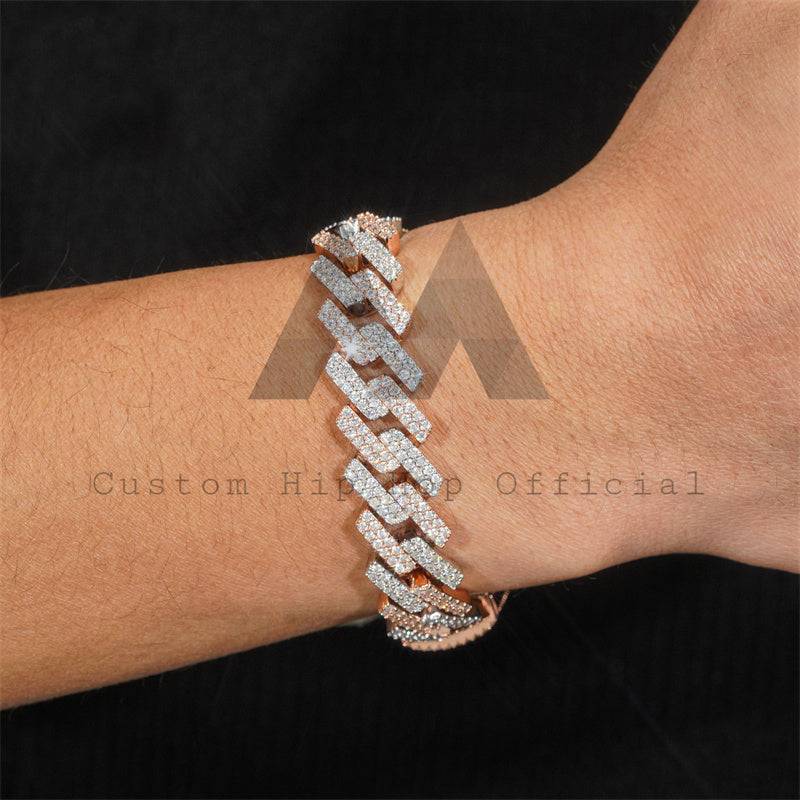
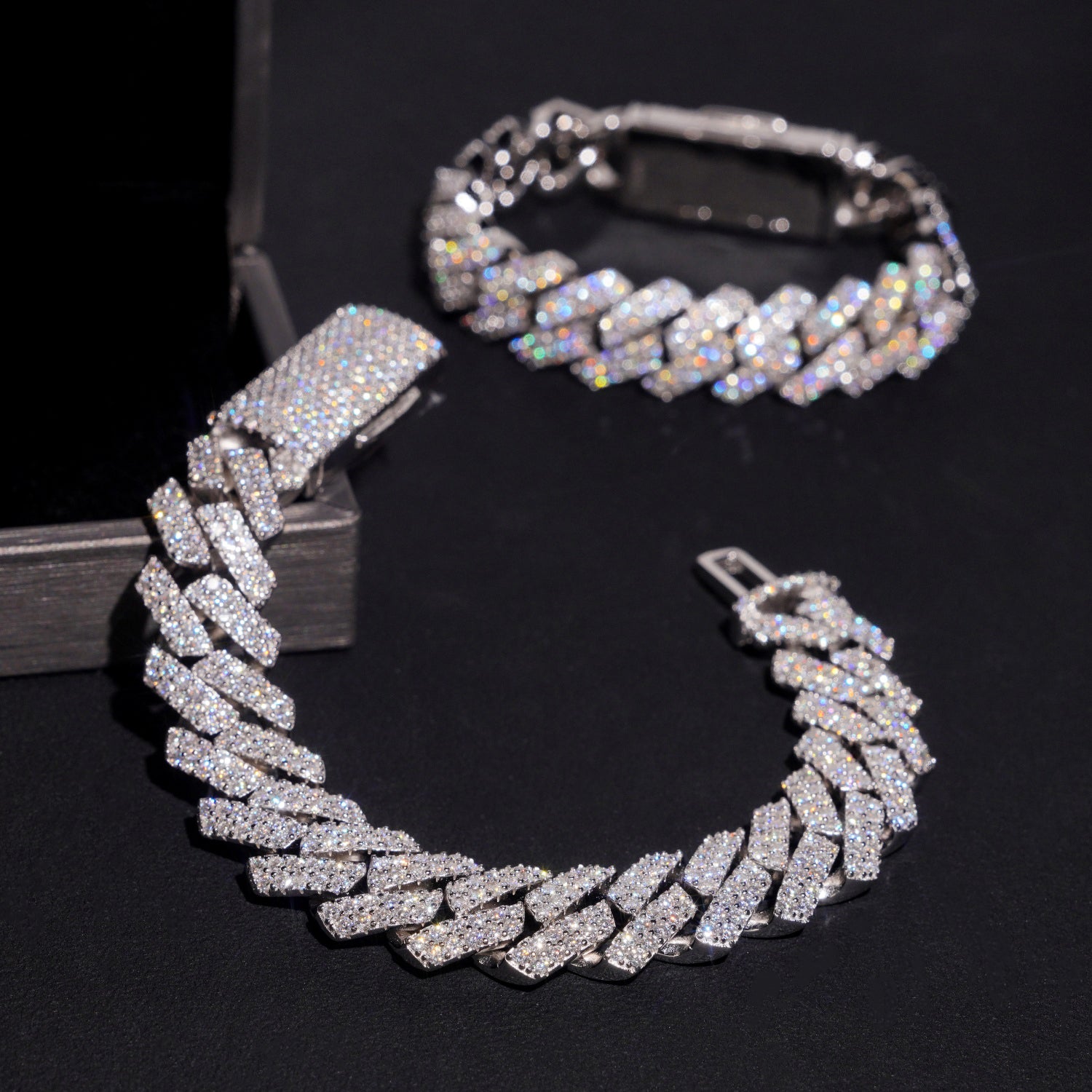
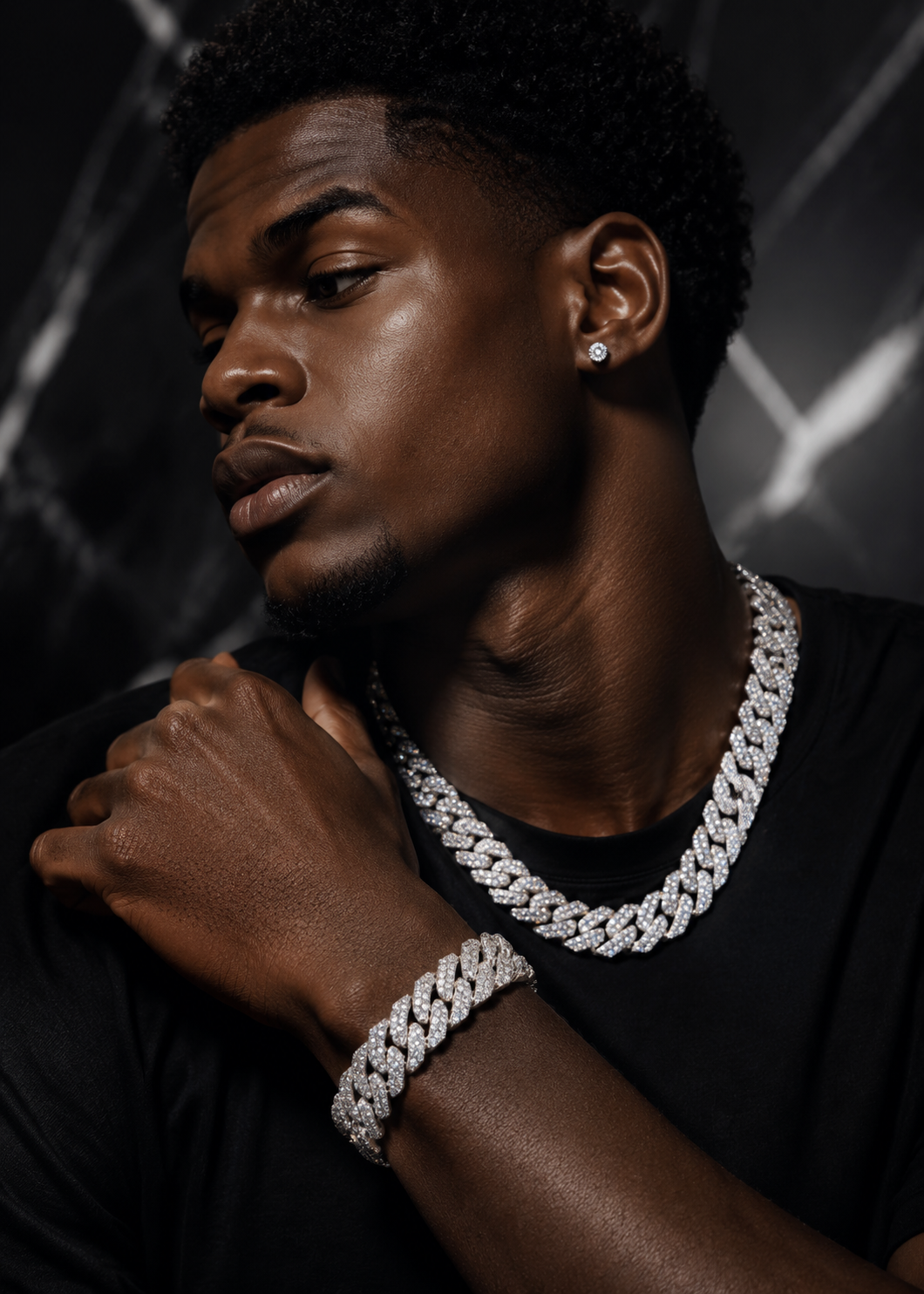
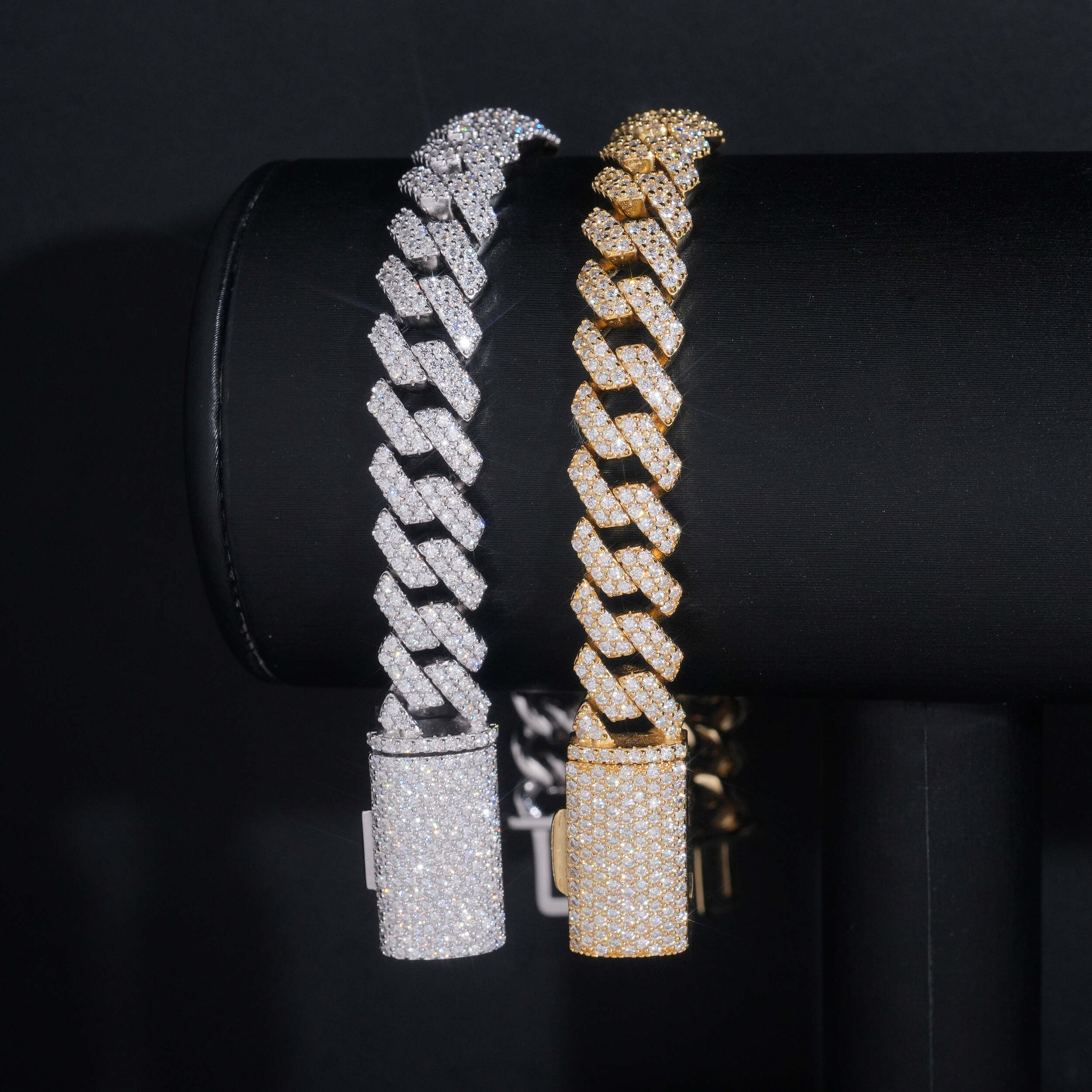

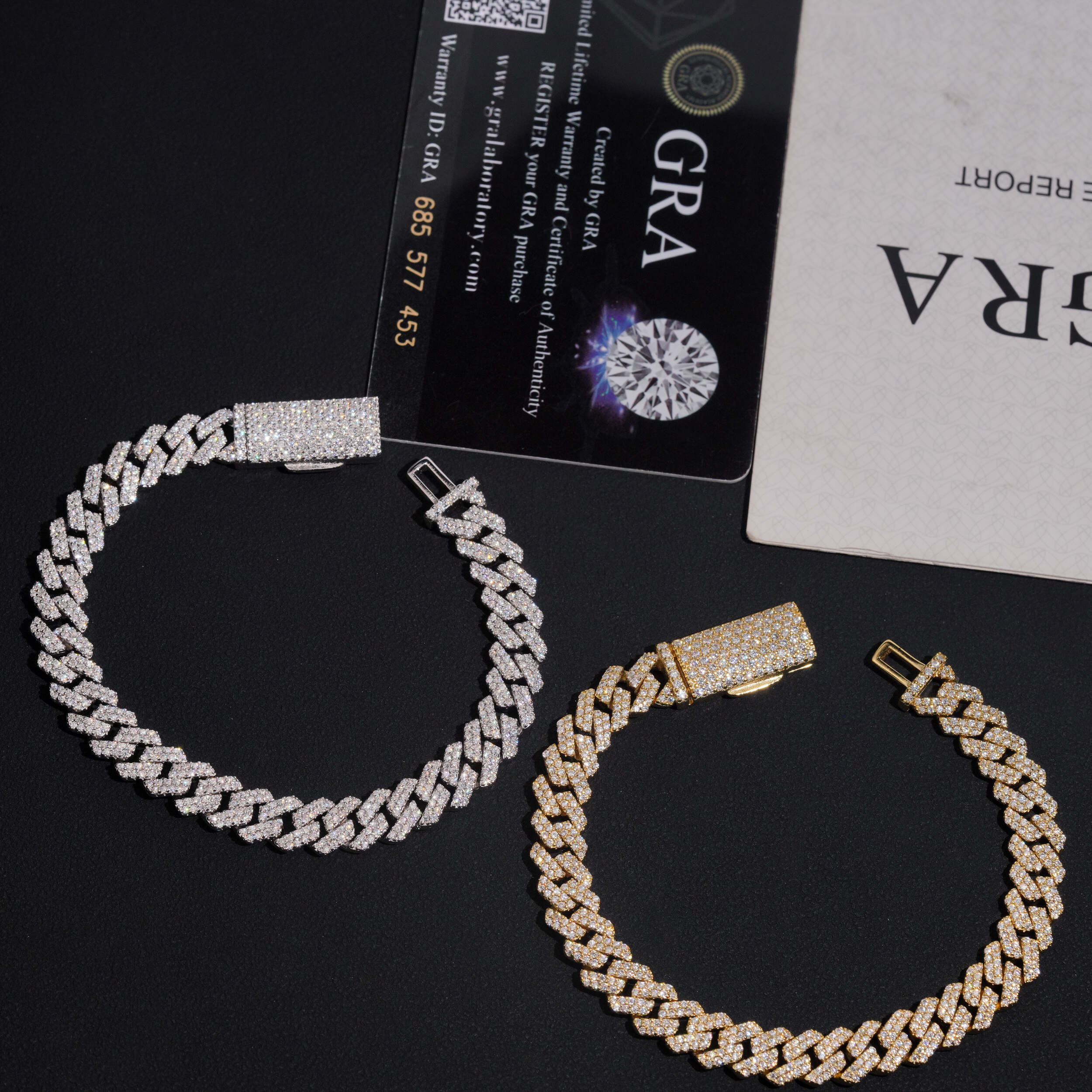



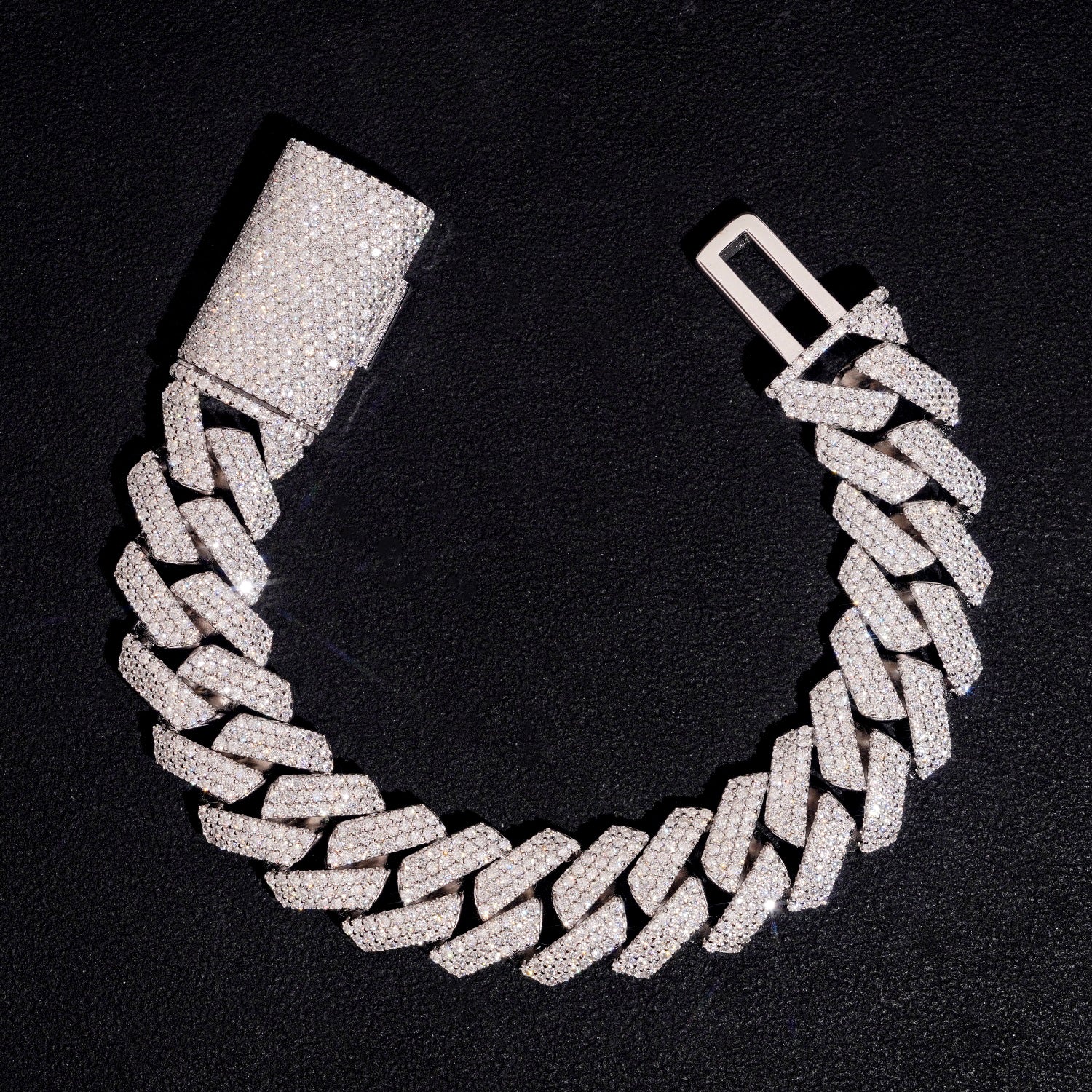
Inside the Cuban Link Bracelet Collection
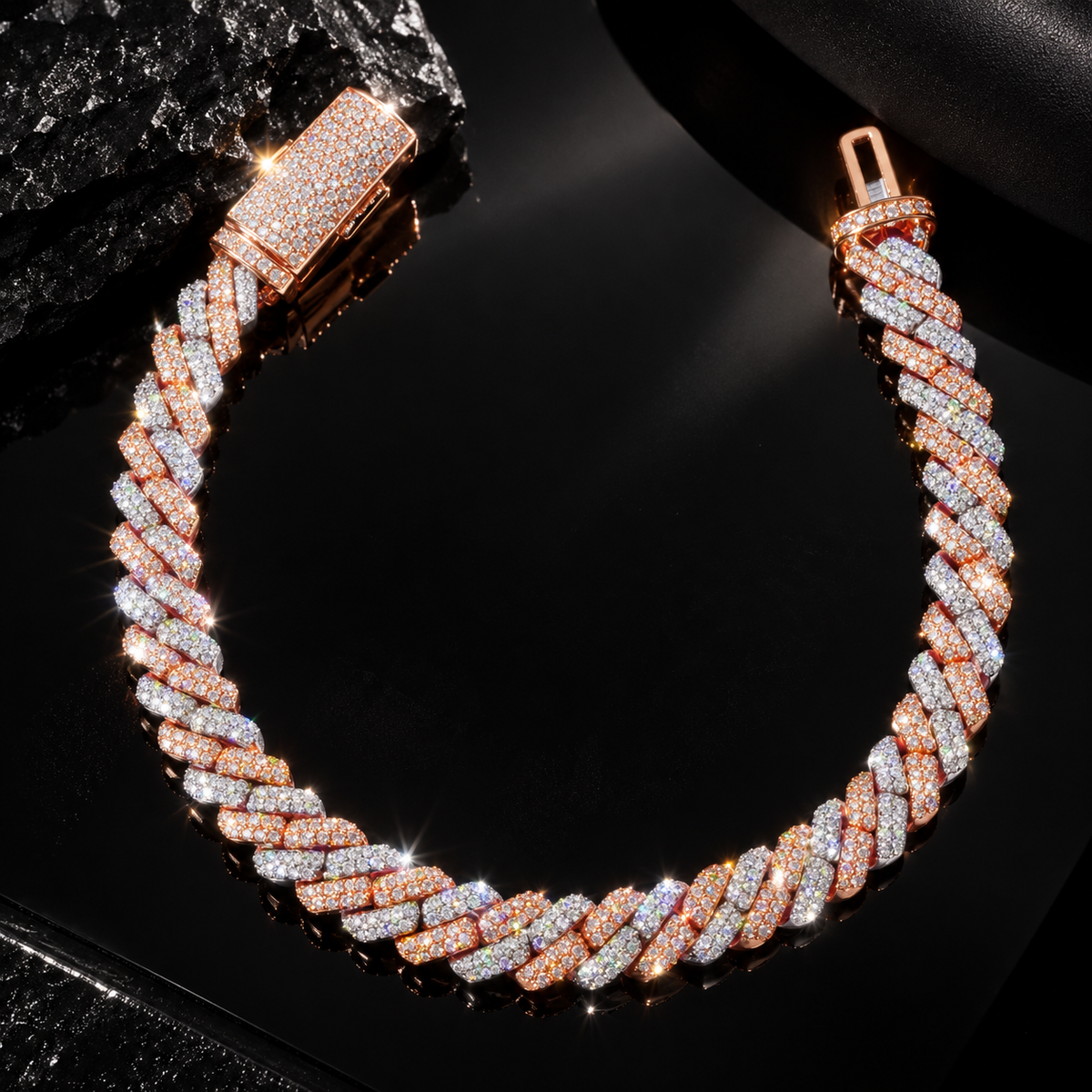
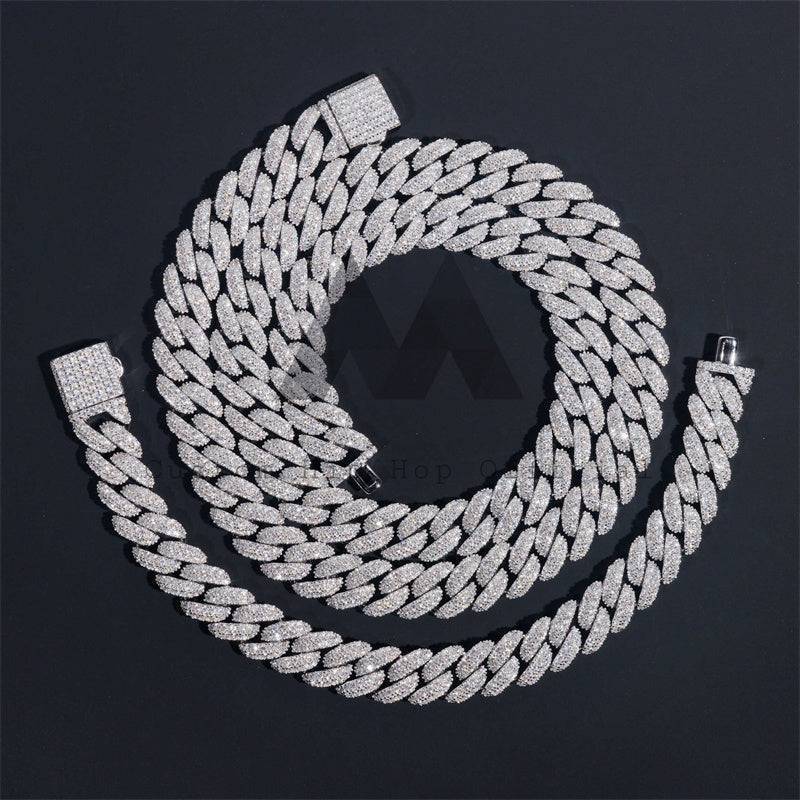
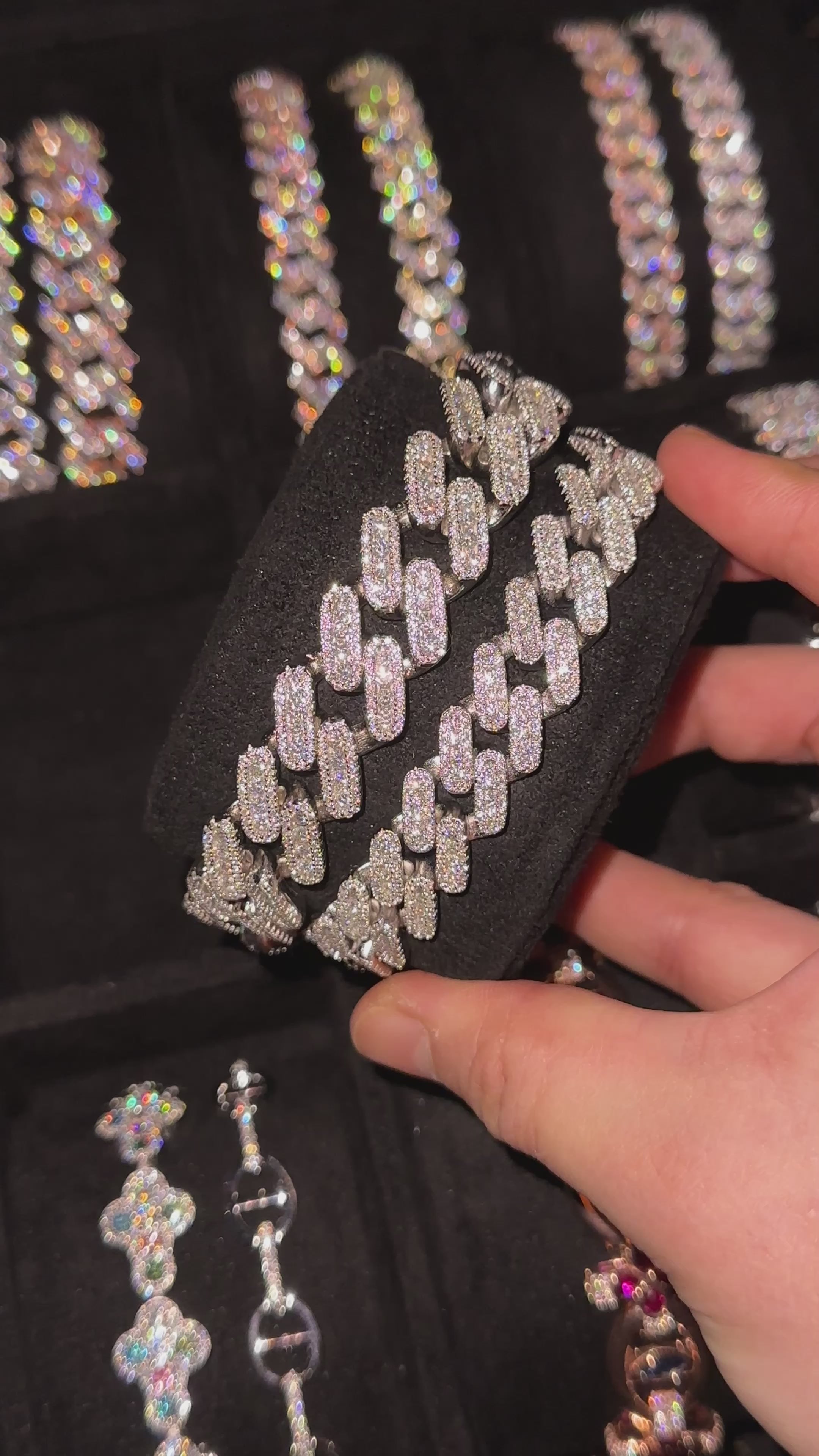
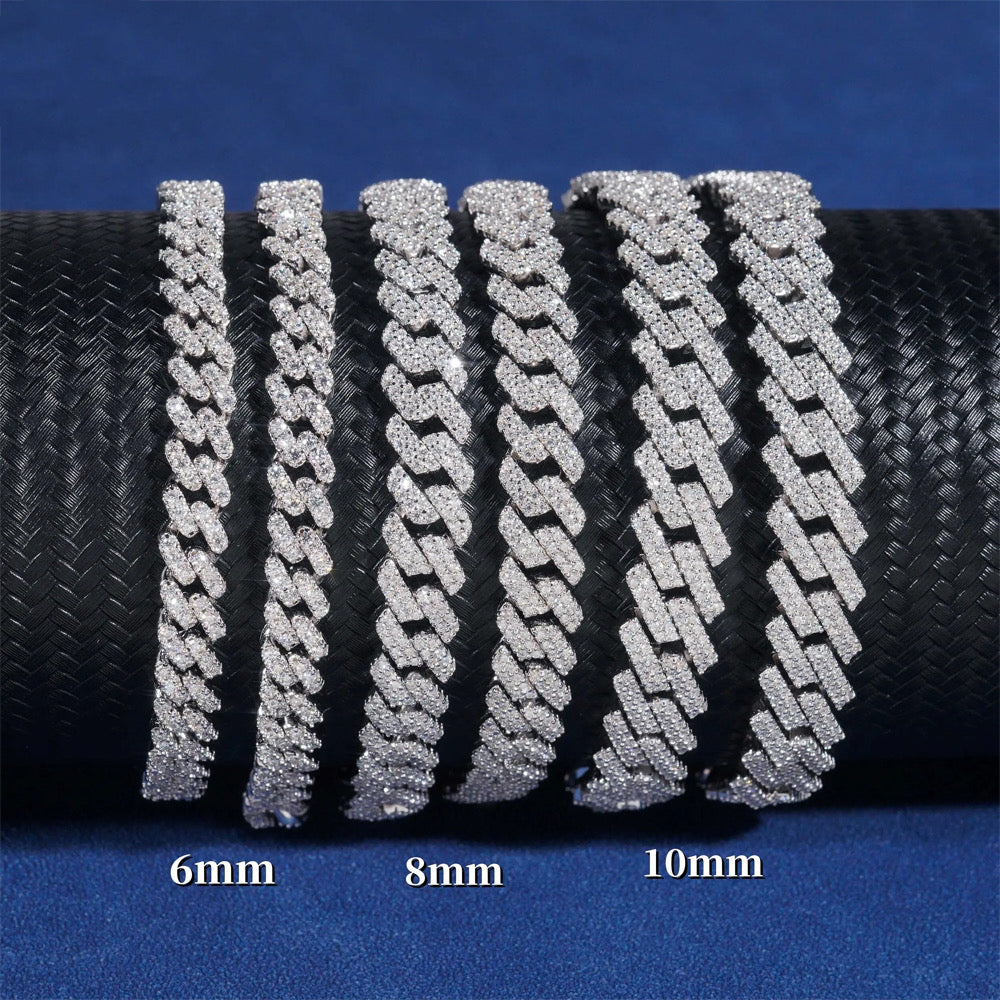
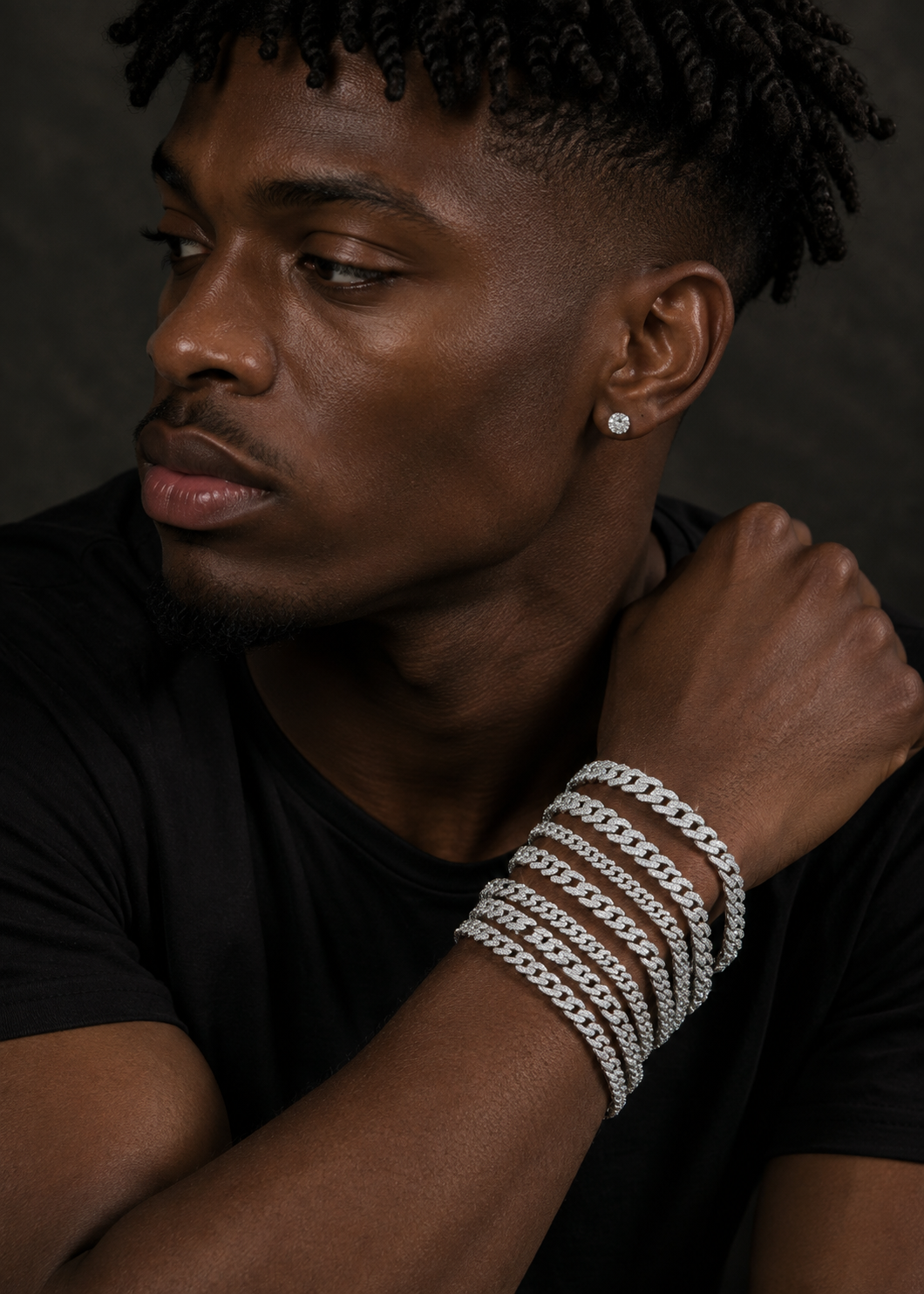
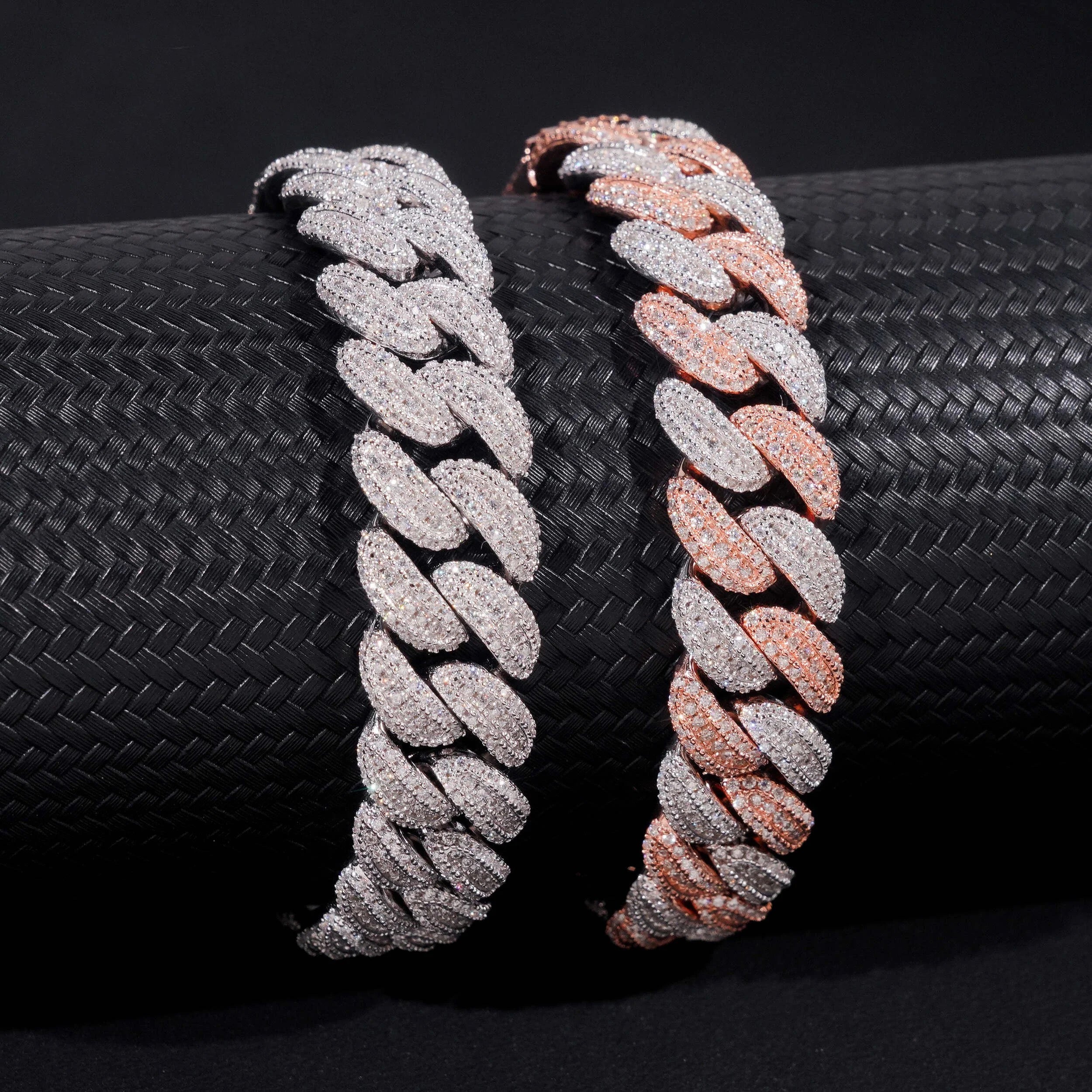
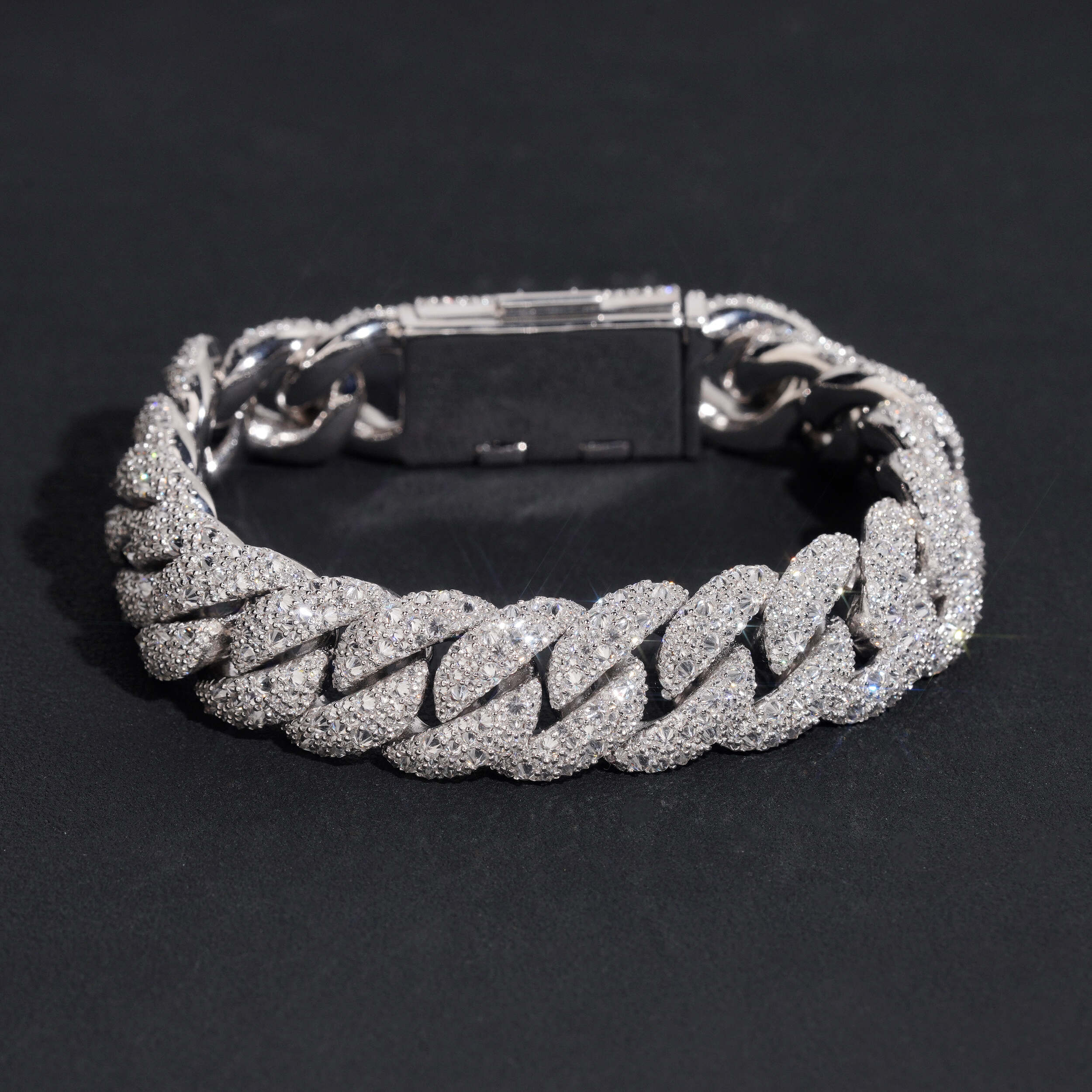
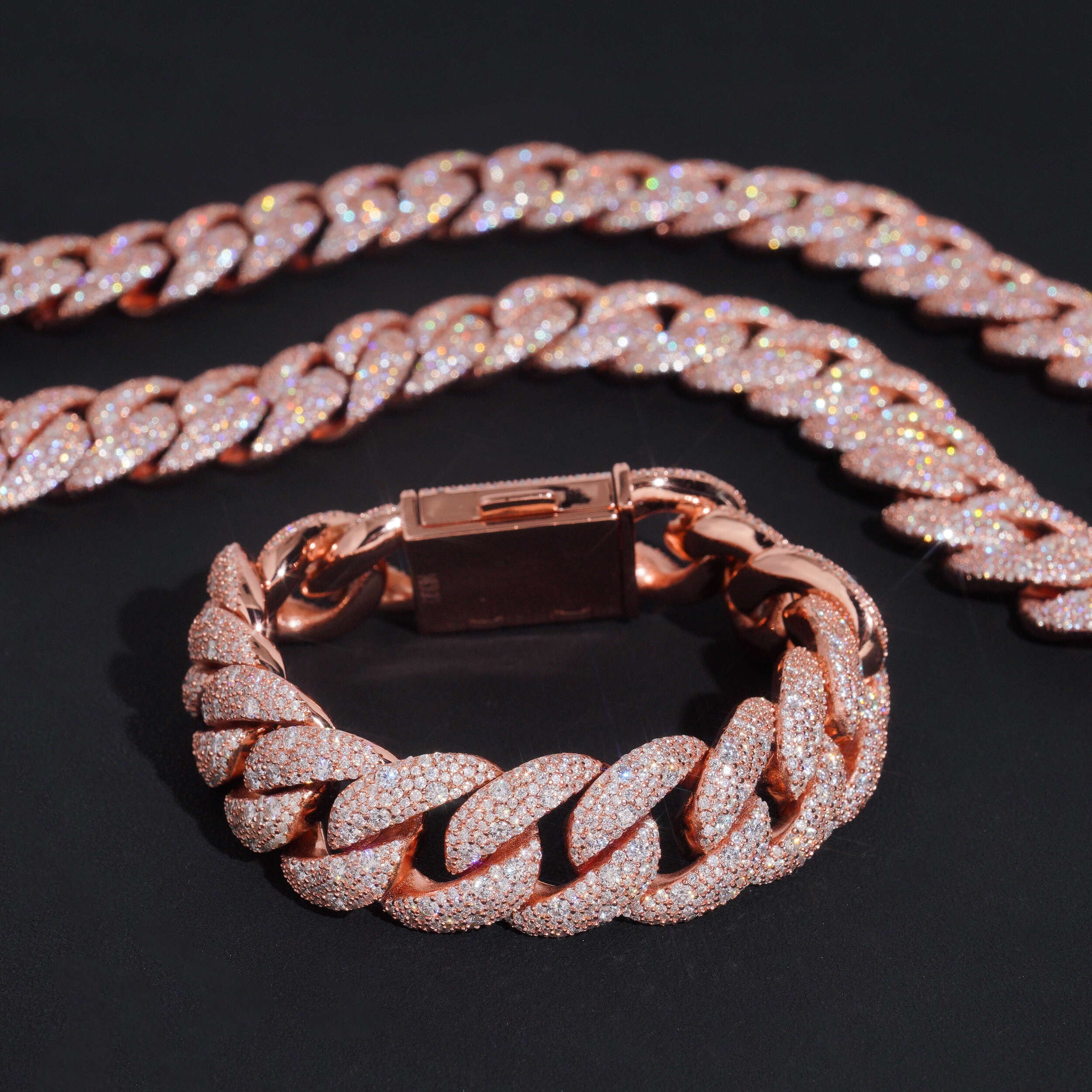
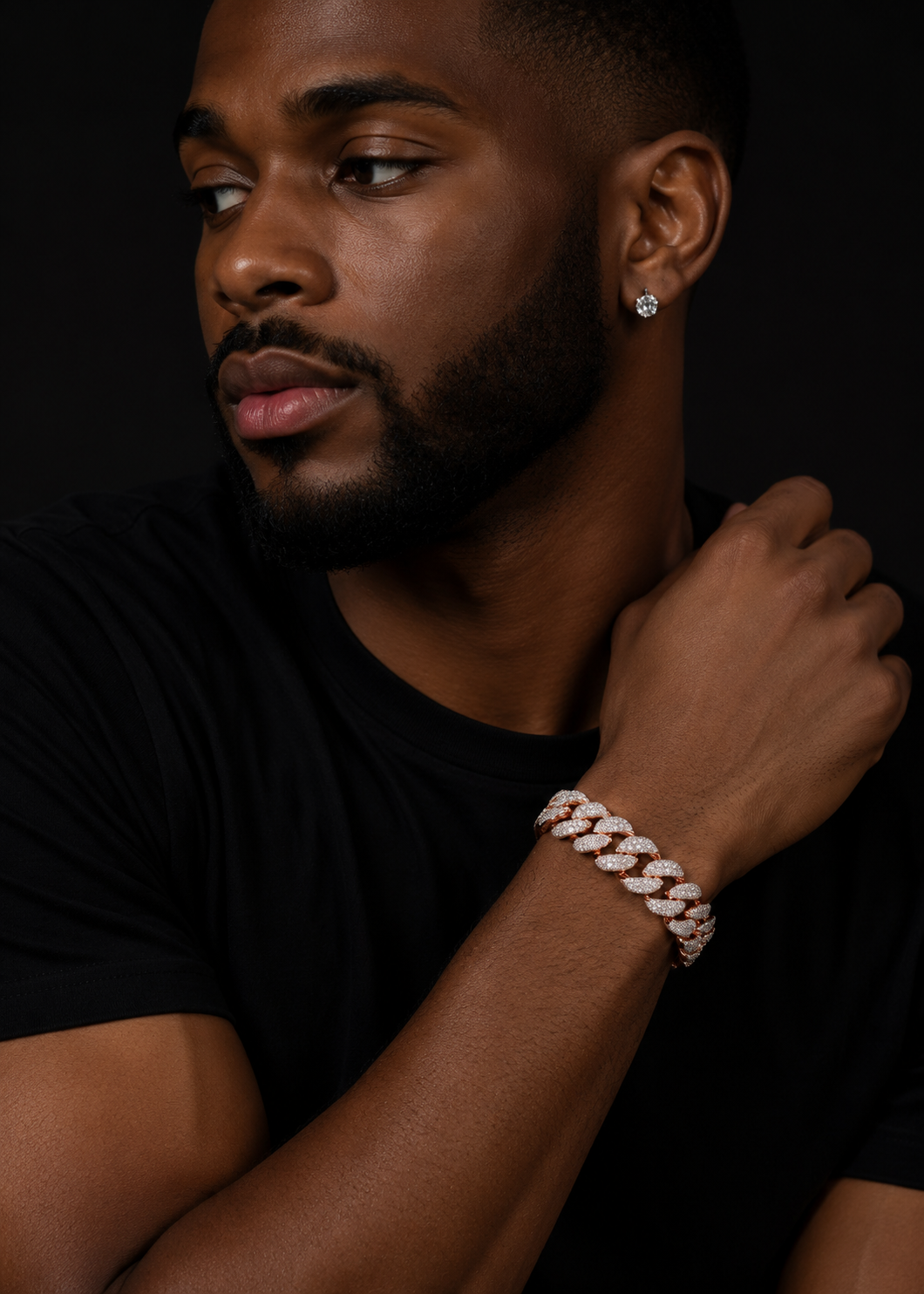
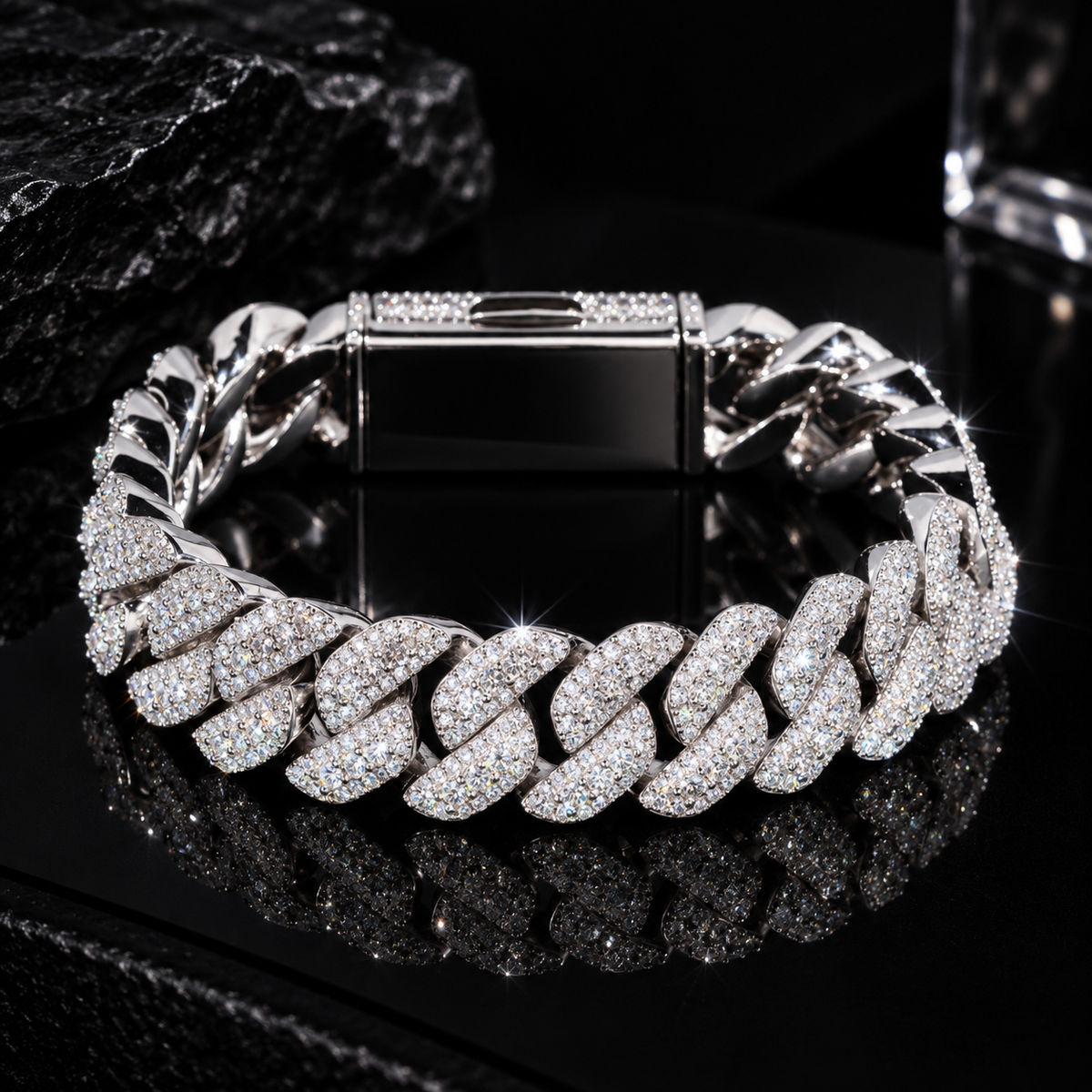
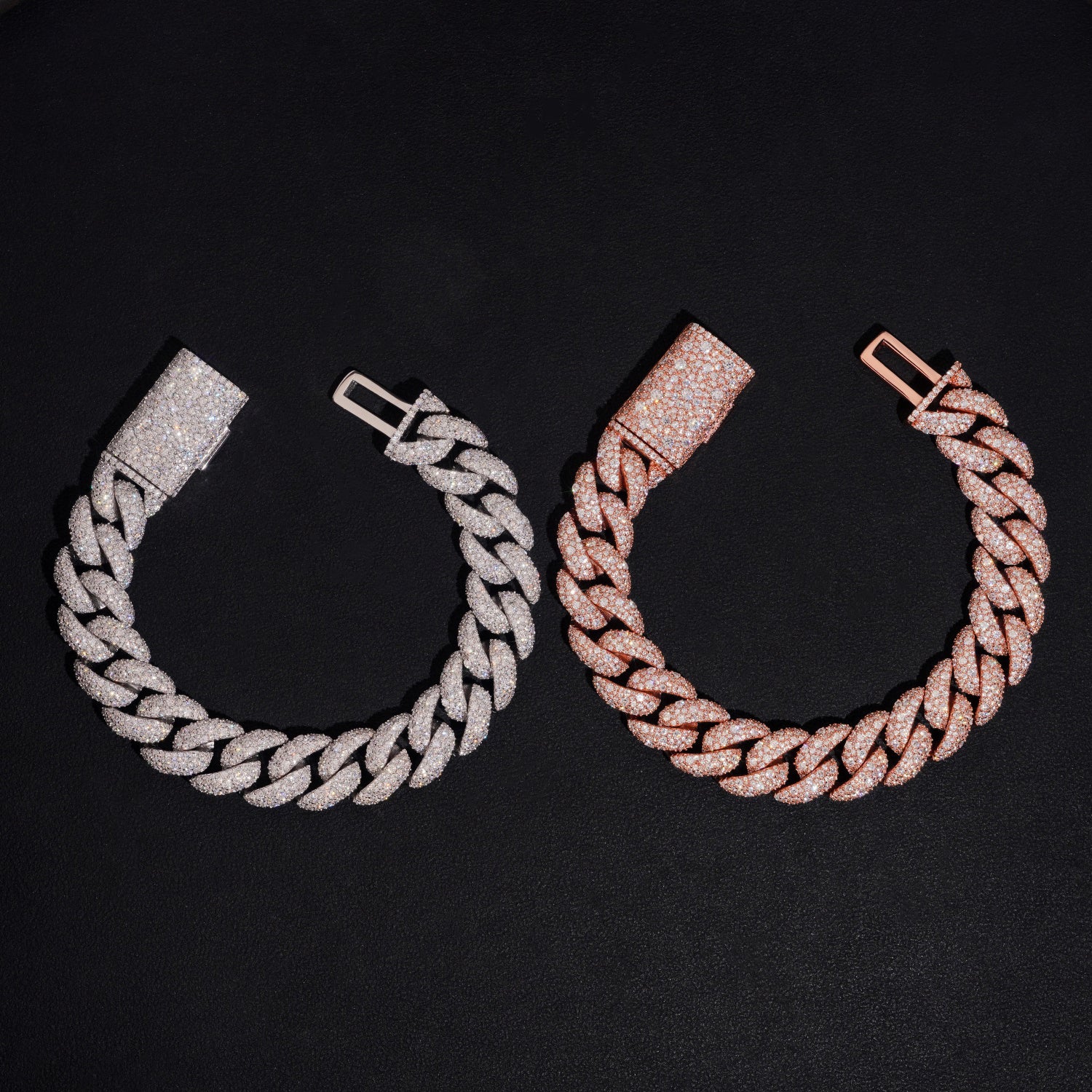
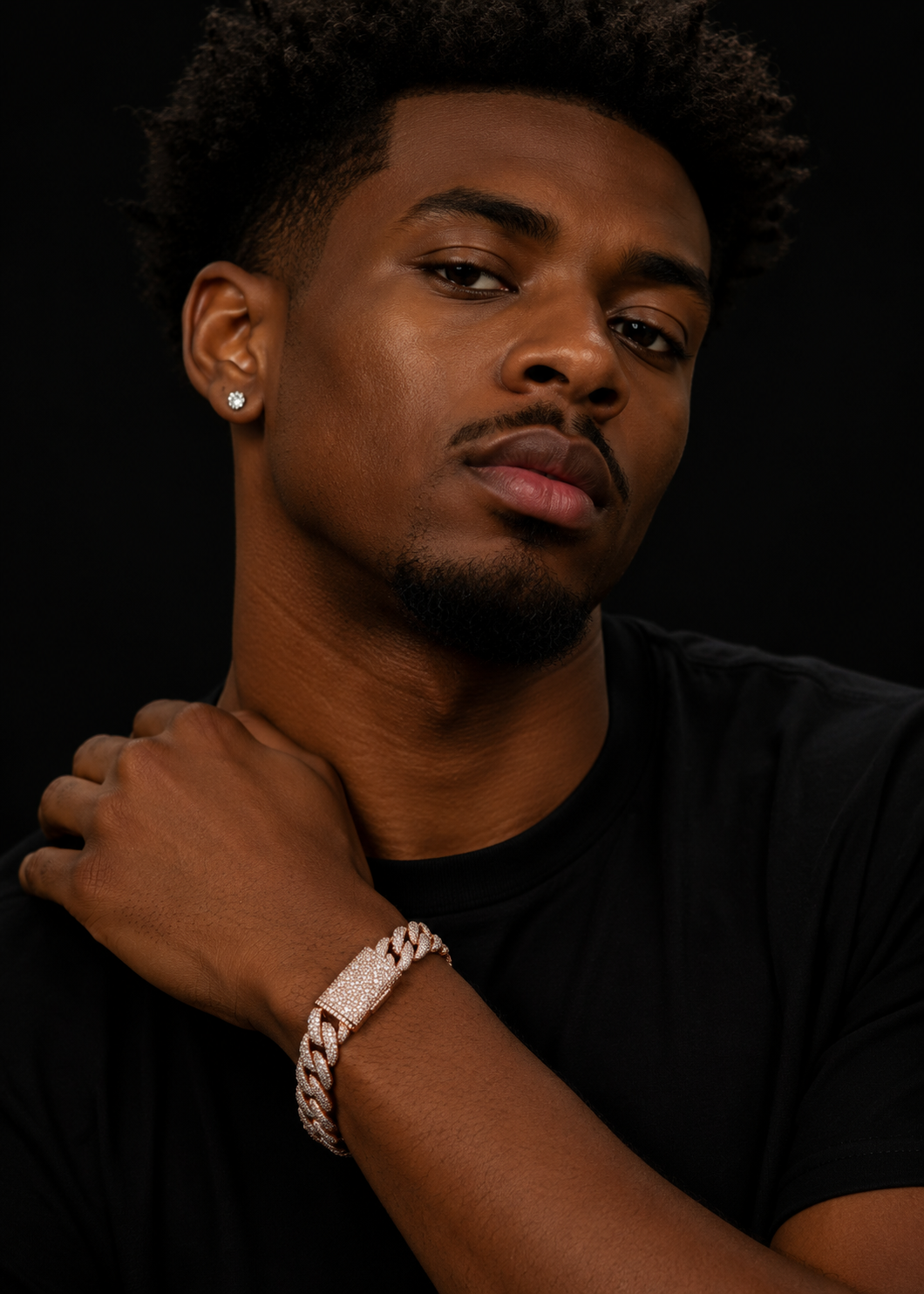
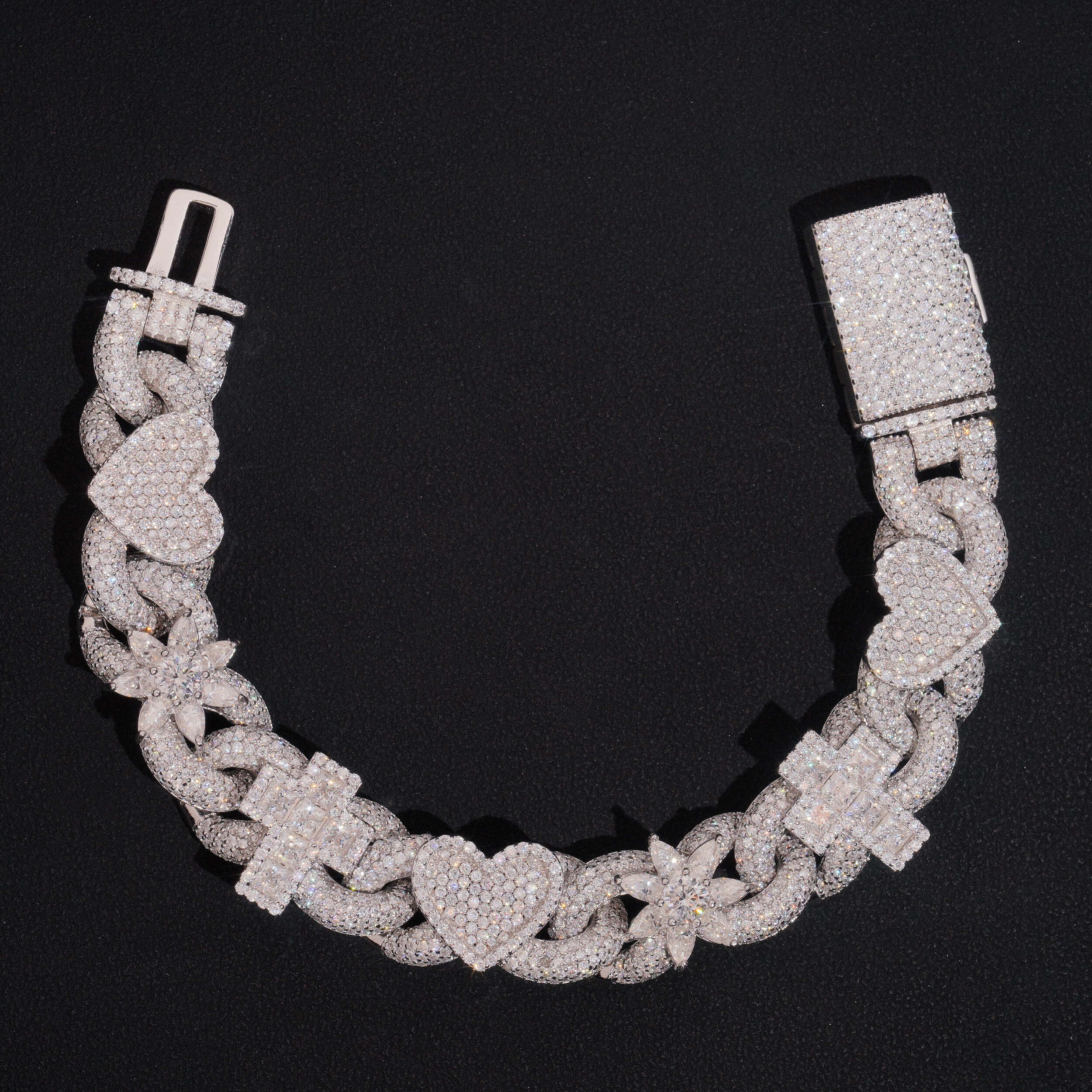
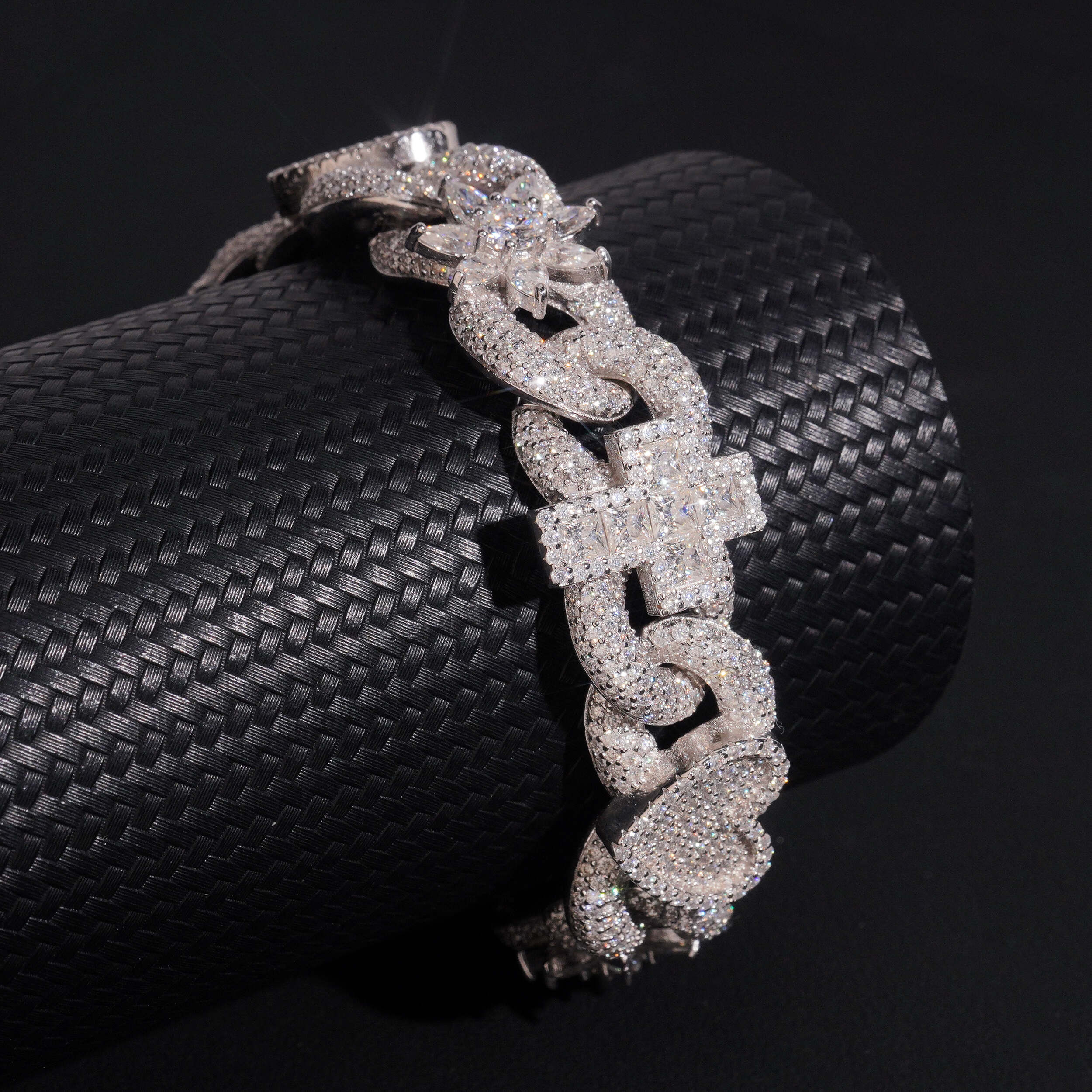
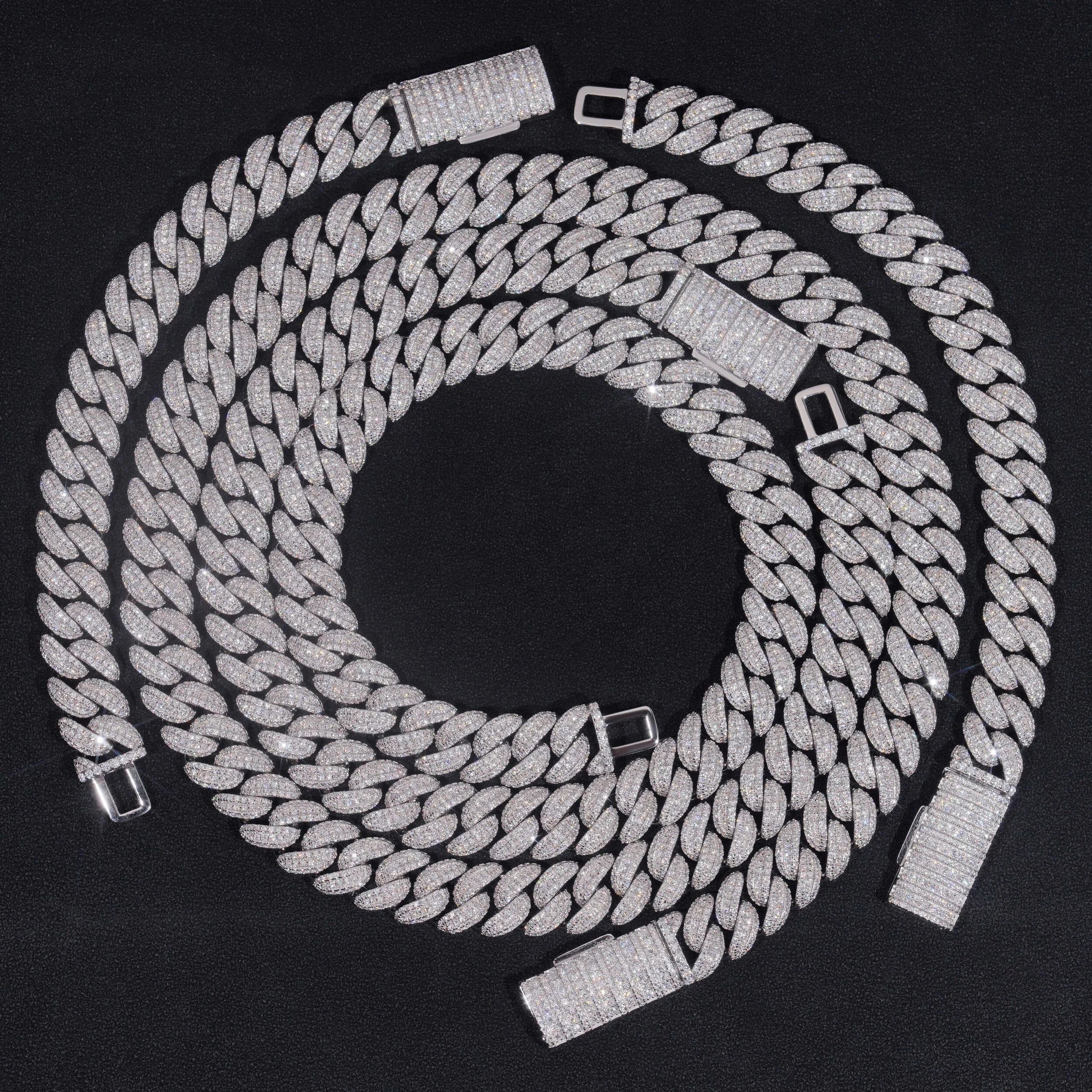
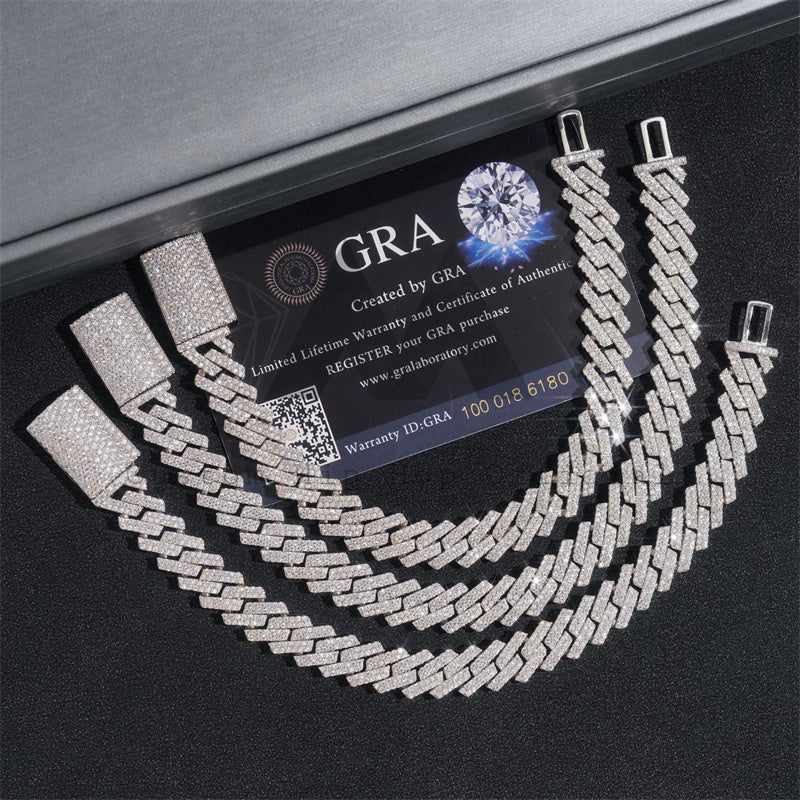
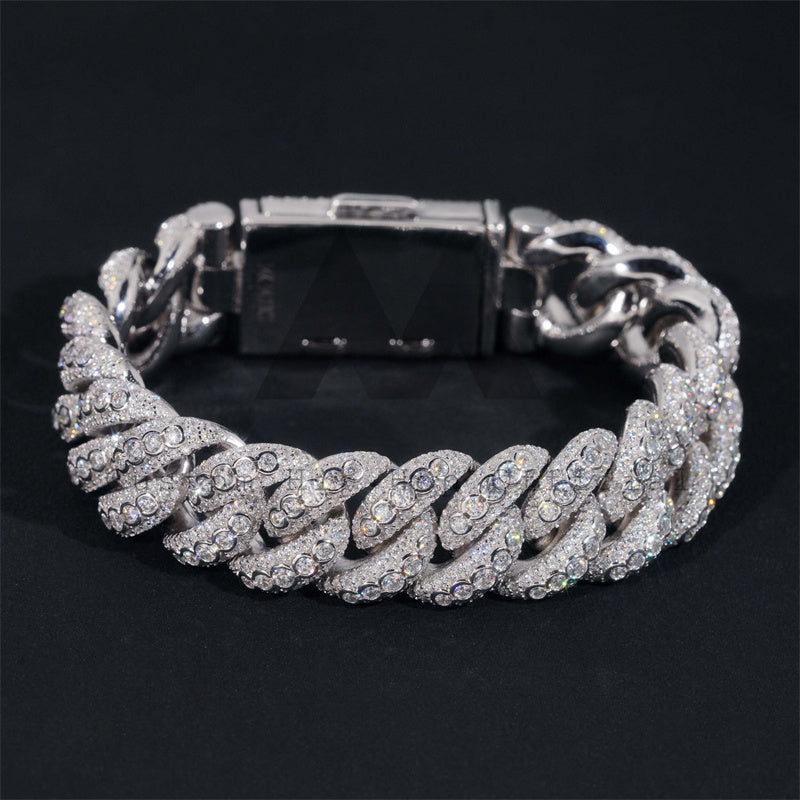
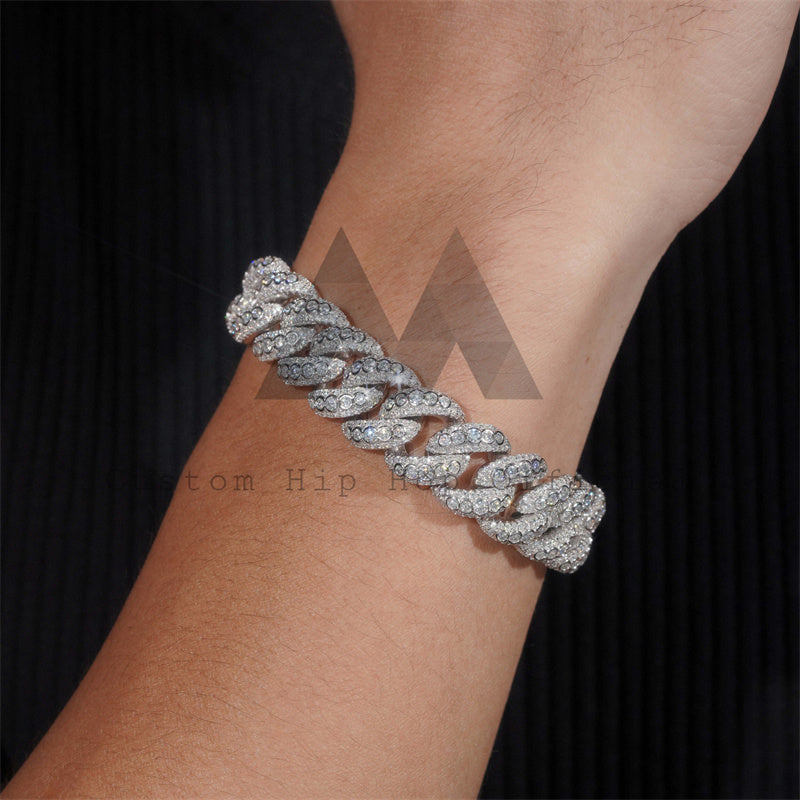
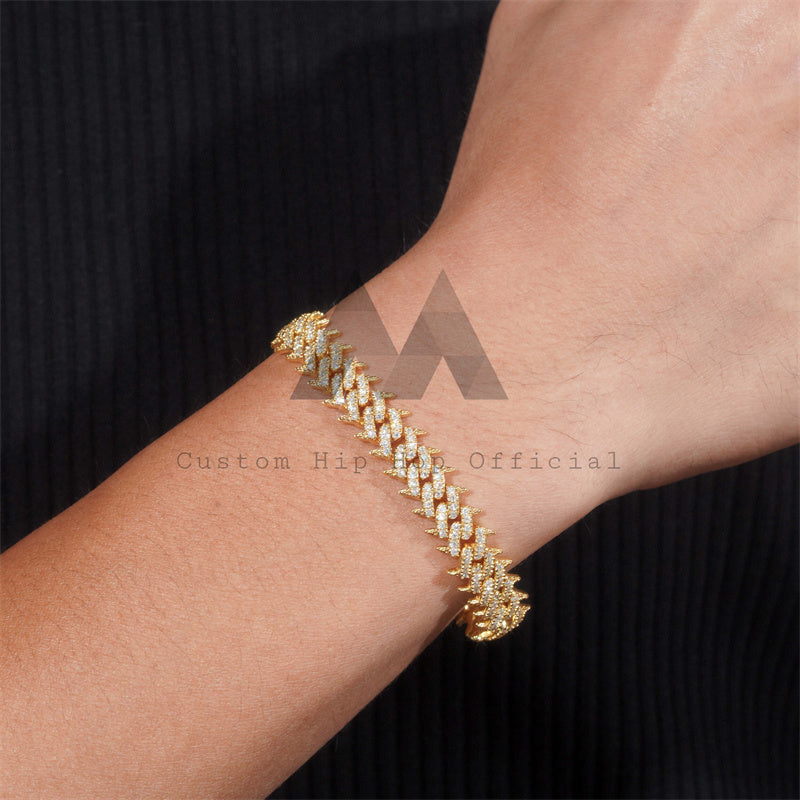
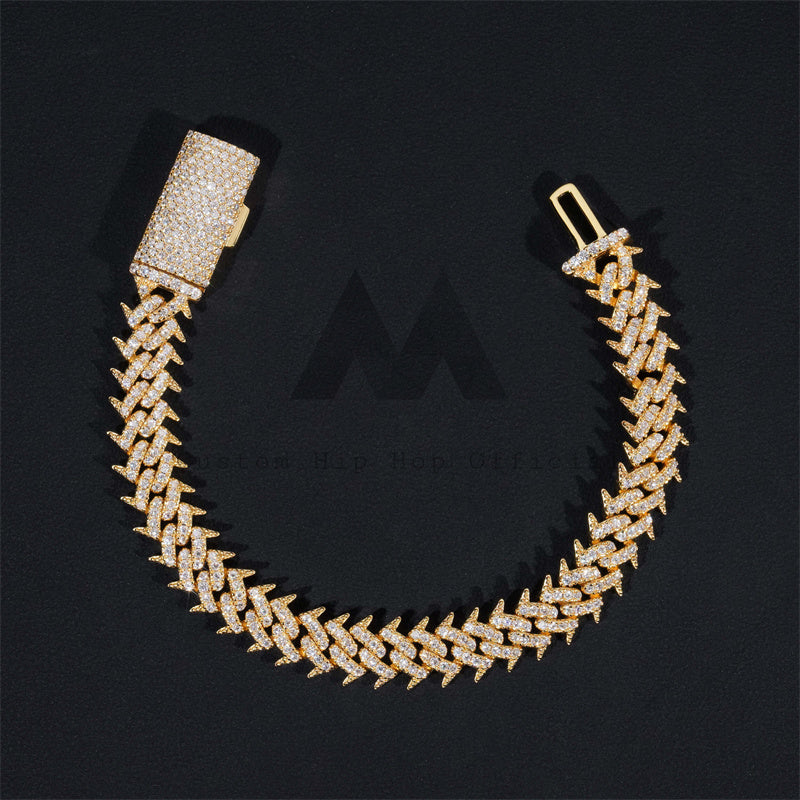
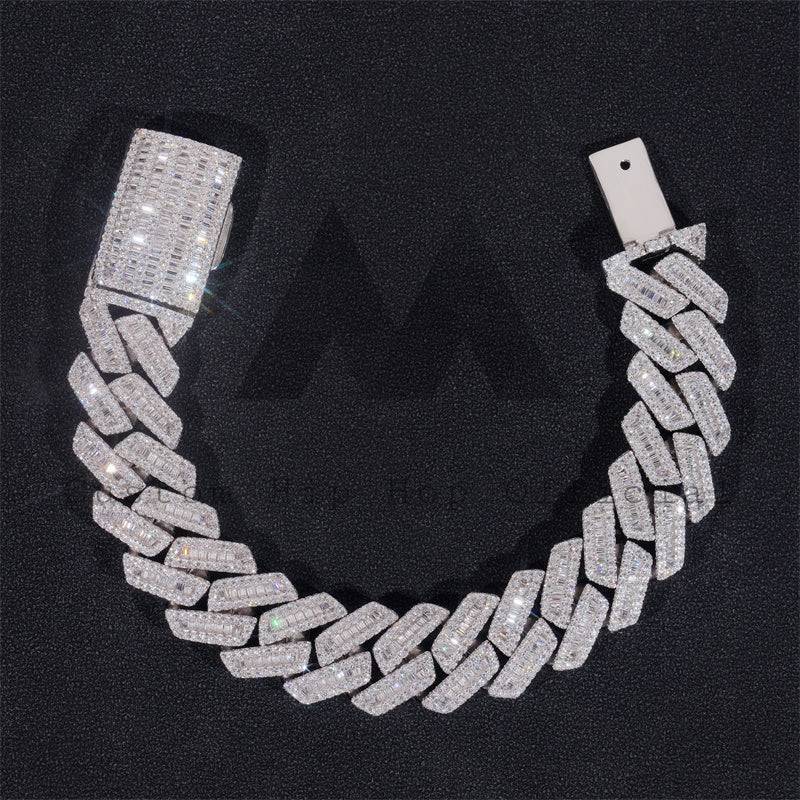
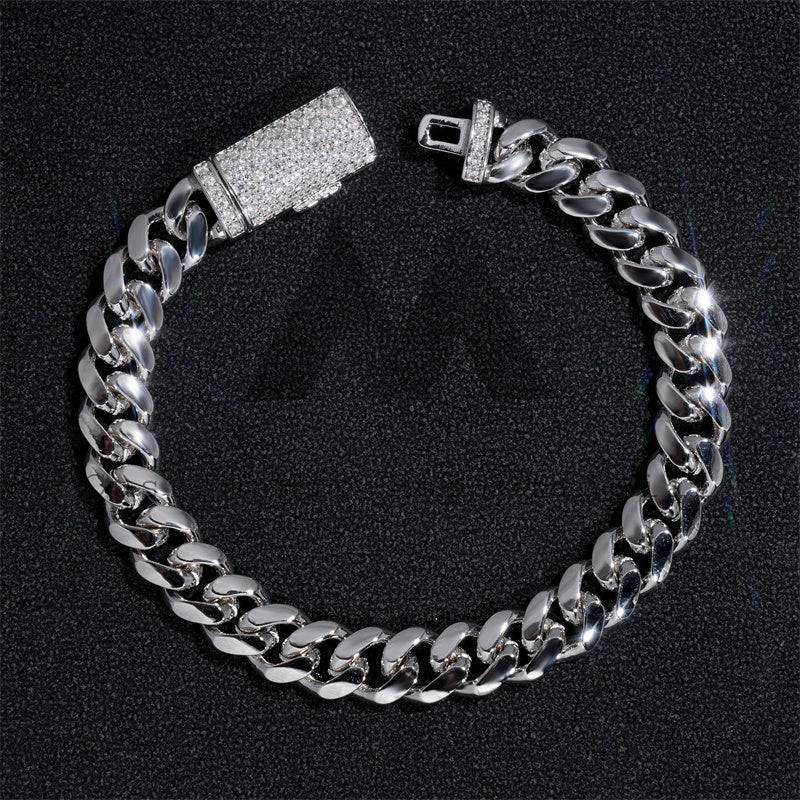
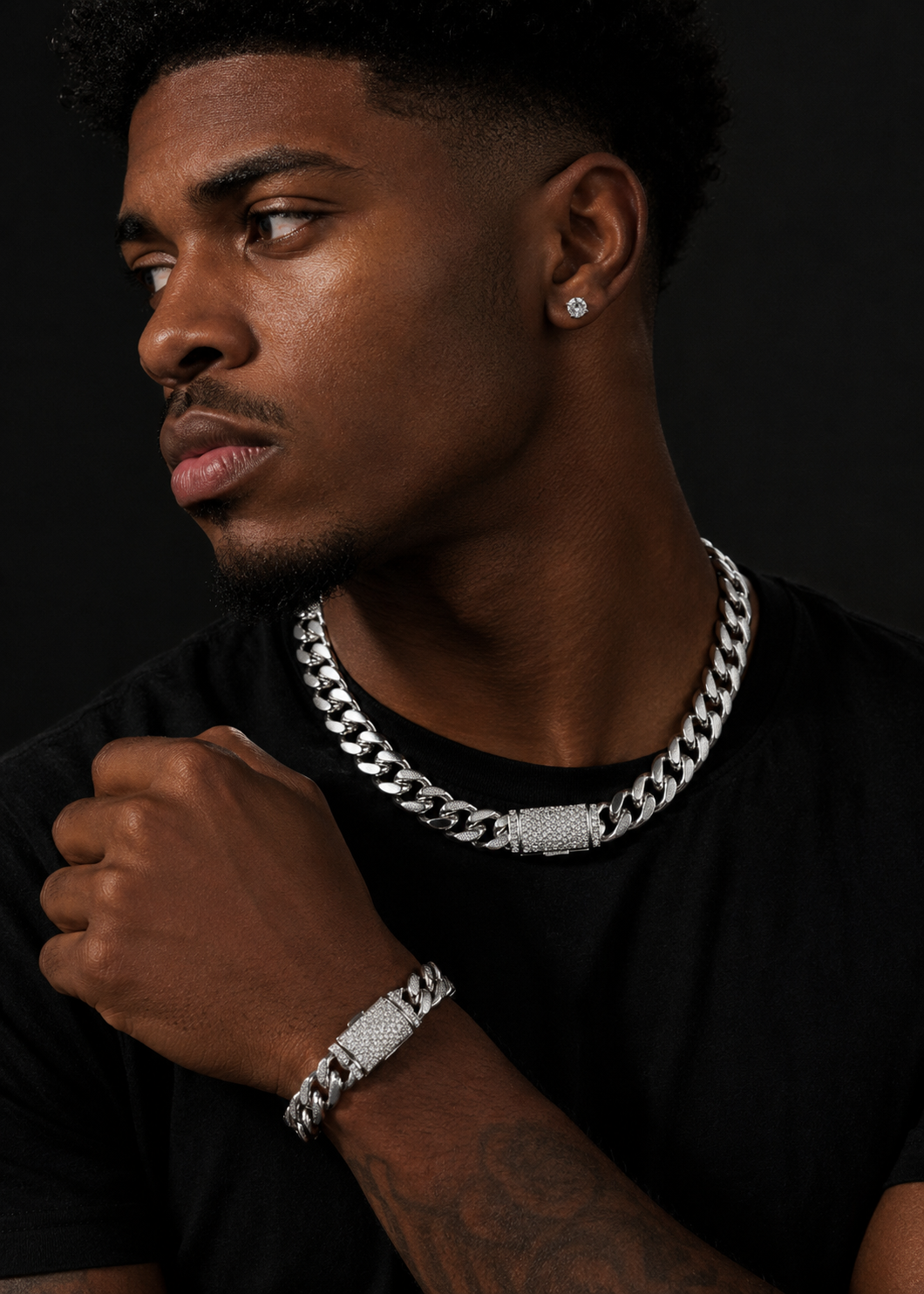
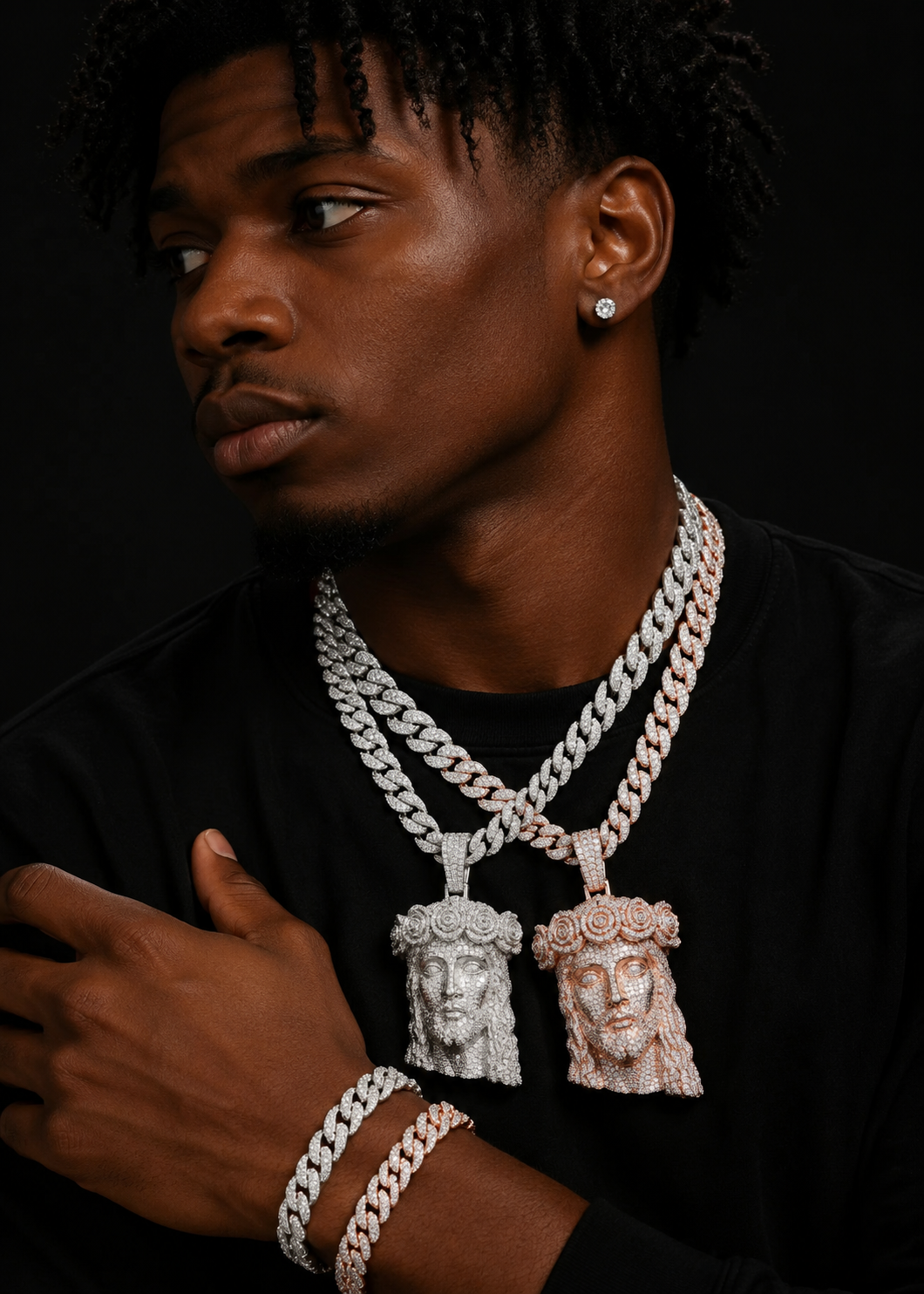
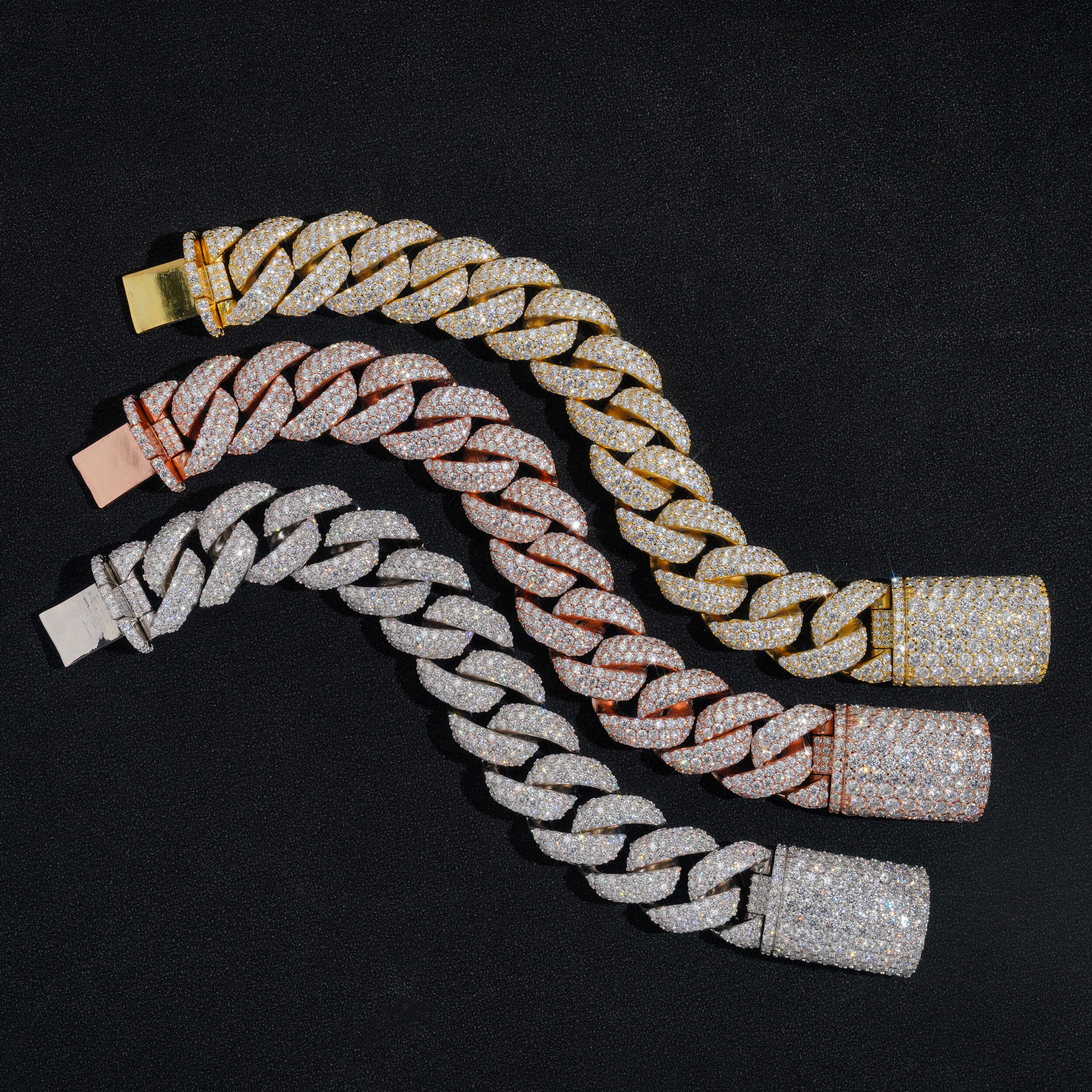
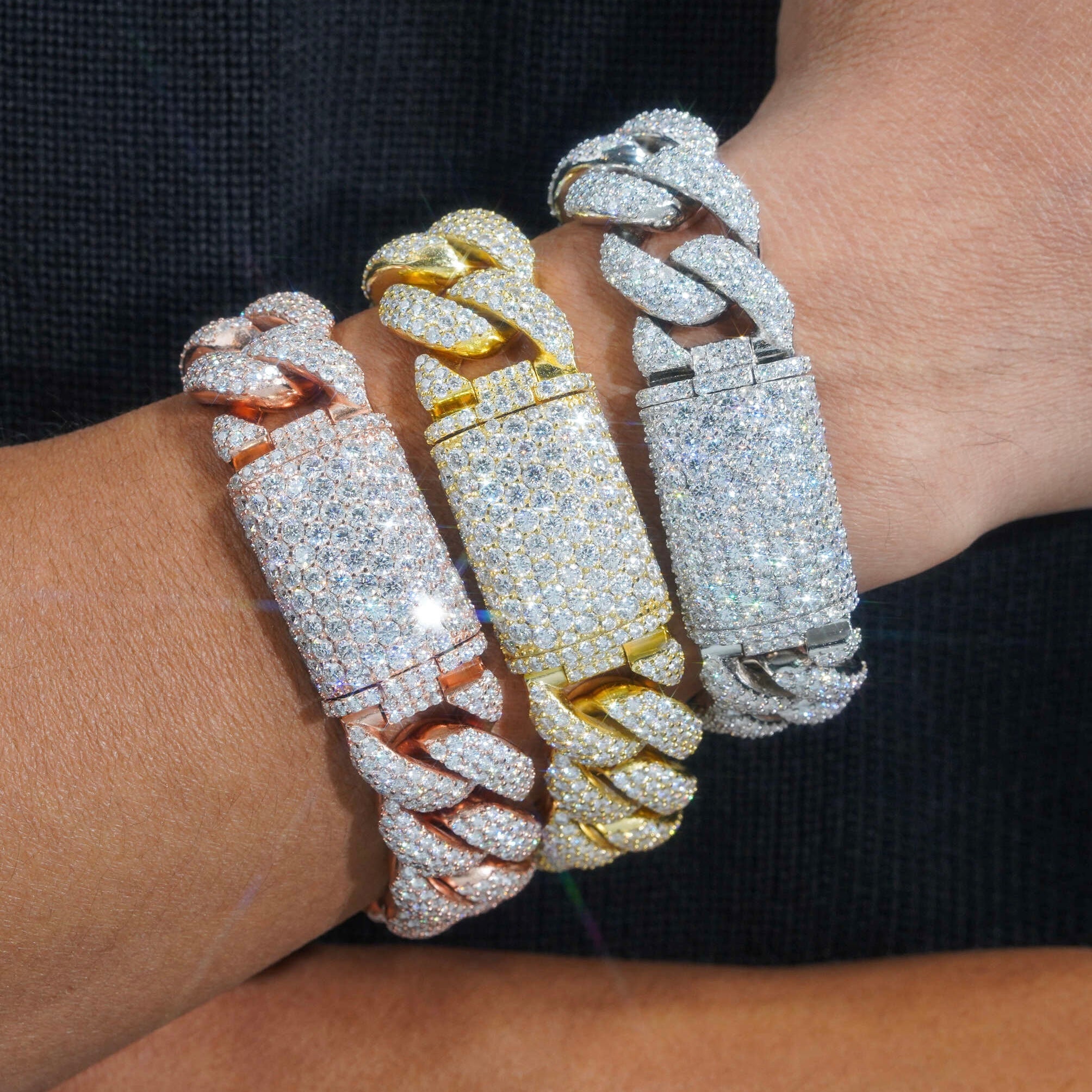
This is the Cuban link scaled down to the wrist. Widths run 6mm to 21mm, lengths 6 to 9 inches, and the builds go from a clean single row to three-row slabs that cover the wrist end to end. The stone here is moissanite, VVS on most styles. Most pieces are set over 925 sterling silver with a 10K or 14K gold finish, and a few entry styles are built on brass — the product page names the metal on each. Finishes run white gold, rose gold and yellow. First iced piece, or the one that finally matches a chain you already wear — either way, the width is on this page.
Moissanite Cuban Link Bracelets
Moissanite is what this collection is built on — 9.25 on the Mohs scale, and it throws more fire than a stone its size has any right to. On a Cuban link that matters more than it does on a thin chain, because the flat face of a Cuban link is a stage. Stones sit edge to edge across that face until the whole wrist reads as one sheet of light. Mosaic-set styles push it further, dropping the metal walls between stones so the ice looks poured rather than placed. If you are still weighing the stone, our moissanite vs diamond guide lays out the trade-offs without the sales pitch.
Moissanite or Lab Grown Diamond
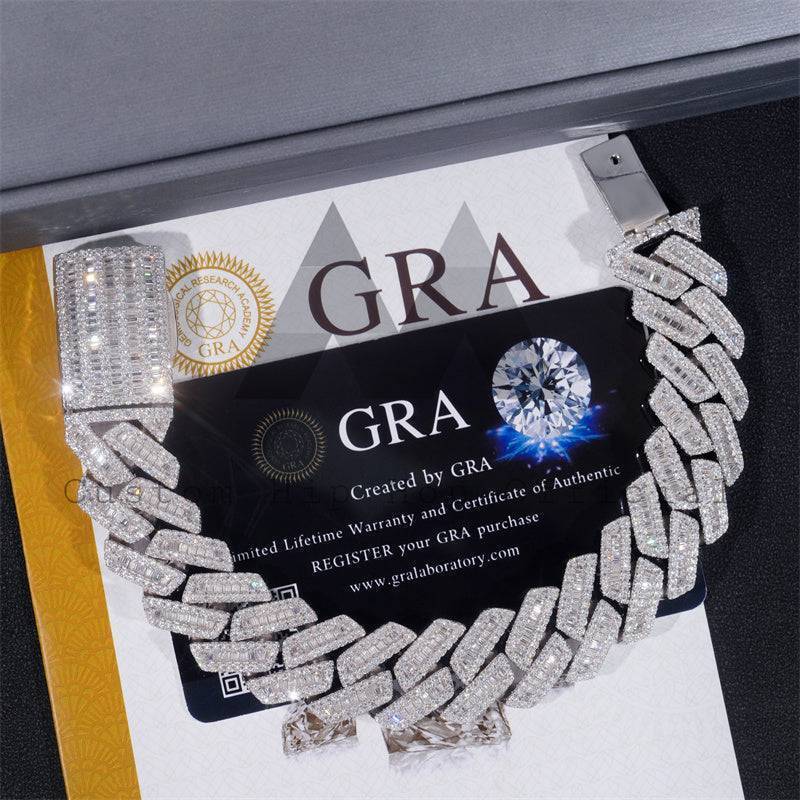
The stone on this page is moissanite, so it is worth knowing what that buys you. A lab grown diamond is chemically and optically diamond and is priced that way. Moissanite throws more fire per millimeter and costs less, which on a Cuban link decides how much wrist you can cover — the budget that buys a narrow single row in grown diamond buys a three-row slab here. The pieces on this page typically ship with a GRA report, and the certificate type is listed on each product page. If a grown diamond wrist piece is what you are after, the lab grown diamond bracelets page keeps the Cuban and tennis builds together.
Single, Double and Triple Row
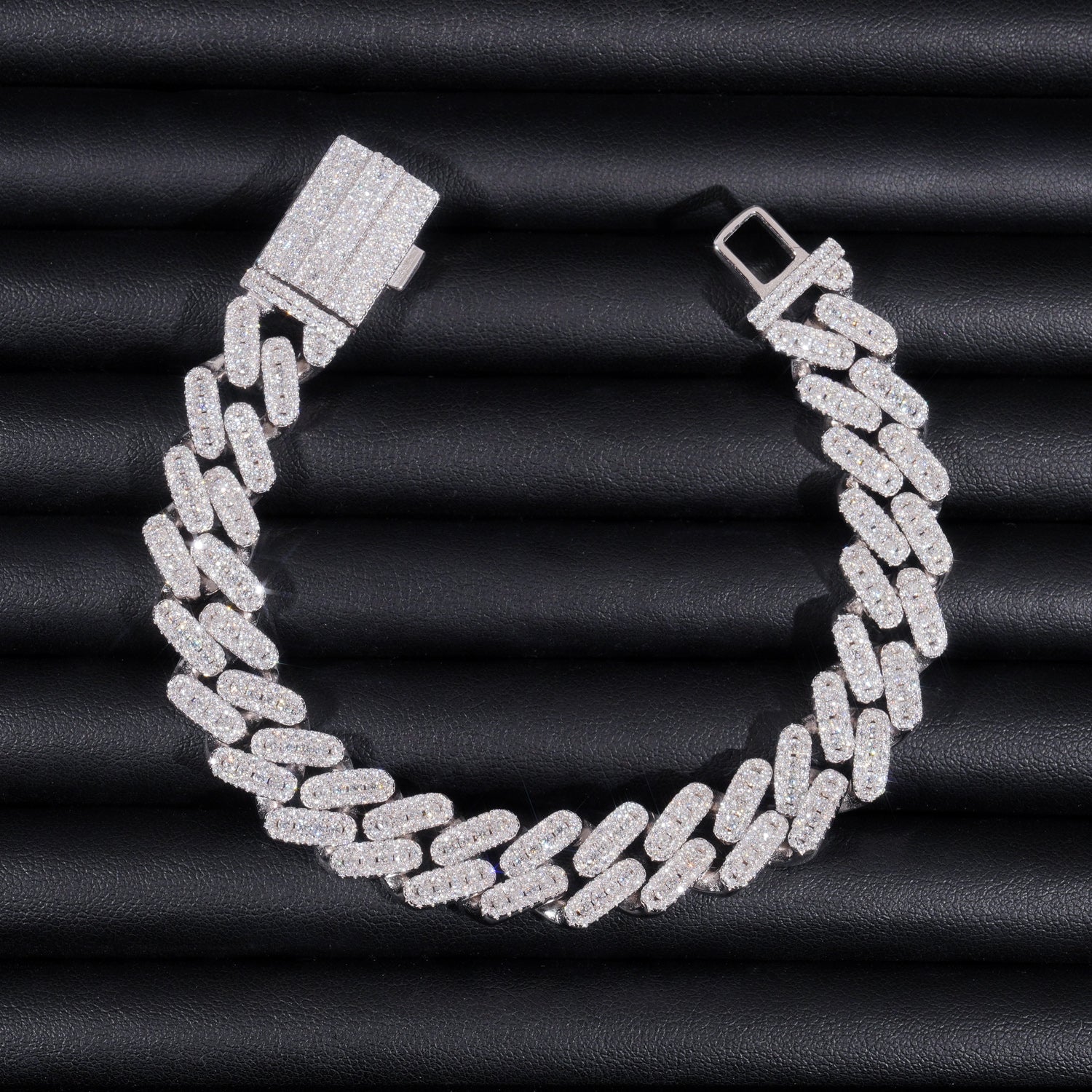
Row count changes a Cuban bracelet more than width does. A single row keeps the link profile clean and slips under a cuff without fighting it. Two-row adds a second line of stones down the center and roughly doubles the flash for very little extra bulk. Three-row is the statement build — stones wrap the link face and the piece reads as a solid band of ice from across a room. A handful of styles switch up the setting — prong, bezel or raised-stone — and each catches light differently; a raised stone sits proud of the metal so it sparks hardest under a direct beam.
Matching Your Bracelet to a Chain
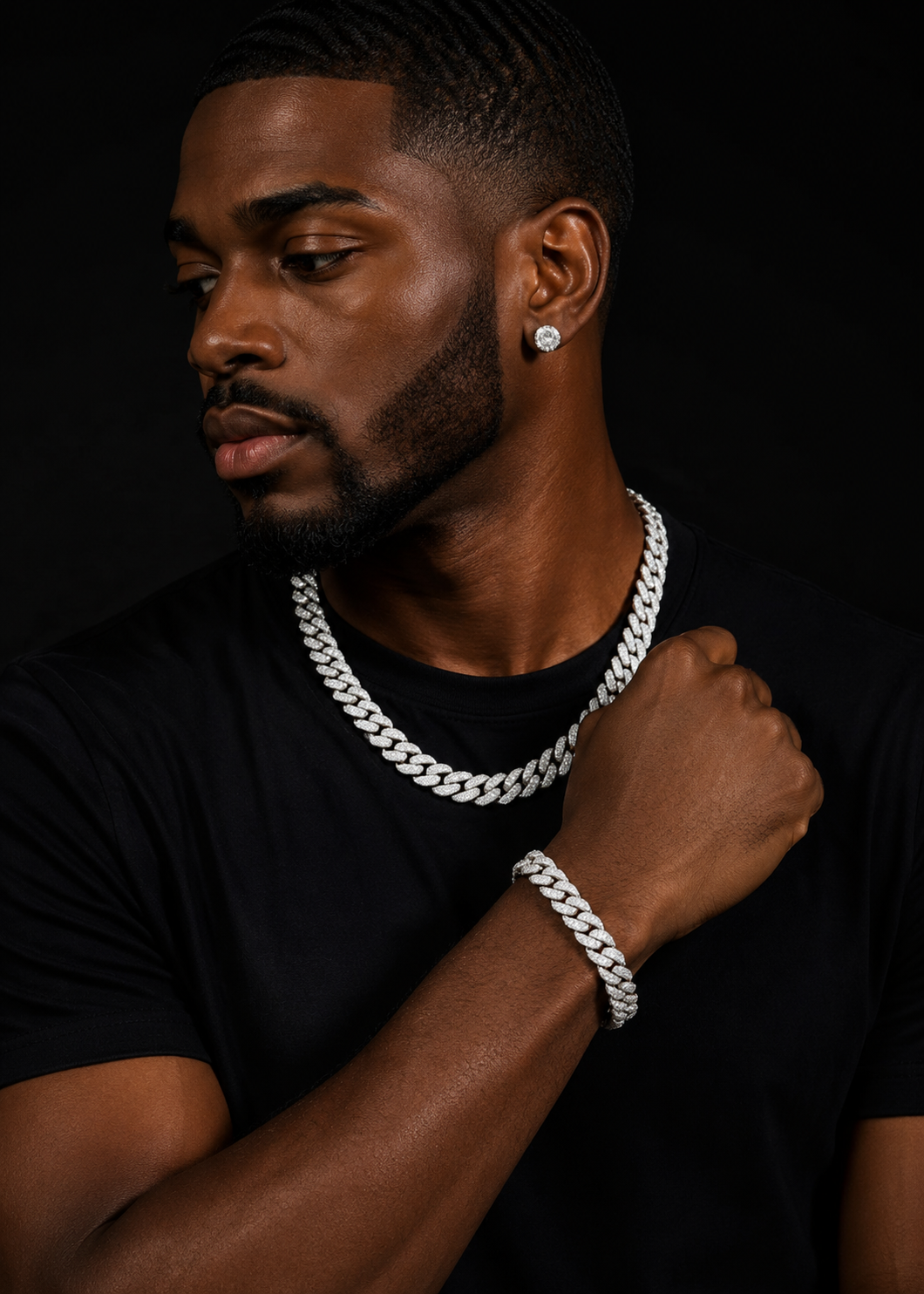
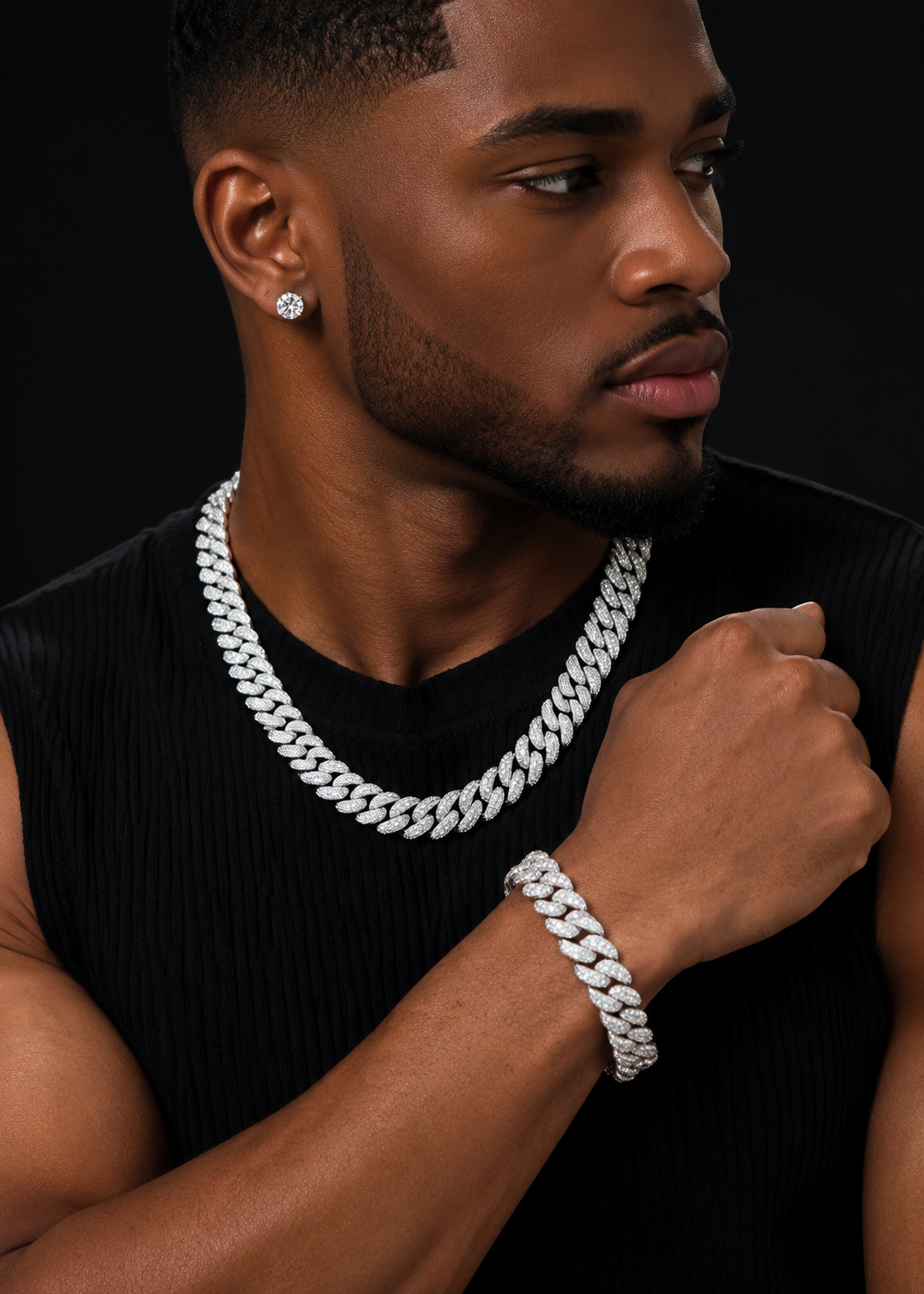
A matched set is why a lot of people land on this page. The usual move is to run the bracelet a few millimeters narrower than the chain — a 20mm chain beside a 15mm bracelet reads balanced, while matching both at 20mm can crowd the frame. Rose gold and yellow builds pair best when the chain and the bracelet share the same finish. Our Cuban link chains run the same finishes and overlapping widths, so pairing is straightforward. For the deeper breakdown of link anatomy, widths and what separates a well-made Cuban from a cheap one, the Miami Cuban link buyer's guide covers it properly.
Sizing Your Wrist
Bracelet fit is less forgiving than chain length, so measure before you pick. Wrap a tape measure around the wrist bone, then allow about half an inch on top for a snug Cuban sit, or a full inch if you want the piece to shift and throw light as you move. Wider builds eat more of that allowance — a 20mm piece usually wants the extra room a 6mm one does not. If nothing on this page lands at your size, most of what we build can be made to a given width and length; send the numbers over on the custom hip hop jewelry page. Still deciding between styles? The wider moissanite bracelets collection puts tennis, Cuban and infinity next to each other.
FAQ
Wrap a soft tape or a strip of paper around your wrist just below the bone, mark where it meets, and read the length. Add about half an inch for a snug Cuban fit or a full inch if you want it to slide and catch light. Wider builds sit higher off the skin, so a 20mm piece generally needs a little more allowance than a 6mm one.
Usually not the same — a bracelet a few millimeters narrower than the chain tends to read better. Pairing a 20mm chain with a 15mm bracelet keeps the proportions balanced, while running both at 20mm can make the whole look feel crowded. If you want them to match exactly, that works best in the 10mm to 15mm range.
It is how many lines of stones sit across the face of each link. Single row keeps the classic Cuban profile and wears easily under a sleeve. Two-row runs a second line down the center for noticeably more flash at a similar weight. Three-row covers the link face almost completely and wears as the centerpiece of a stack rather than a supporting piece.
Mostly the metal and the build, since the stone here is moissanite. Entry styles are set on brass, most of the collection is 925 sterling silver, and the gold you see is a 10K or 14K finish over that base rather than solid gold. Row count and width add to it as well, since a three-row 20mm piece carries several times the stones of a 6mm single row. The materials are listed on each product page.
Wider Cuban bracelets carry real weight, so the clasp is worth a look before you buy. The heavier builds here tend to use a flush box clasp, which seats down into the link and locks, rather than a lobster clip that holds on spring tension alone. Clasp type is shown in the photos on each product page. When you put it on, press until you feel it seat, then check it the way you would a watch buckle.