





One Row, Every Stone Counts
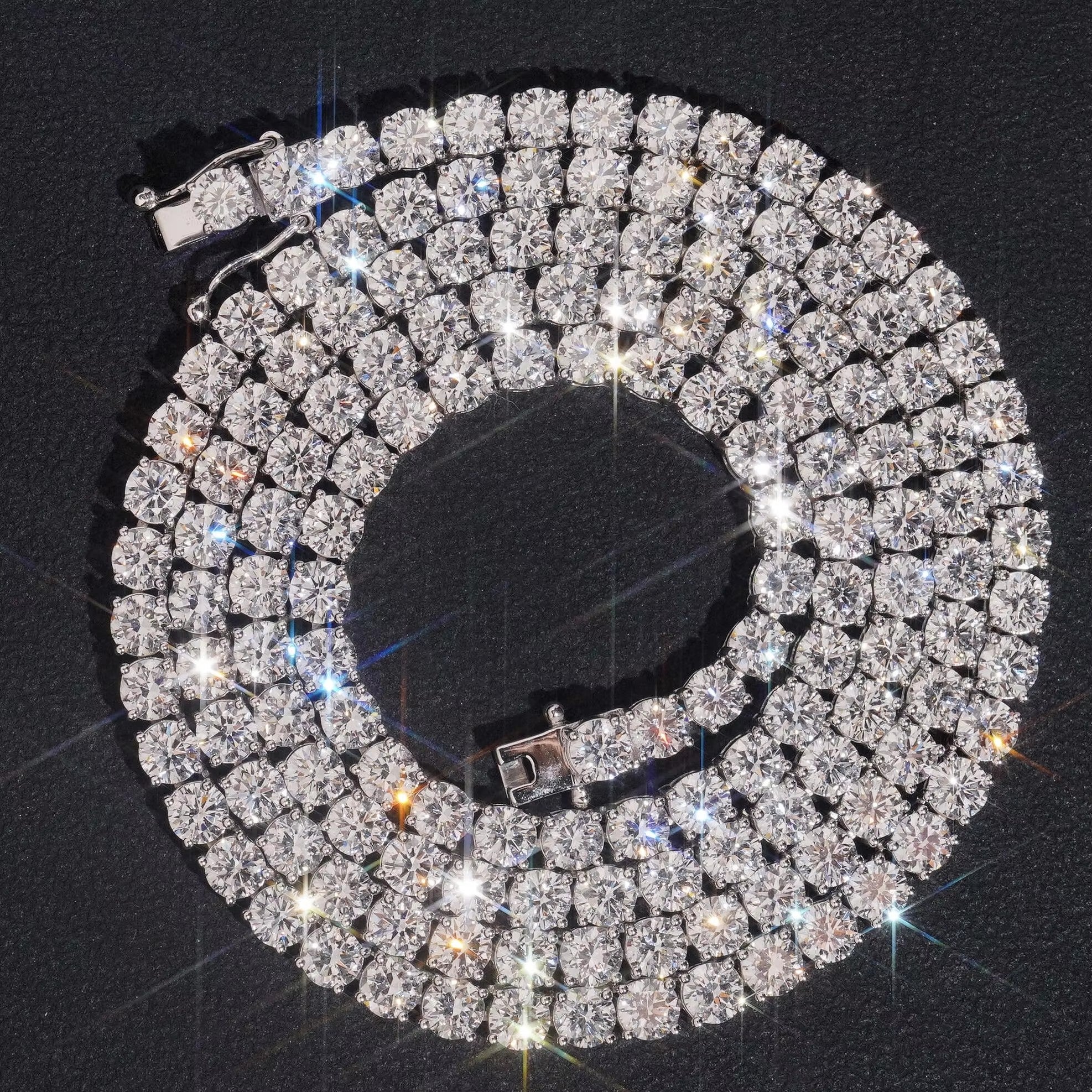
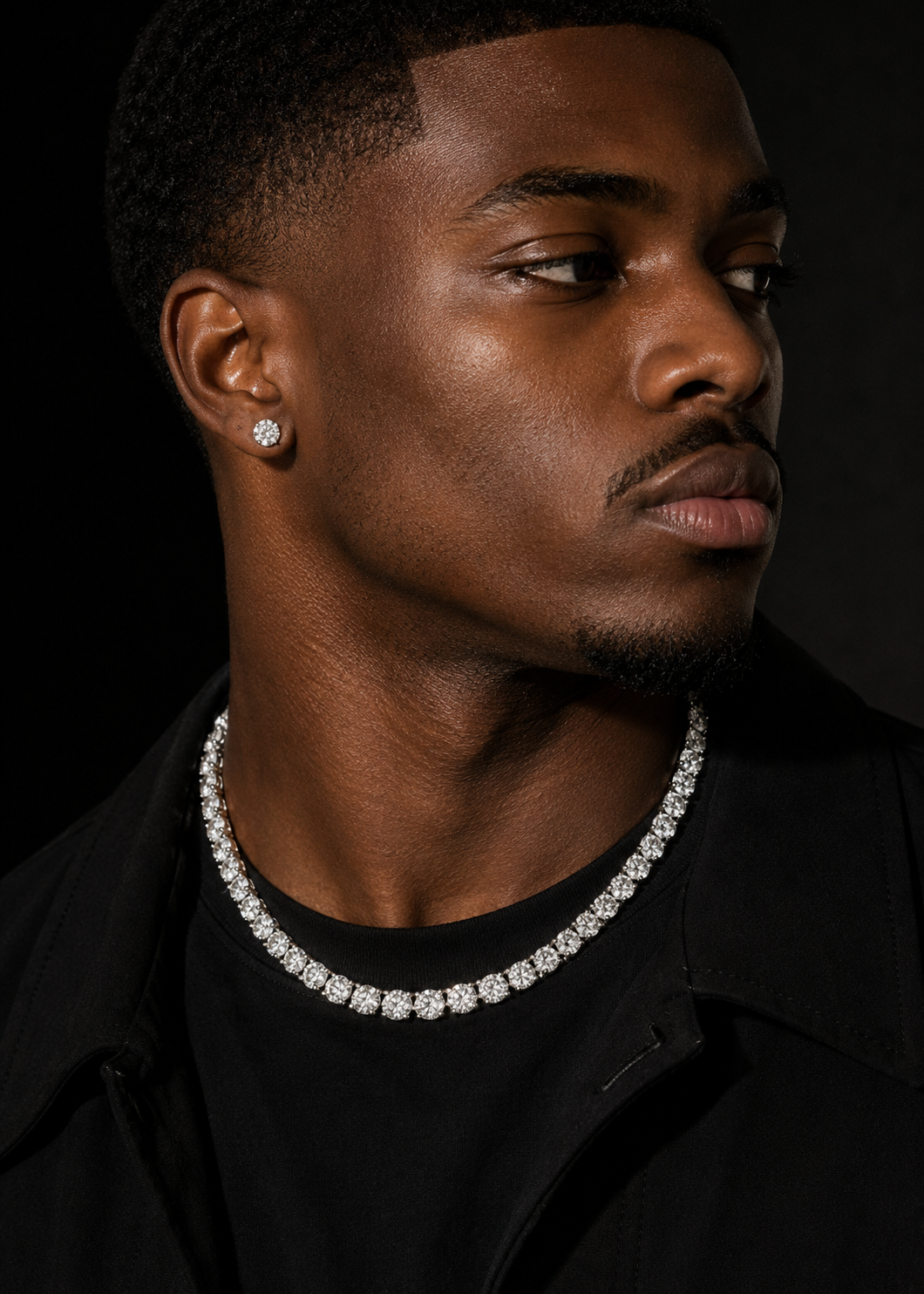
A tennis necklace hides nothing — one row, every stone matched to the next. These are lab grown diamonds, in widths from a fine 2mm line up to a 5mm row.
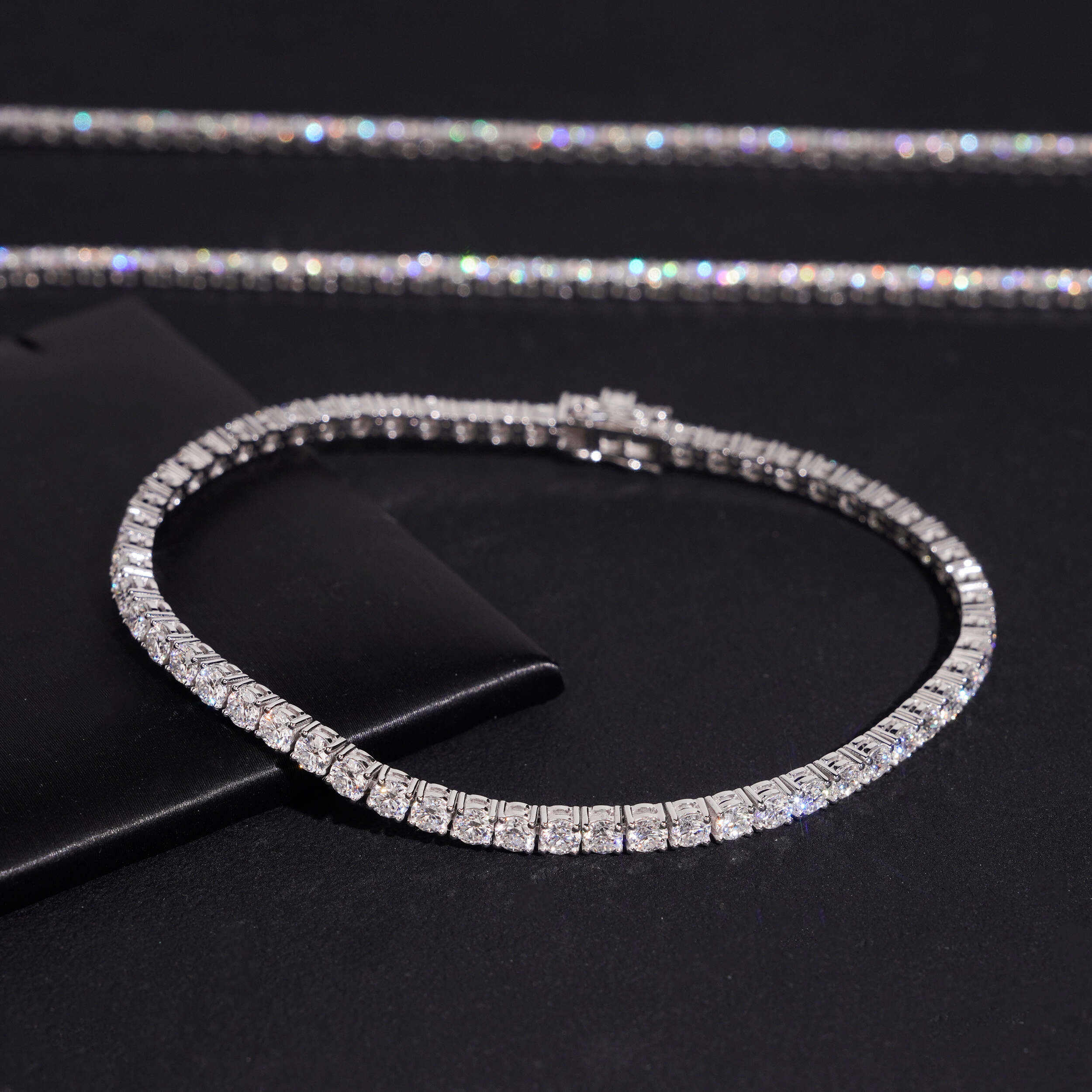
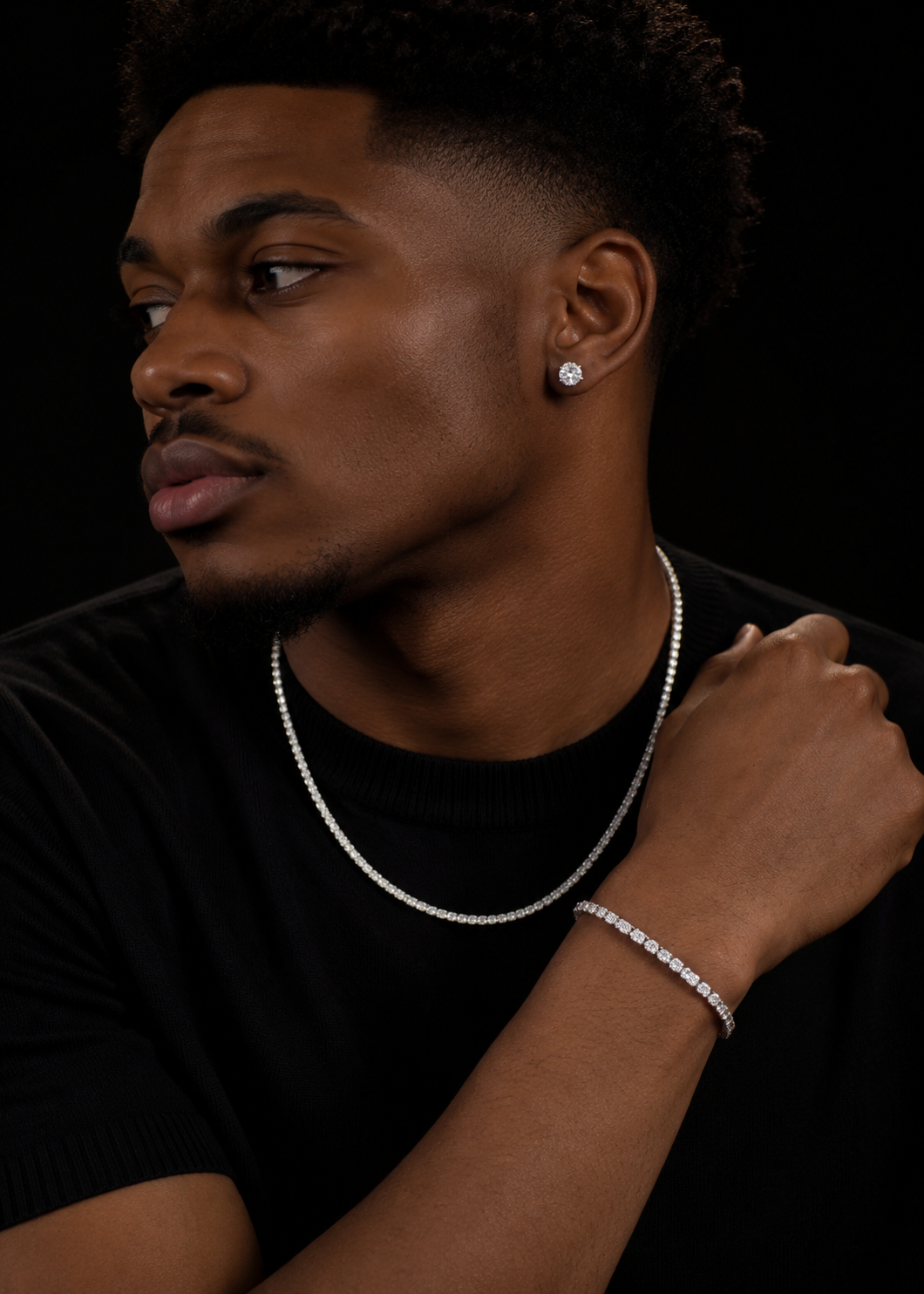
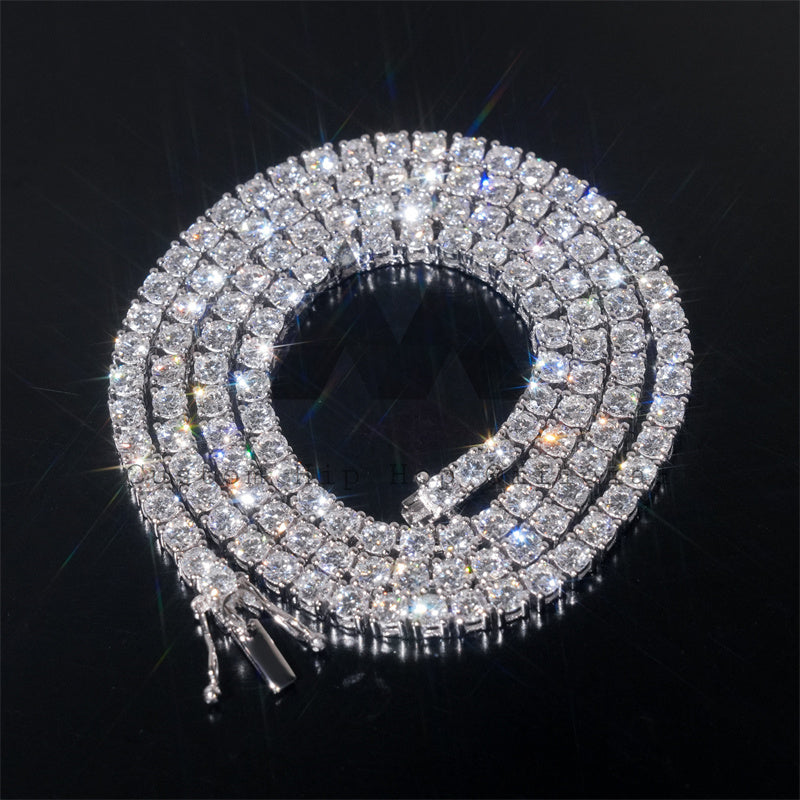
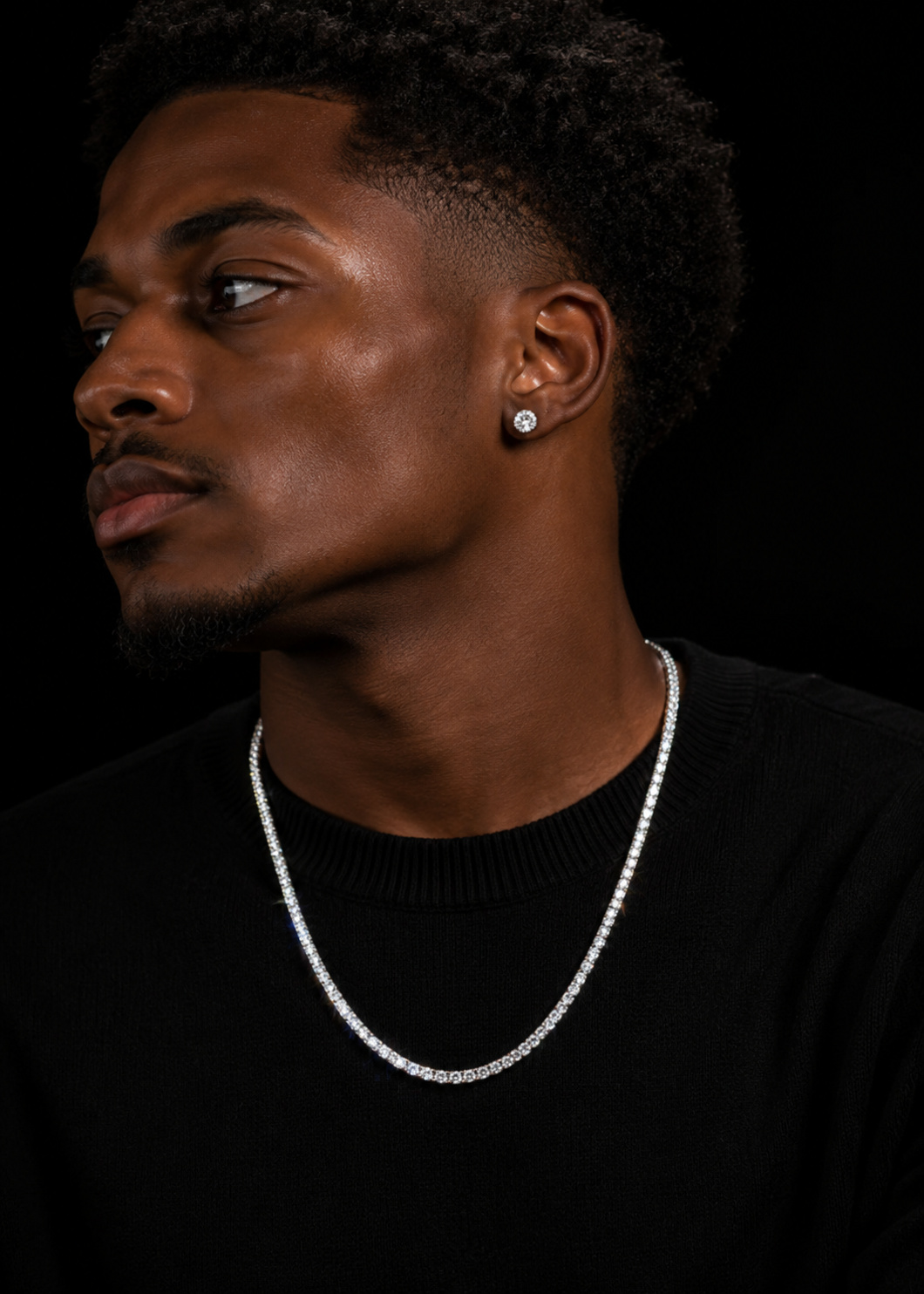
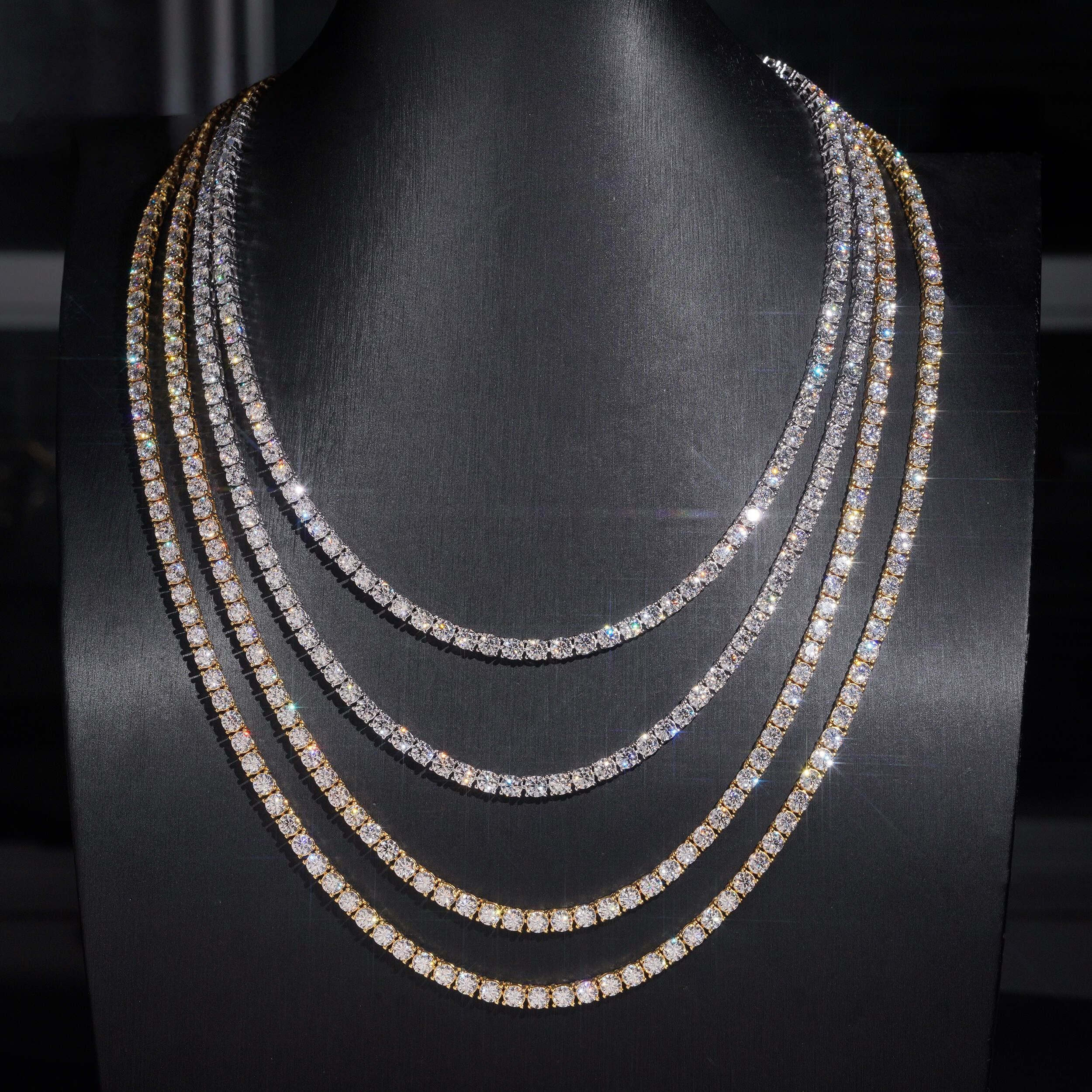
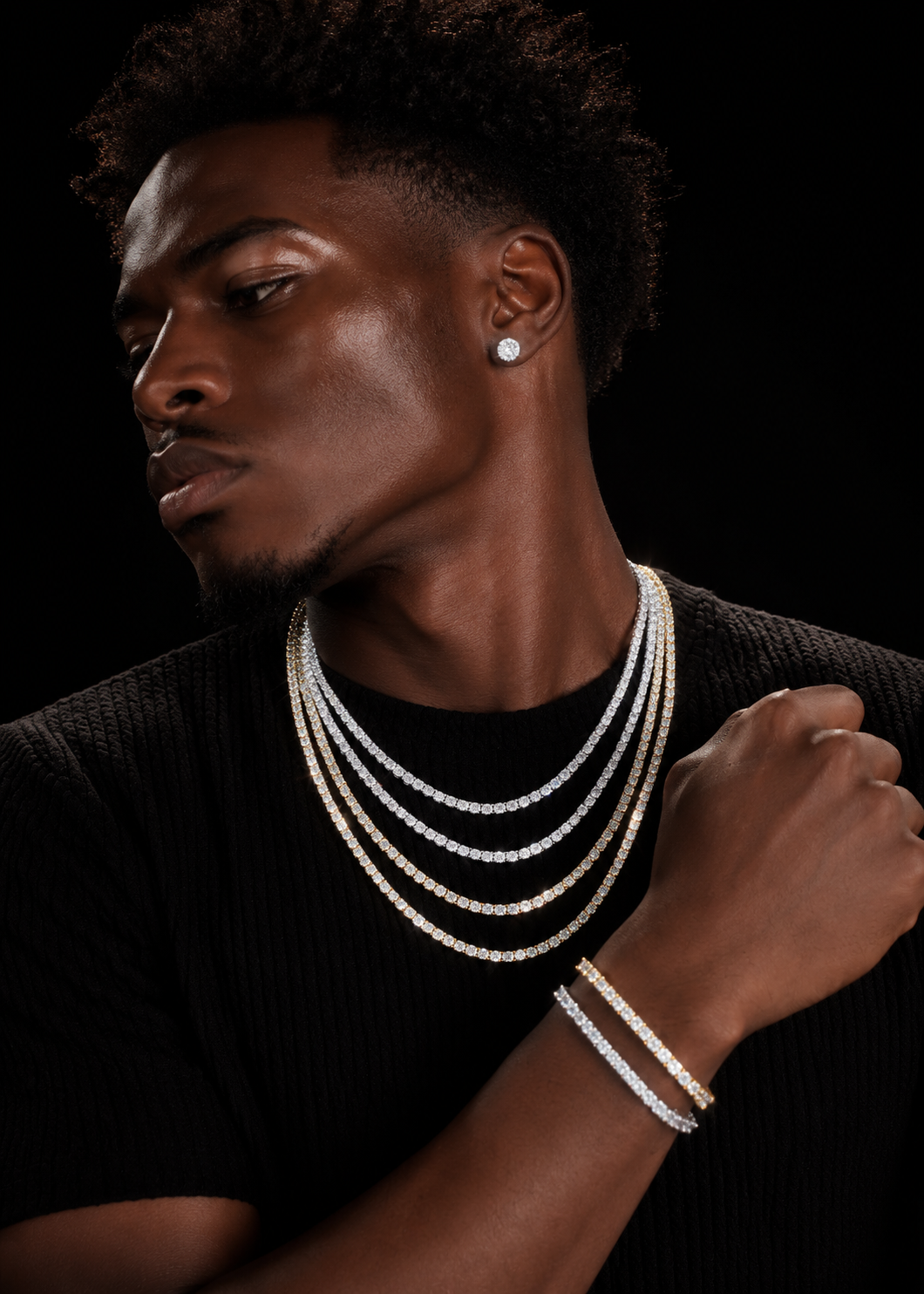
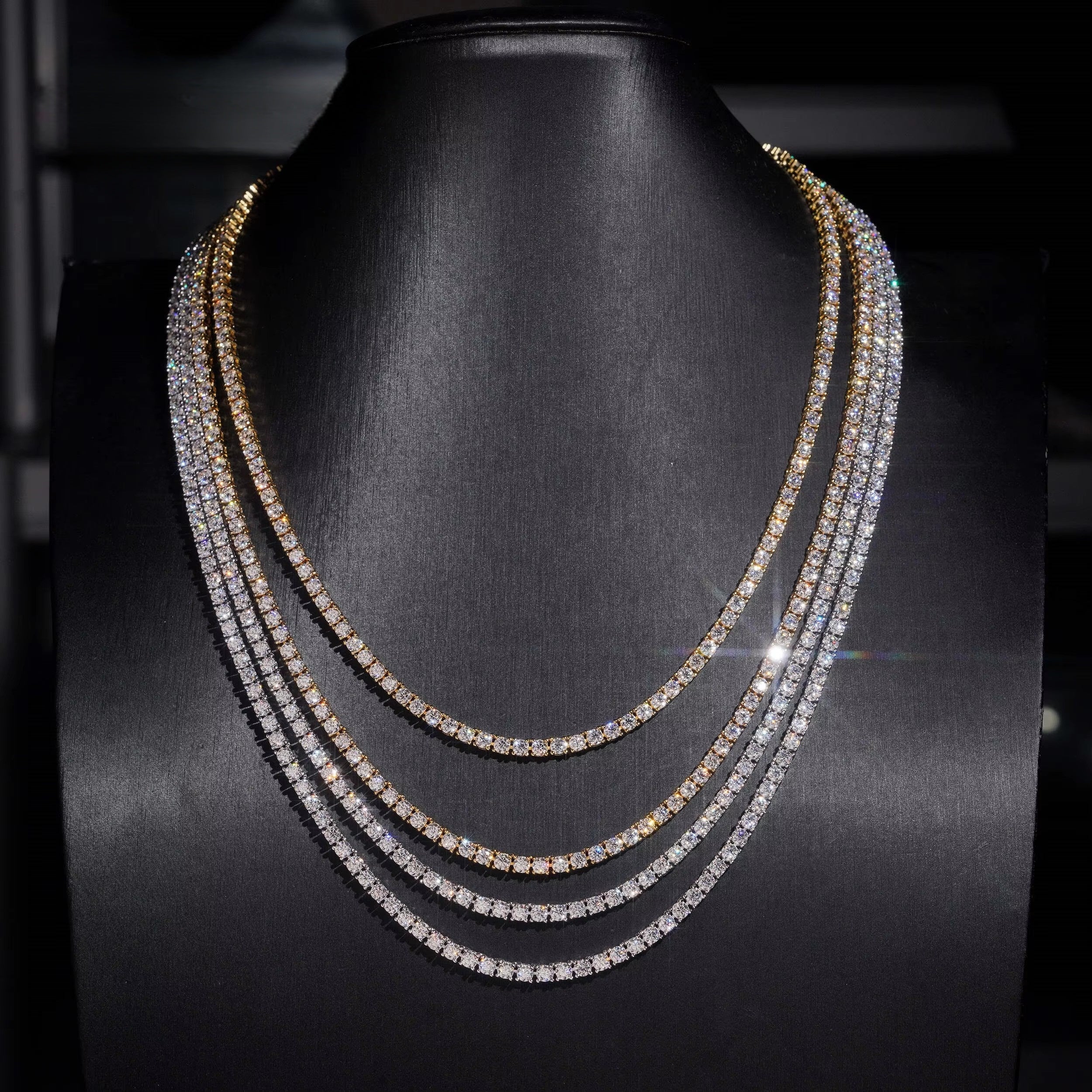
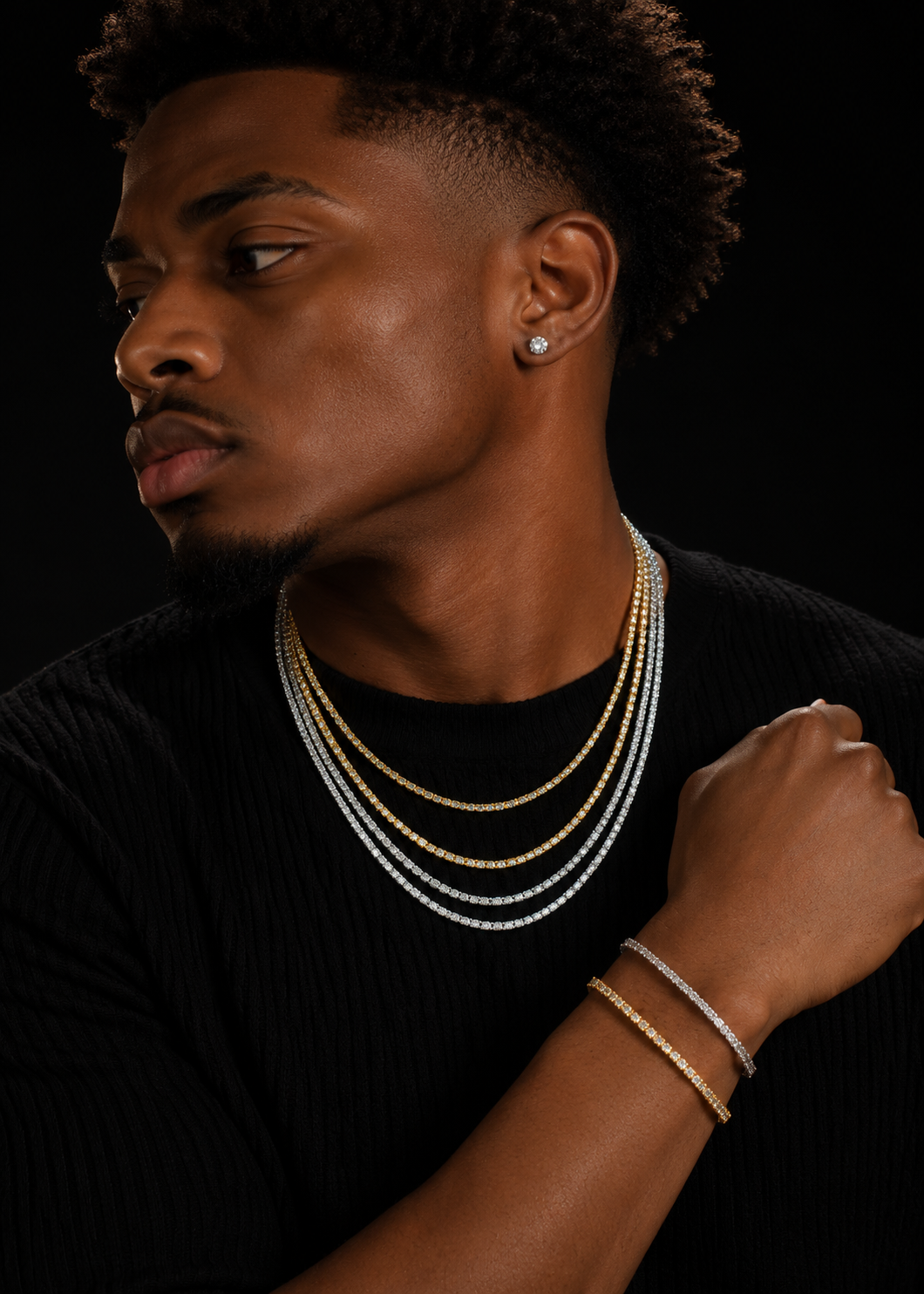
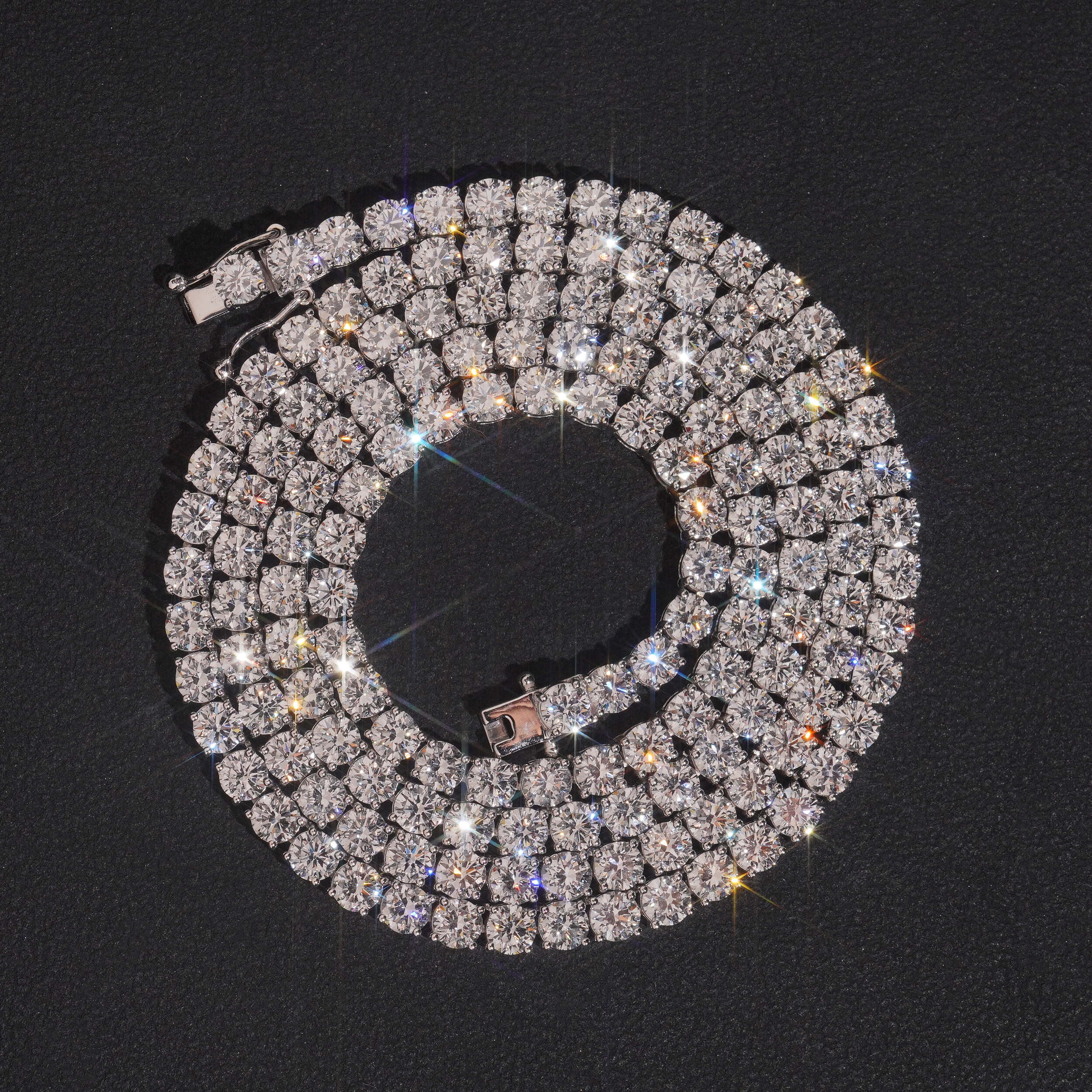
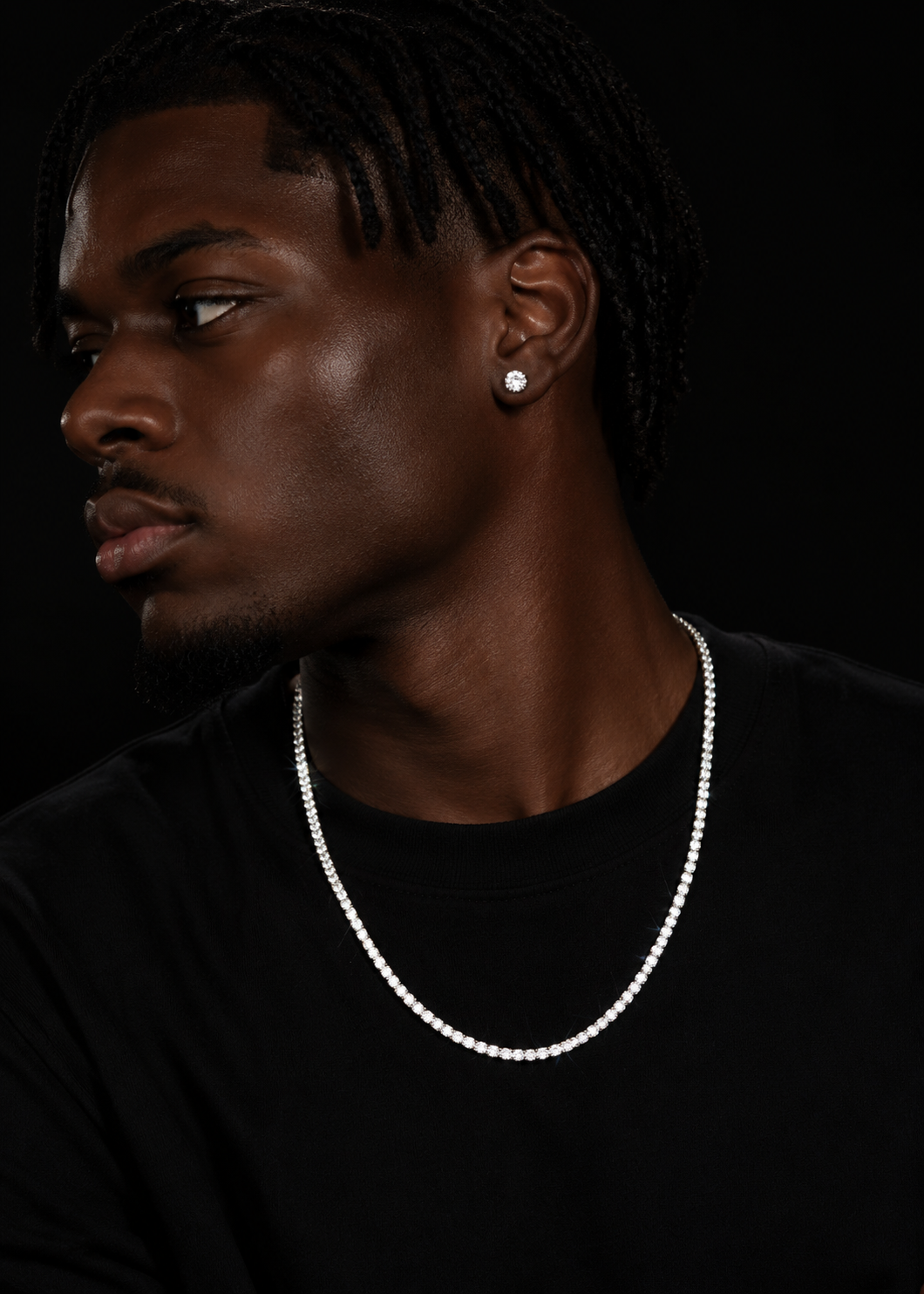
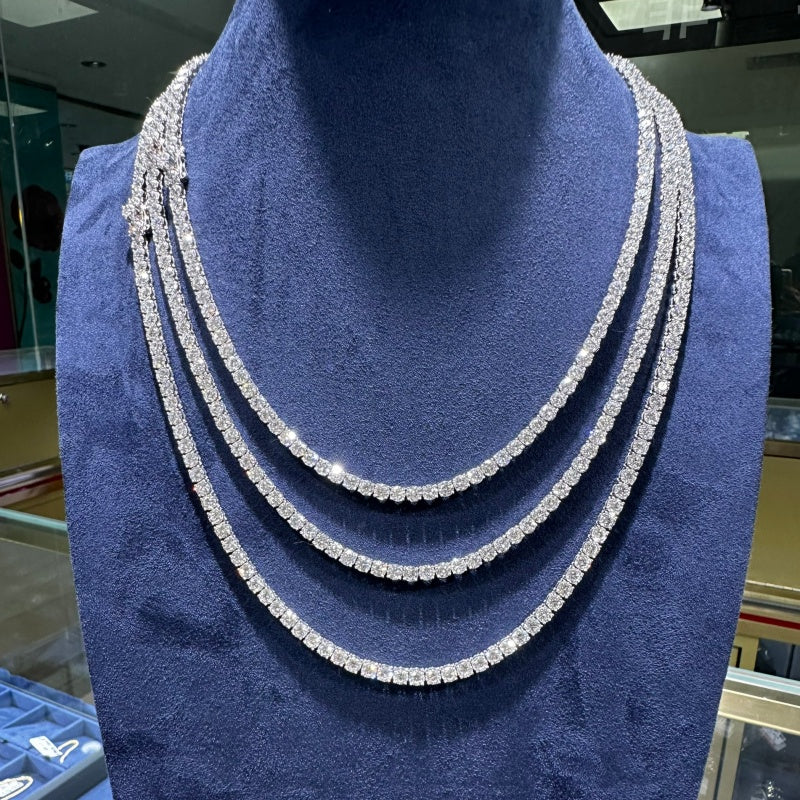
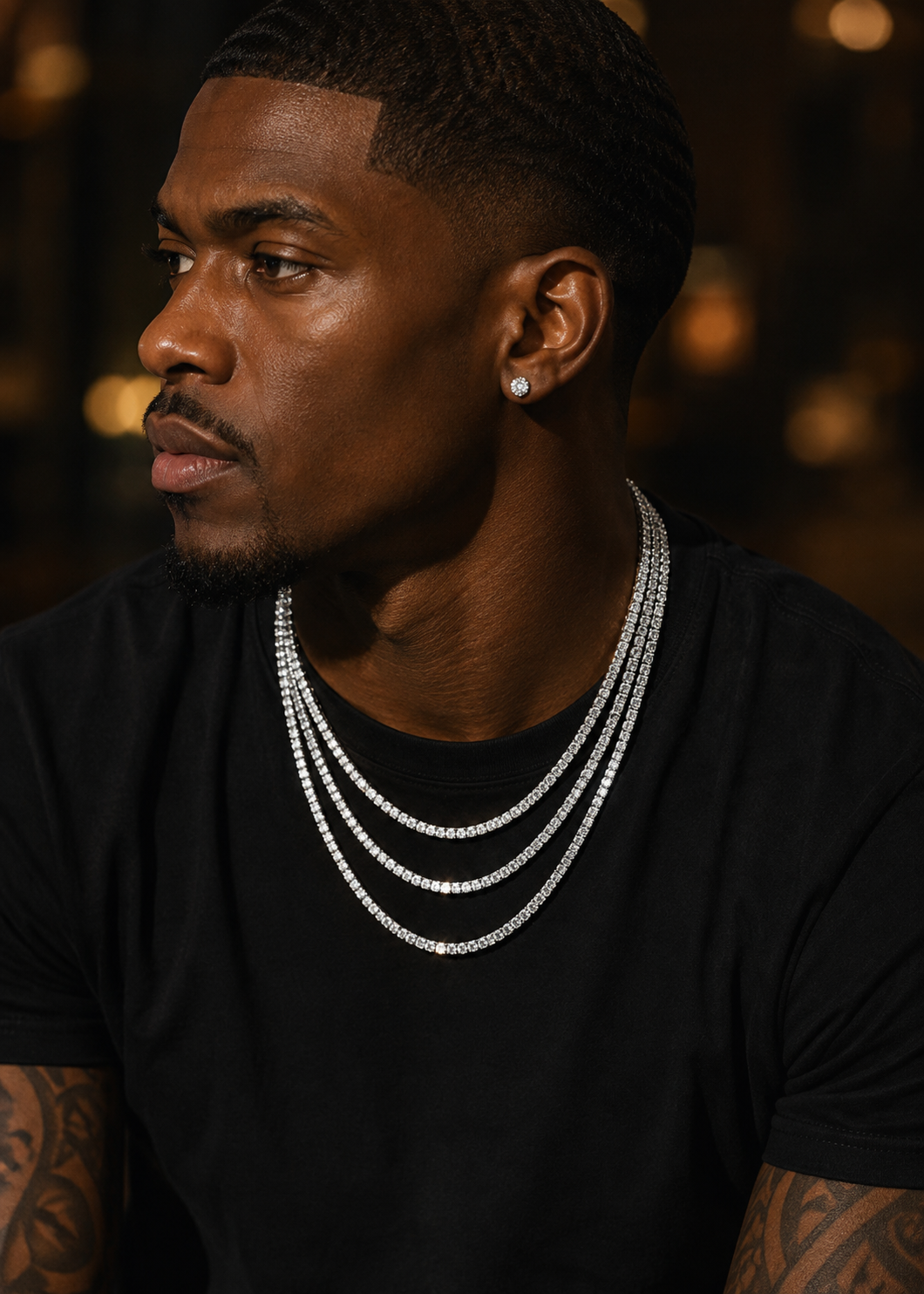
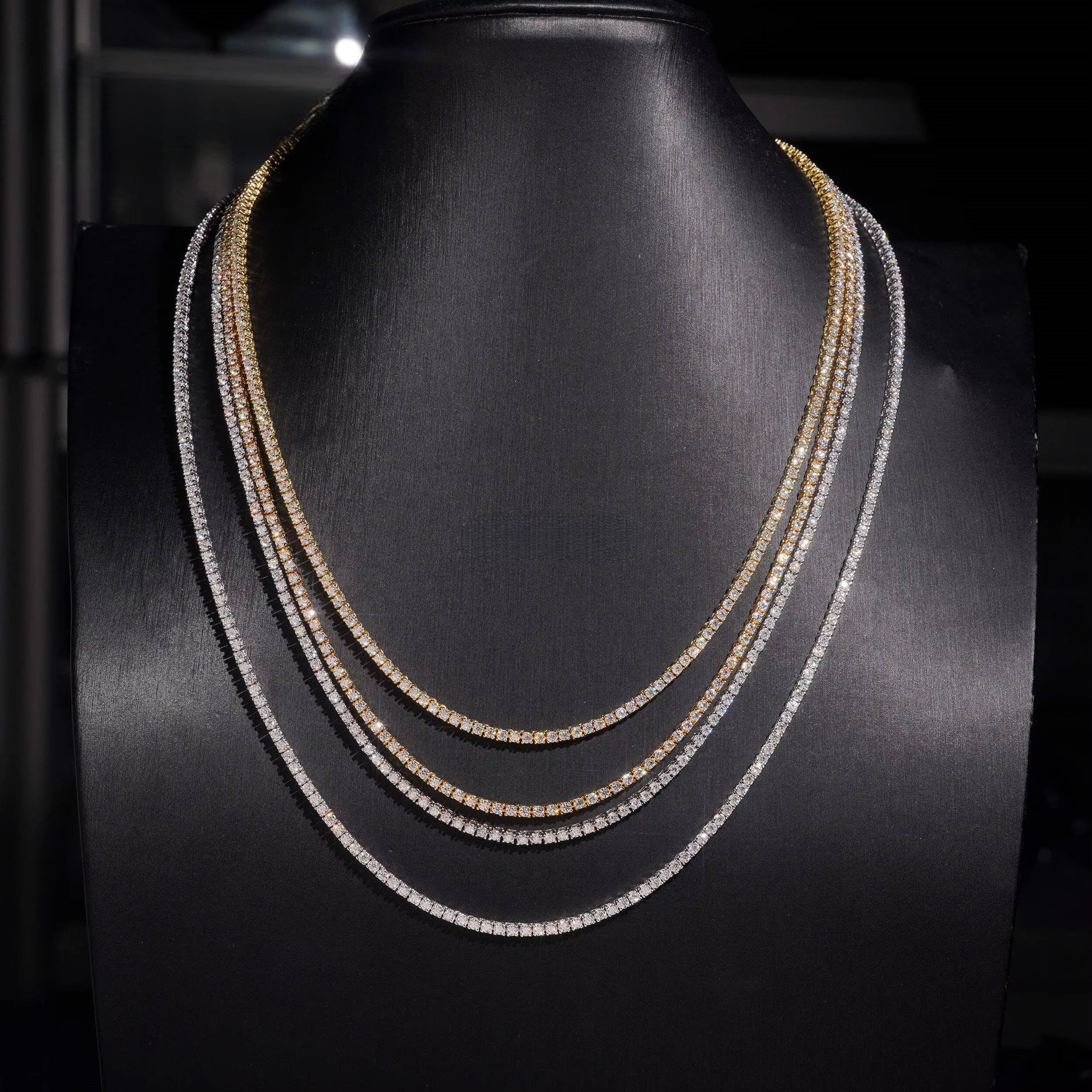
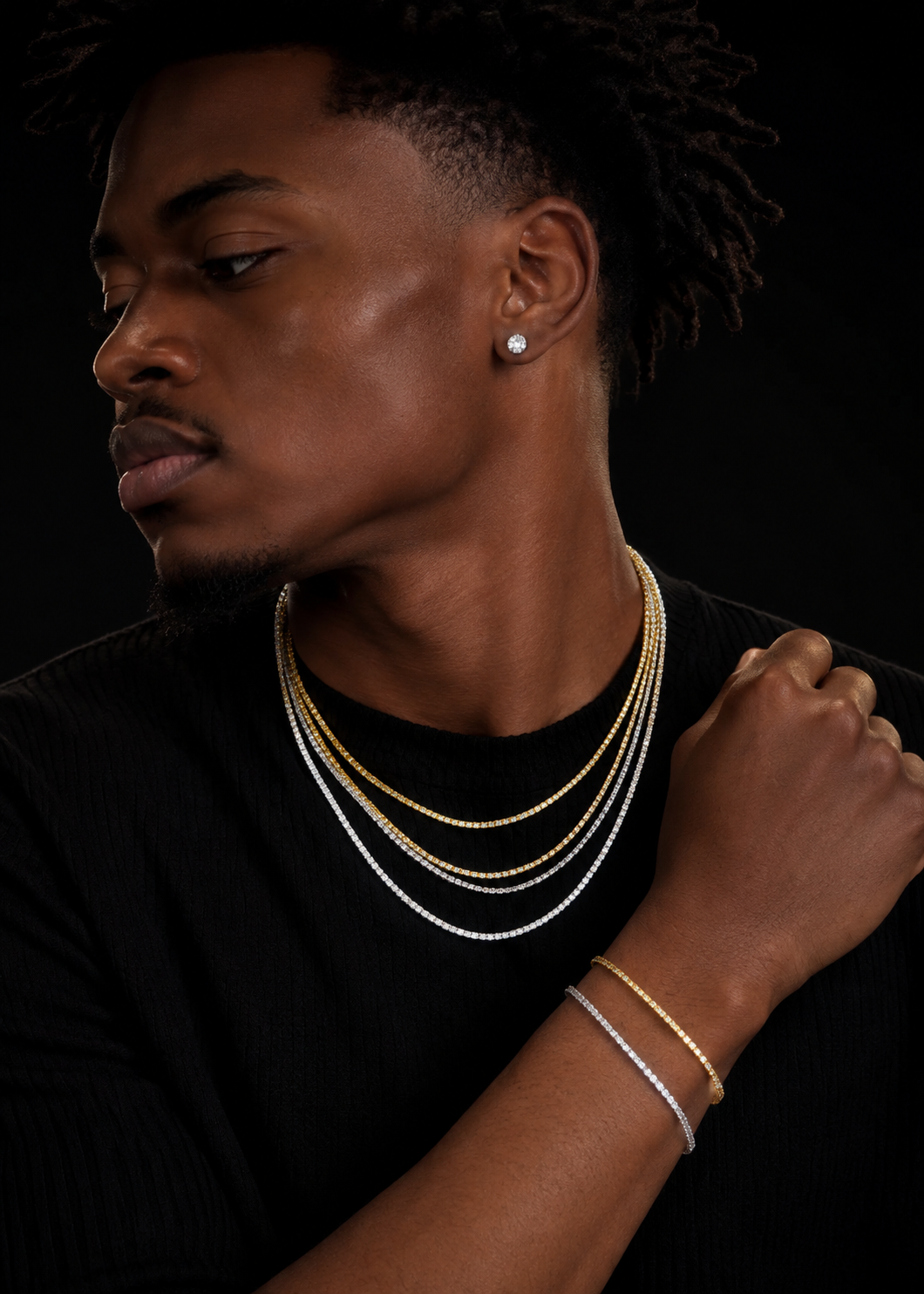
Inside the Lab Grown Diamond Tennis Necklace Collection
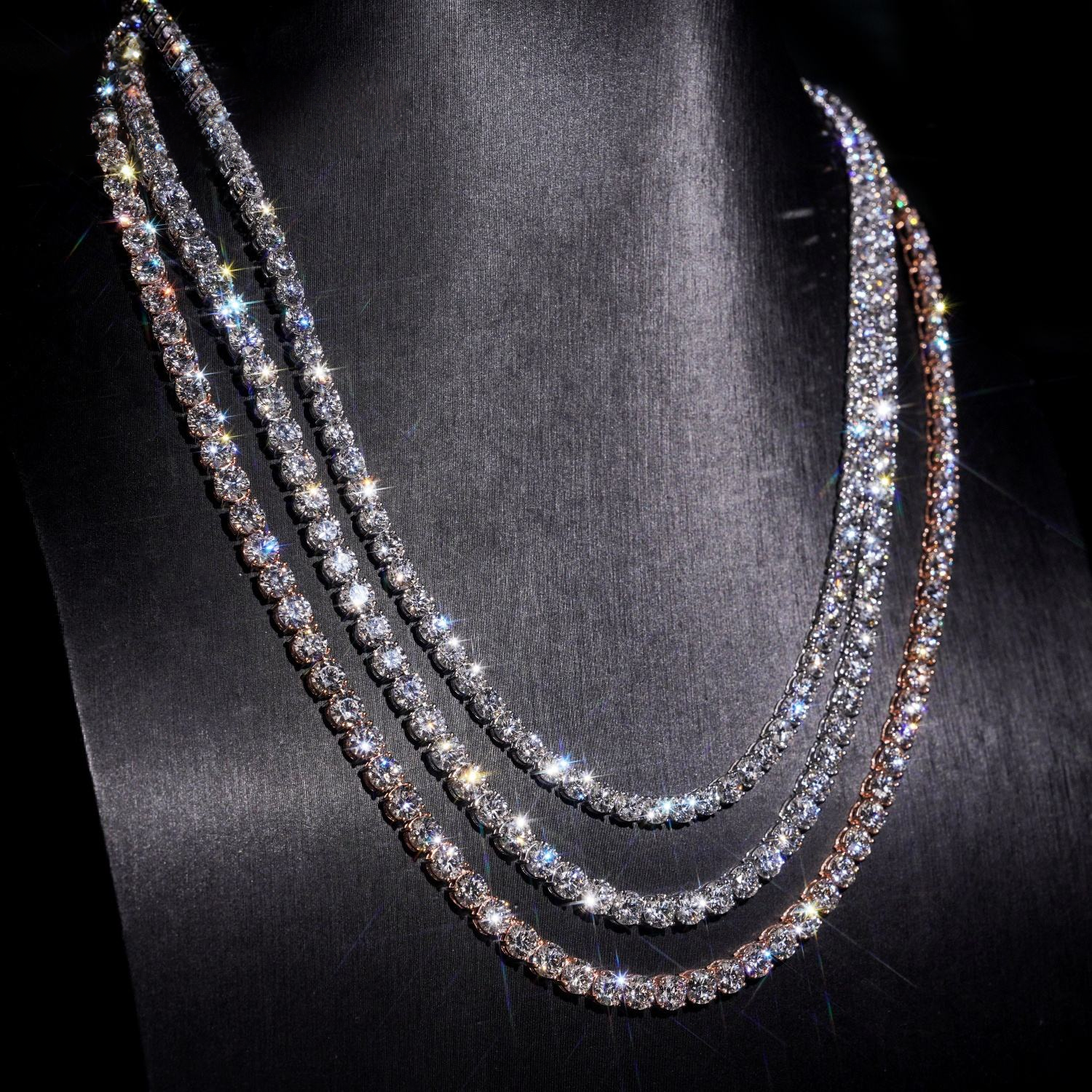
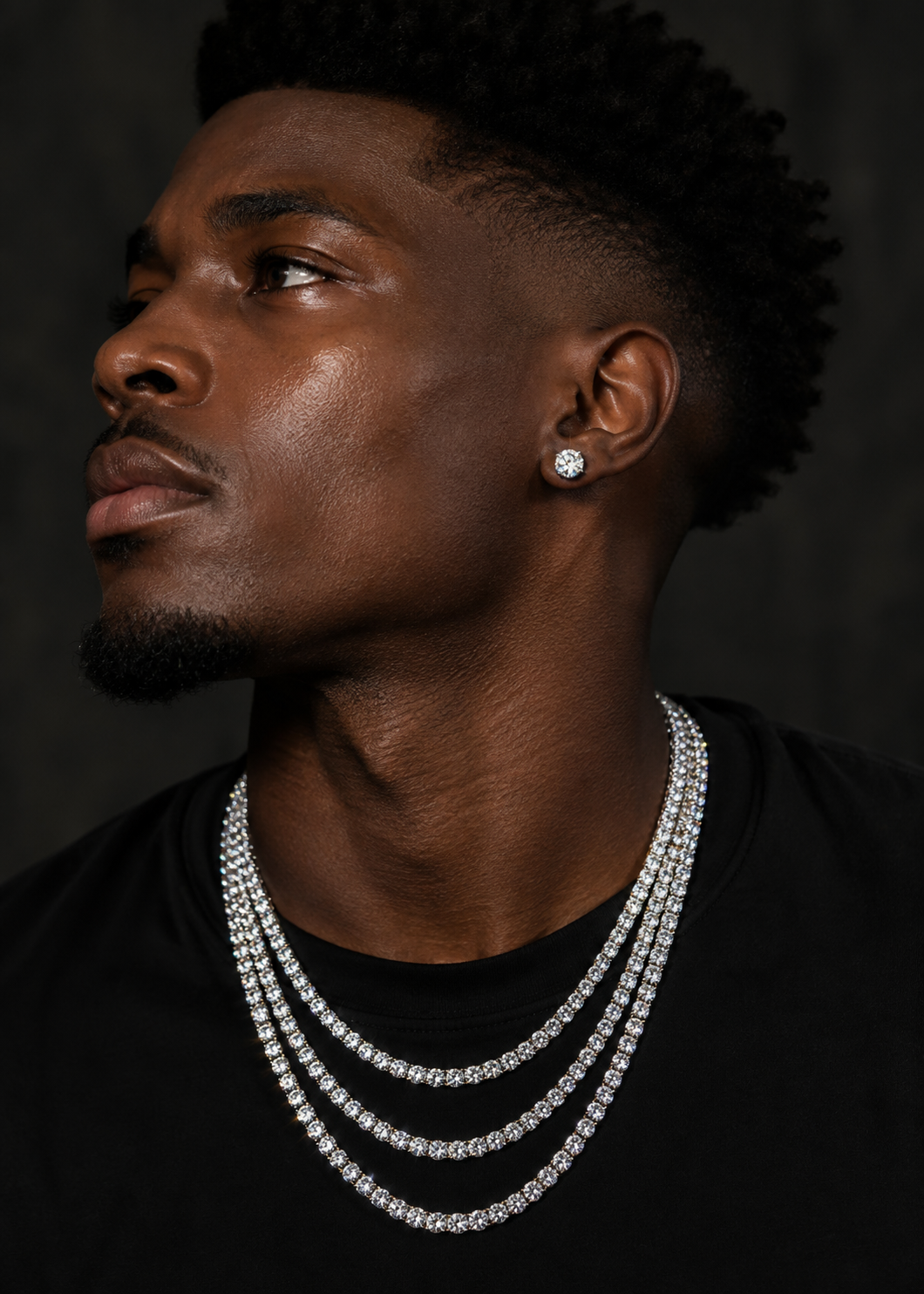
Two things decide how a tennis necklace reads on you: how wide the row is, and how long it hangs. Everything else follows from those two. The rows on this page are set with lab grown diamonds, in widths that start at a 2mm line you can wear to work and end at a 5mm row nobody misses, and in lengths that run 16" through 24".
A Grown Diamond Is Still a Diamond
A lab grown diamond is a diamond — same carbon, same hardness, graded on the same scale. What changed is where it started: above ground, in a lab, instead of a mine. That is the whole difference, and it is why a grown stone can carry the width you actually wanted. It is not cubic zirconia, and it is not moissanite either — moissanite is a different stone with a brilliance of its own, and it keeps its own moissanite tennis chains here. Our moissanite vs diamond guide breaks down exactly where the two part ways.
Choosing a Width and a Length
Here is how the widths actually wear:
- 2mm–3mm — a fine line. Layers easily, and quiet enough for the office.
- 3.5mm–4mm — where most people land. Bright enough to catch a room, still light on the neck.
- 5mm — big enough to count from across a table, and where the 40- and 50-pointer rows sit.
Length is the quieter decision: 16" sits at the base of the throat, 20" lands mid-chest, and 24" drops below it. Our tennis chain and bracelet buyer's guide takes each width in turn, and explains what a pointer actually buys you.
Plated Silver or Solid Gold
Two builds share this page. The silver-based pieces are 925 sterling finished in white or yellow gold plating — the iced look, at the weight your budget is comfortable with. The solid pieces are exactly that: 9K and 10K gold the whole way through, and that is where the heavier pointer stones tend to show up. Check the material line on the listing before you settle on a width — plated and solid are not the same purchase. Orders ship in a jewelry box, and select styles include a certificate.
Wear It on the Wrist Too
A couple of styles here come in wrist sizes as well as neck lengths — the same row, sized around 6" to 8", so one product covers both. If the wrist is where you actually want it, the full range lives in our lab grown diamond tennis bracelets. And if you are building out the whole neck — Cuban links, solitaires, pendants — start from lab grown diamond necklaces.
FAQ
Same piece, two names. The row of stones is identical — chain is the street name for it, necklace is the jeweler's. What actually changes how it wears is the width and the length, not what you call it. The same style in moissanite sits in our tennis chains collection.
On a few of them, yes. Check the size list before ordering — where a piece lists wrist sizes alongside the neck lengths, it is sold both ways. The rest are neck-only. If the wrist was the plan from the start, look at the lab grown diamond tennis bracelets collection instead.
The material line on the listing spells it out. Plated is 925 silver underneath a gold finish, in white or yellow. Solid is gold from the surface down, either 9K or 10K. Price separates the two the most, and stone size tends to follow — the widest row on this page is a solid piece.
A pointer is one hundredth of a carat, so a 40-pointer stone is 0.40 carat and a 50-pointer is 0.50. On a tennis necklace that figure describes each stone in the row, not the total weight — which is why a 50-pointer row reads far heavier than the number alone suggests.
Usually yes. Most pieces here can be built to a width, length or metal that is not in the size list — what varies is the price and the lead time, not whether it can be done. The custom made jewelry collection is where that starts.